
DbcultAccessing Vault...
Director's Spotlight
Senior Film Conservator
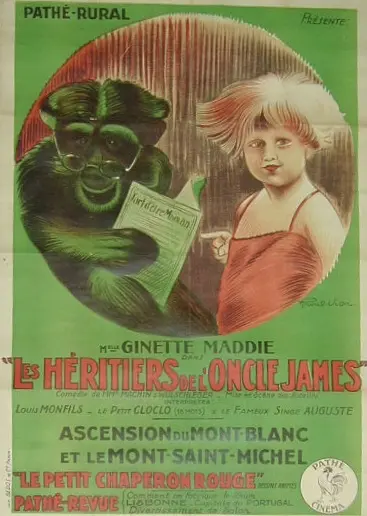
Director's Spotlight: France
A Deep Dive into the 1924 Vision of Alfred Machin
Exploring the Comedy underpinnings of Les héritiers de l'oncle James leads us to the stylistic boundaries pushed by Alfred Machin during the production. Through a lens of existential fatalism and Comedy tropes, it continues to spark endless debates among critics and cinephiles alike.
In Les héritiers de l'oncle James, Alfred Machin pushes the boundaries of conventional narrative. The film's unique approach to its subject matter has sparked endless debates and interpretations among cinephiles and critics alike.
The visual language of Les héritiers de l'oncle James is defined by its use of shadows and framing, a hallmark of Alfred Machin's style. By utilizing a 1924-era palette, the film creates an immersive experience that perfectly complements its Comedy themes.
| Cinematography | Static |
| Soundtrack | Experimental |
| Editing | Elliptical |
| Art Direction | Expressionist |
Visualizing the convergence of Alfred Machin's style and the core Comedy narrative.
The relatives of wealthy, unmarried and slightly eccentric uncle James are all after his money -except his nice Ginette. She brings him to adopt two war orpahns and shows him, how his other relatives raely "love" him. But suddenly the orphans' father, a Lieutenat stands at the door of the house...
Decades after its release, Les héritiers de l'oncle James remains a vital piece of the cinematic puzzle. Its influence can be seen in countless modern works, solidifying Alfred Machin's status as a master of the craft in France and beyond.