
DbcultAccessing Vault...
Director's Spotlight
Senior Film Conservator
Director's Spotlight: Australia
A Deep Dive into the 1911 Vision of Alfred Rolfe
When we examine the cinematic landscape of Australia, The Bushranger's Bride emerges as a landmark work of the unique directorial voice that Alfred Rolfe brought to the screen. This film stands as a masterclass in visual storytelling, it demands to be seen by anyone who cares about the art of film.
In The Bushranger's Bride, Alfred Rolfe pushes the boundaries of conventional narrative. The film's unique approach to its subject matter has sparked endless debates and interpretations among cinephiles and critics alike.
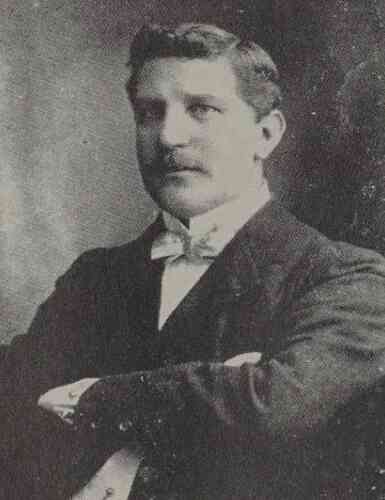
To fully appreciate The Bushranger's Bride, one must consider the cinematic climate of 1911. During this period, Australia was undergoing significant artistic shifts, and Alfred Rolfe was at the forefront of this cult movement, often challenging established norms.
| Cinematography | High-Contrast |
| Soundtrack | Minimalist |
| Editing | Slow-Burn |
| Art Direction | Brutalist |
Visualizing the convergence of Alfred Rolfe's style and the core cult narrative.
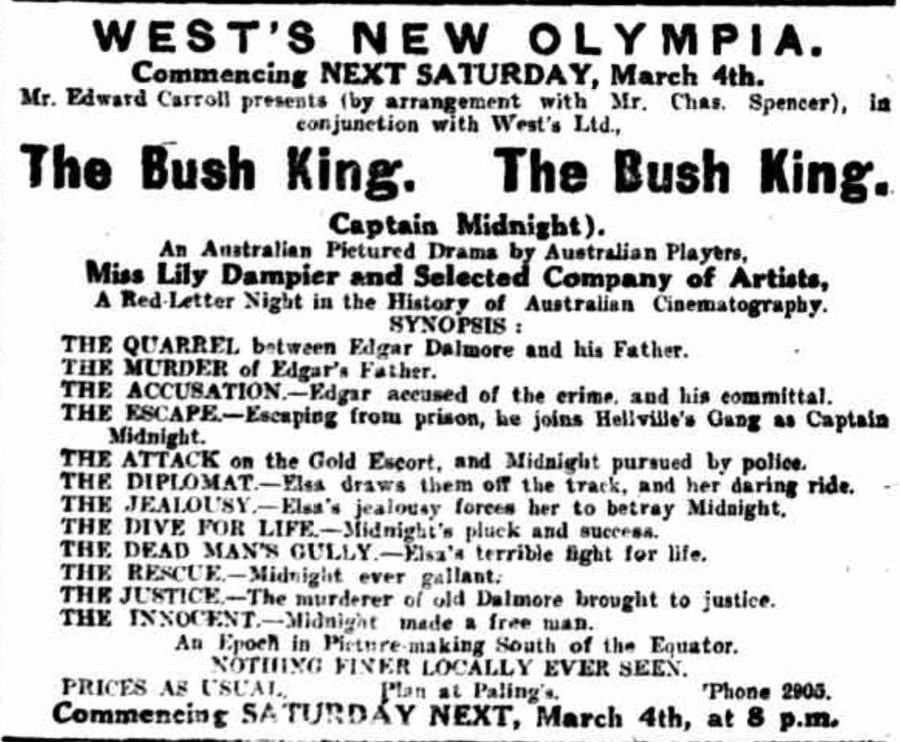
Edgar Dalmore, an impulsive youth, quarrels with his father, and in the heat of anger is disowned. Edgar's cousin, Vincent Lennox, is hard pressed for money, owing to his gambling proclivities. With aid of his friend, John Sterling, he beats Edgar's father into insensibility, robs the safe and accuses Edgar of having committed the crime. The father dies, and Edgar is sentenced to prison for life. At the end of six months, Edgar escapes from prison. As an escaped convict, he is welcomed into the Hellville band of bushrangers, made their captain, and called "Captain Midnight." He leads his band on several daring adventures, including an attack on and robbery of the government gold coach. After a thrilling chase by the bandits, the escort of the coach are overpowered and the chest of gold stolen. The mounted police chase Edgar and his band, and Edgar is separated from the bushrangers. Edgar meets his sweetheart, Thelma, who prevails upon him to renounce his bushranger connections. Elsa Harling, who is in love with Edgar, but whose love is not returned, sees Edgar with his sweetheart. She decides to turn Edgar over to the police and lays a plan for his capture. Edgar visits her at her father's cabin in the forest. The police surround the cabin. Elsa relents at the last moment, and helps Edgar to escape by cutting a hole in the back of the hut, thus eluding the police. Another exciting chase follows, during which Edgar has to swim across a river. Elsa overhears Vincent Lennox and his friend Sterling quarreling about the division of the money they have stolen after murdering Edgar's father. Her presence is discovered. She is seized by Lennox and Sterling, and tied to a tree. Lennox bargains with one of the bushrangers to do away with Elsa. Edgar, in his flight from the police, discovers Elsa tied to the tree, rescues her and in a thrilling scene he and Elsa overcome the two bushrangers and escape. Elsa notifies the police of the guilt of Lennox and Sterling, and the police start on the trail of the criminals. Edgar decides to cross the border and to live an honest life. He marries Thelma, and as they are coming out of the church they are seized by Lennox and Sterling and their followers, but Elsa arrives with the police in time to save Edgar and his wife. The stolen notes are found on Lennox, and he and Sterling are arrested for the murder. Through Elsa's noble sacrifice, Edgar is free to join his bride.
Decades after its release, The Bushranger's Bride remains a vital piece of the cinematic puzzle. Its influence can be seen in countless modern works, solidifying Alfred Rolfe's status as a master of the craft in Australia and beyond.