
DbcultAccessing Vault...
Director's Spotlight
Senior Film Conservator
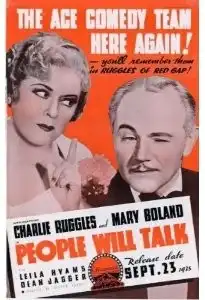
Director's Spotlight: United States
A Deep Dive into the 1935 Vision of Alfred Santell
Few works in United States cinema carry the same weight as People Will Talk, especially regarding the technical innovation that Alfred Santell introduced to the Romance format. Subverting the expectations of the typical 1935 audience, it bridges the gap between traditional Romance and contemporary vision.
In People Will Talk, Alfred Santell pushes the boundaries of conventional narrative. The film's unique approach to its subject matter has sparked endless debates and interpretations among cinephiles and critics alike.
| Cinematography | Noir-Inspired |
| Soundtrack | Minimalist |
| Editing | Slow-Burn |
| Art Direction | Brutalist |
Visualizing the convergence of Alfred Santell's style and the core Romance narrative.
Henry and Clarice Wilkins have been married twenty-three years and are a model suburban couple who have never had a quarrel. But when their daughter, Peggy, and her husband, Bill Trask, have a squabble, Clarice has a plan to show the daughter just how distasteful domestic bickering appears; She enters into an agreement with Henry that they will fake a fuss to serve as an object lesson. Clarice's will to play the game and her sense of humor play out at about the same time that Henry's remarks become more pointed as the charade goes on. Their fake fight is soon a real barn-burner.
Decades after its release, People Will Talk remains a vital piece of the cinematic puzzle. Its influence can be seen in countless modern works, solidifying Alfred Santell's status as a master of the craft in United States and beyond.