
DbcultAccessing Vault...
Director's Spotlight
Senior Film Conservator
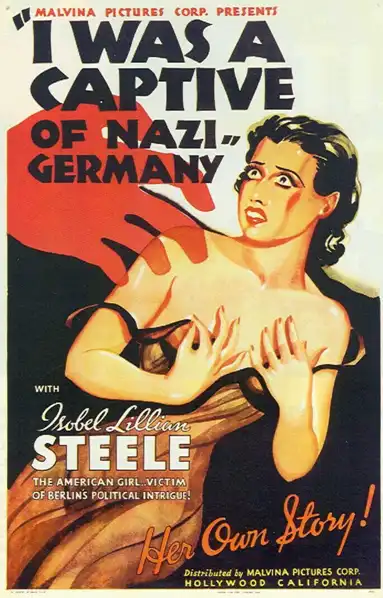
Director's Spotlight: United States
A Deep Dive into the 1936 Vision of Alfred T. Mannon
When we examine the cinematic landscape of United States, I Was a Captive of Nazi Germany emerges as a landmark work of the enduring legacy of Alfred T. Mannon's artistic contribution to the genre. Through a lens of existential fatalism and Drama tropes, it captures a specific kind of cinematic magic that is rarely replicated.
In I Was a Captive of Nazi Germany, Alfred T. Mannon pushes the boundaries of conventional narrative. The film's unique approach to its subject matter has sparked endless debates and interpretations among cinephiles and critics alike.
While deeply rooted in United States, I Was a Captive of Nazi Germany has achieved a global reach, influencing directors from various backgrounds. Its ability to translate Drama tropes into a universal cinematic language is why it remains a cult staple decades after its 1936 release.
| Cinematography | Static |
| Soundtrack | Diegetic |
| Editing | Rhythmic |
| Art Direction | Naturalist |
Visualizing the convergence of Alfred T. Mannon's style and the core Drama narrative.
The history of Germany from 1924 through Hitler's rise in power is described through newsreel footage. Freelance press representative Isobel Lillian Steele travels to Germany to work as a translator/journalist for the English language magazine Germany and You . Thinking a story on the German film industry would be interesting, she becomes acquainted with Herr Luger, the Nazi representative in charge of motion picture employment. Through him she becomes friendly with German actress Catherine Stoloff and eventually Baron Yurick Von Sosnowski, a modern-day Casanova whose parties are the talk of Berlin. While an overload of work on 28 Feb 1934 causes Isobel to miss one of the wealthy nobleman's soirees, the secret police arrest the baron on charges of espionage and his guests are detained, some for weeks, for questioning. Unaware of the imprisonments because the police feign ignorance, Isobel searches for Catherine, which arouses police suspicion that she is a collaborator. Even after Catherine is released a month later, she reveals nothing to Isobel, for the actress, like the other detainees, have been sworn to an oath of silence, which if violated would mean three years imprisonment. On 3 May, the People's Court is formed in Germany. It issues new edicts concerning foreign nationals and anti-Hitlerite activities. Film producer Henry Reicher, a communist sympathizer, contacts Isobel about writing a screenplay for his film Social Espionage which would depict the arrest of the baron and his guests by the secret police. Unaware of his propagandist motives, Isobel begins writing the script with Baroness Von Elmendorff, another of the baron's acquaintances. Although they plan to change the names of the characters in their final draft, the first version of the script contains the real names of the people involved. By 10 August, after President Von Hindenburg has died, removing the last obstacle to Hitler's control, Isobel's script is completed. Two secret policemen, having infiltrated Reicher's company as his secretaries, arrest Reicher and Isobel. Sent to Alexanderplatz, she is charged with espionage when confronted with her first draft. Other charges follow, including treason and associating with communists. Detained as a political espionage prisoner, she is taken to a women's prison. Only slowly does she acclimate to the harsh conditions and bad food. When finally allowed to receive the American Consul as a visitor, she is forbidden to discuss details of her case. Isobel's mother, on the eve of a trip to the United States to seek help for her daughter, is allowed a short visit, but is told not to discuss Isobel's imprisonment. After a constant barrage of distorted accusations by the police, on 11 Sep Isobel is suddenly transferred to Moabit prison, where the Sosnowski women victims have been retained. Her personal belongings confiscated, Isobel finds comfort in a small yarn doll, named Malvina after the first initials of her friends, which becomes her "fetish of hope" in a lonely existence. Denied the simplest pleasures, her condition worsens. Mrs. Steele, having arrived in Boise, Idaho, to recruit the assistance of her son, contacts Senator William E. Borah in Washington, D.C., whose involvement in the matter at year's end forces Isobel's case to be "temporarily closed," allowing for her deportation and freedom. Clutching her doll, she sails for New York. As her ship enters New York Harbor, she proudly smiles as the Statue of Liberty rises in the background.
Decades after its release, I Was a Captive of Nazi Germany remains a vital piece of the cinematic puzzle. Its influence can be seen in countless modern works, solidifying Alfred T. Mannon's status as a master of the craft in United States and beyond.