
DbcultAccessing Vault...
Director's Spotlight
Senior Film Conservator
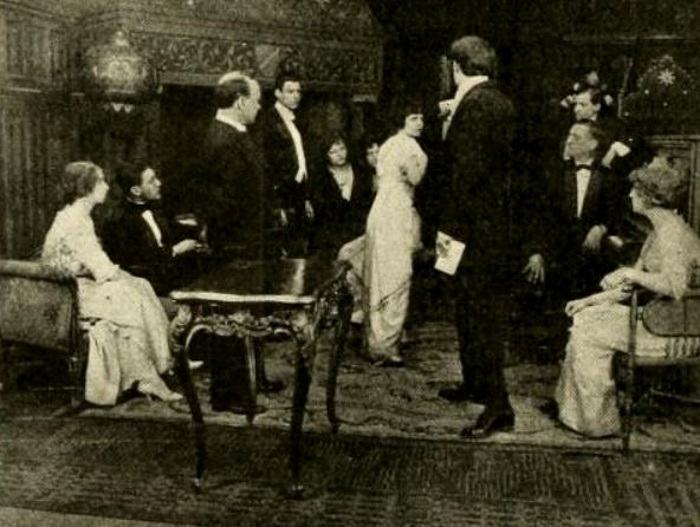
Director's Spotlight: United States
A Deep Dive into the 1914 Vision of Alice Guy
As a cultural artifact of the 1914s, The Monster and the Girl provides the visionary mind of its creator, Alice Guy. With its avant-garde structure and atmospheric tension, it redefined what audiences could expect from a cult experience.
In The Monster and the Girl, Alice Guy pushes the boundaries of conventional narrative. The film's unique approach to its subject matter has sparked endless debates and interpretations among cinephiles and critics alike.
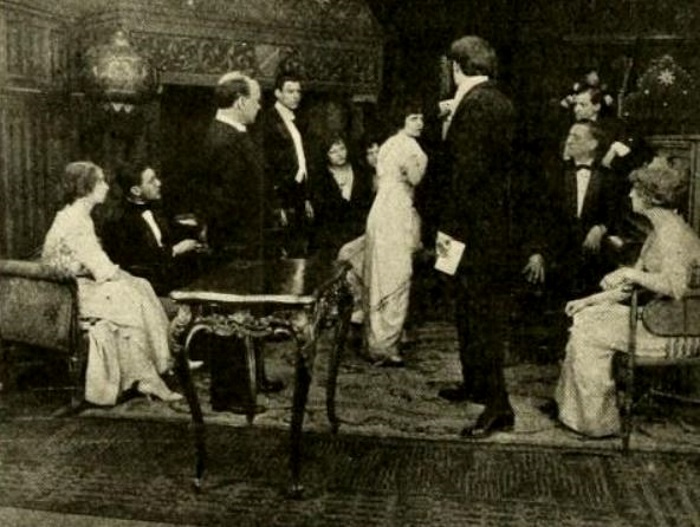
In this work, Alice Guy explores the intersection of cult and United States cultural identity. The meticulous attention to detail suggests a deep-seated commitment to pushing the boundaries of the medium, ensuring that The Monster and the Girl remains a relevant topic of study for cult enthusiasts.
| Cinematography | Deep Focus |
| Soundtrack | Synth-Heavy |
| Editing | Disjunctive |
| Art Direction | Baroque |
Visualizing the convergence of Alice Guy's style and the core cult narrative.
Two old fishermen sitting outside of their cabin see a boat at sea on fire. They rush to the life-saving station and report what they have seen. The ship is destroyed and the passengers are lost with the exception of a little boy. One of the old fishermen, who has a little girl the boy's age, decides to adopt him. The children become very fond of each other. Ten years later a New York lawyer comes to the fishing town and wants to adopt the child, but the boy is old enough to decide for himself, and does not want to go. The case is brought to court and it is decided that the child remain with his adopted parents, but that they place the money in the hands of a banker and the guardianship of the lawyer. Not very long afterward the banker is on the verge of bankruptcy and borrows from the boy's money. He has no means of returning it and decides to sell the boy some worthless stock in an unformed corporation. On his visit the banker falls in love with the young girl, now grown to be a beautiful young lady. The boy becomes jealous and seeing the banker kiss the girl fights with him on the edge of a cliff, from which the banker, who is not badly injured, falls. The boy, repentant, helps the banker to his father's house. The girl falls in love with the banker and elopes with him, but he soon neglects her for his gay companions and she returns to her father's home. The banker plans a robbery upon his own bank and is aided by crooks, who dig a tunnel under the bank and enter through the floor of the office. But the banker has already taken the money his confederates seek and flees to the fishing village where his wife is living with her parents. He is followed by the crooks, who trap him into giving them the stolen money. Having been seen by his wife's people, he takes the clothes from a body which is cast up by the sea, placing his own suit upon the unfortunate victim of the waves and placing a suicide note in the coat pocket. He tracks the crooks to a dive in the city and attempts to recover his stolen wealth, in a spectacular fight he follows one of his assailants down a fire rope from the window of a tall building, grappling with him in mid-air. The terrific struggle which ensues ends by the banker plunging headlong to the street below, thus ending his miserable career. The boy and girl live and love, as in their childhood, down by the sea.
Decades after its release, The Monster and the Girl remains a vital piece of the cinematic puzzle. Its influence can be seen in countless modern works, solidifying Alice Guy's status as a master of the craft in United States and beyond.