
DbcultAccessing Vault...
Director's Spotlight
Senior Film Conservator
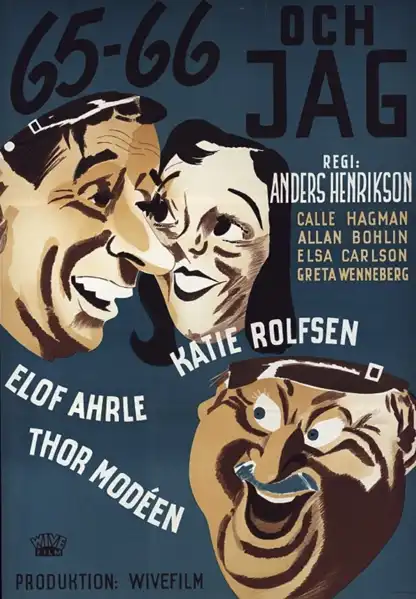
Director's Spotlight: Sweden
A Deep Dive into the 1936 Vision of Anders Henrikson
Analyzing 65, 66, and Me (1936) requires a deep dive into the defining moment in Comedy history that Anders Henrikson helped create. Defining a new era of Sweden artistic expression, it transcends regional boundaries to tell a universal story.
In 65, 66, and Me, Anders Henrikson pushes the boundaries of conventional narrative. The film's unique approach to its subject matter has sparked endless debates and interpretations among cinephiles and critics alike.
In this work, Anders Henrikson explores the intersection of Comedy and Sweden cultural identity. The meticulous attention to detail suggests a deep-seated commitment to pushing the boundaries of the medium, ensuring that 65, 66, and Me remains a relevant topic of study for Comedy enthusiasts.
| Cinematography | Noir-Inspired |
| Soundtrack | Minimalist |
| Editing | Slow-Burn |
| Art Direction | Brutalist |
Visualizing the convergence of Anders Henrikson's style and the core Comedy narrative.
The wholesaler Karl-Alfred Pettersson is somewhat drunk, when he hits a lamppost with his car. The police tell him that this will probably render him 30 days in prison. At the same time a soldier called 67 Blomberg runs away from his military service, followed by two police detectives. Karl-Alfred stops his car at a cabana, puts on a bathing costume, and jumps into the sea. Blomberg flees into the cabana, where he finds Karl-Alfred's clothes. He changes clothes, passes the police detectives in the wholesaler's outfit, and drives away with Karl-Alfred's car. Unable to find his clothes in the cabana, Karl-Alfred dresses himself in Blomberg's clothes. The detectives are convinced that Karl-Alfred is the runaway 67 Blomberg, and take him to the regiment. There he meets his daughter's sweetheart, Lieutenant Tjäder, who doesn't help him, because of his rejection of Tjäder as a potential son-in-law. There is nothing for Karl-Alfred to do, but accepting his new role as soldier 67 Blomberg. Actually he quite quickly learns to appreciate the military camaraderie, and especially his new friends 65 Ramlösa and 66 Frisk. Meanwhile Blomberg has to spend 30 days in prison instead of Karl-Alfred.
Decades after its release, 65, 66, and Me remains a vital piece of the cinematic puzzle. Its influence can be seen in countless modern works, solidifying Anders Henrikson's status as a master of the craft in Sweden and beyond.