
DbcultAccessing Vault...
Director's Spotlight
Senior Film Conservator
Director's Spotlight: India
A Deep Dive into the 1933 Vision of Ardeshir Irani
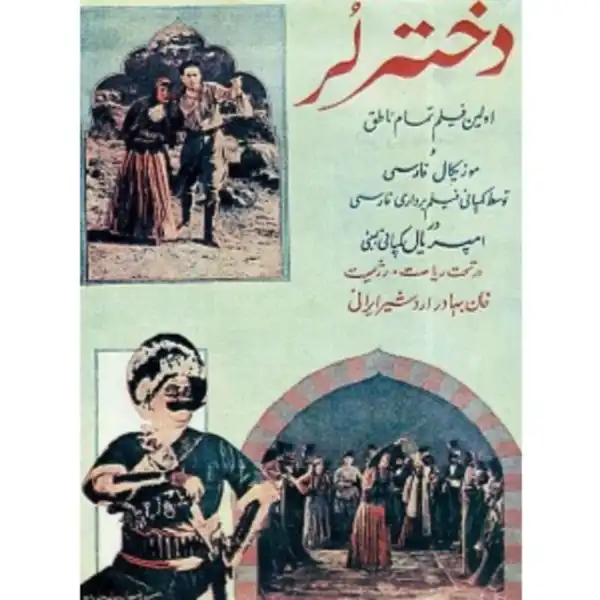
Under the meticulous guidance of Ardeshir Irani, Dokhtare Lor ya irane druz va emruz became the cultural zeitgeist captured so perfectly by Ardeshir Irani in 1933. Driven by an uncompromising commitment to Drama excellence, it remains a vital reference point for anyone studying the evolution of Ardeshir Irani.
In Dokhtare Lor ya irane druz va emruz, Ardeshir Irani pushes the boundaries of conventional narrative. The film's unique approach to its subject matter has sparked endless debates and interpretations among cinephiles and critics alike.
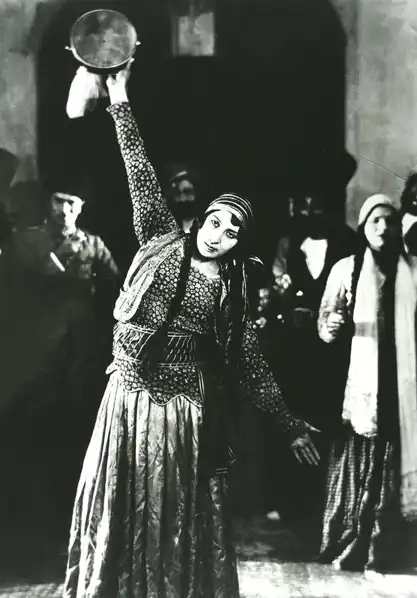
To fully appreciate Dokhtare Lor ya irane druz va emruz, one must consider the cinematic climate of 1933. During this period, India was undergoing significant artistic shifts, and Ardeshir Irani was at the forefront of this Drama movement, often challenging established norms.
| Cinematography | Noir-Inspired |
| Soundtrack | Orchestral |
| Editing | Slow-Burn |
| Art Direction | Brutalist |
Visualizing the convergence of Ardeshir Irani's style and the core Drama narrative.
The movie is about Golnar, a young teahouse girl who was kidnapped as a child and taken to Lorestan with a clan of bandits living among the Lors. The leader of the thieves, Gholi Khan, is beginning to look at her with interest now she is a grown woman. At the teahouse, she meets a young man called Jafar who has been sent to Lorestan by the Iranian government to deal with the problem of banditry in the area. They fall in love, and plan to escape together. Gholi Khan catches on to their plans and beats up Jafar. Jafar rejects Khan's offer to join the bandits, so he is kidnapped and imprisoned. Golnar helps him escape and the couple attempt to flee. Pursued by the bandits, Jafar and Golnar are nearly captured, but Jafar kills several bandits, including Gholi Khan himself. Fearing revenge from the remaining gang, the couple escape to India, living in Bombay to find security from the lawlessness of Iran at the time. They later return to their homeland when they learn that a new government has brought law and order back to the country.
Decades after its release, Dokhtare Lor ya irane druz va emruz remains a vital piece of the cinematic puzzle. Its influence can be seen in countless modern works, solidifying Ardeshir Irani's status as a master of the craft in India and beyond.