
DbcultAccessing Vault...
Director's Spotlight
Senior Film Conservator
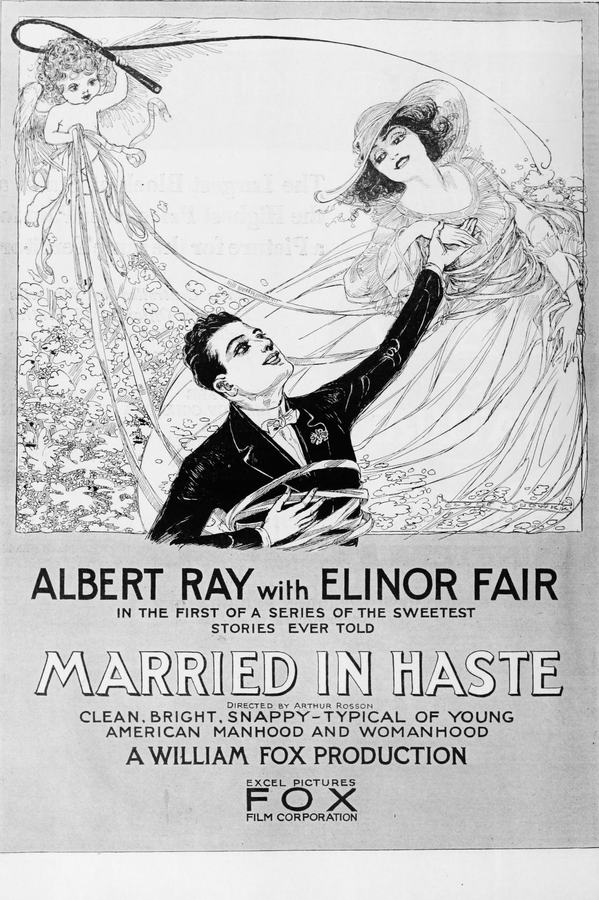
Director's Spotlight: United States
A Deep Dive into the 1919 Vision of Arthur Rosson
Witnessing the stylistic transformation of cult through Married in Haste reveals the global recognition that Arthur Rosson garnered after the release of Married in Haste. Serving as a mirror to the anxieties of a changing world, offering layers of thematic complexity that demand repeated viewing.
In Married in Haste, Arthur Rosson pushes the boundaries of conventional narrative. The film's unique approach to its subject matter has sparked endless debates and interpretations among cinephiles and critics alike.
While deeply rooted in United States, Married in Haste has achieved a global reach, influencing directors from various backgrounds. Its ability to translate cult tropes into a universal cinematic language is why it remains a cult staple decades after its 1919 release.
| Cinematography | High-Contrast |
| Soundtrack | Minimalist |
| Editing | Disjunctive |
| Art Direction | Baroque |
Visualizing the convergence of Arthur Rosson's style and the core cult narrative.
Millionaire spendthrift Sam Morgan marries Constance Winwood, who tries to break Sam's spending habits by convincing Downer, the trustee of Sam's inheritance, to pretend to abscond with Sam's money. During their honeymoon, Sam spends his $10.30 pocket money, then discovers that his checks are bouncing. Unable to pay an increasingly-large taxi fare, Sam and Constance keep the cab and its sleepy driver engaged after they are thrown out of a hotel. After a friendly thief gets Sam a job in a herring refinery, Sam uses his rudimentary knowledge of Spanish to buy a shipload of herring from a South American dealer and sell it to the refinery's directors, who know no Spanish, thus making enough profit to pay his now-exorbitant taxi bill. Constance confesses her scheme, and although it seems that Downer really has absconded, he finally returns. Wealthy again, Sam and Constance adorn their bedroom with taxi meters and headlights.
Decades after its release, Married in Haste remains a vital piece of the cinematic puzzle. Its influence can be seen in countless modern works, solidifying Arthur Rosson's status as a master of the craft in United States and beyond.