
DbcultAccessing Vault...
Director's Spotlight
Senior Film Conservator
Director's Spotlight: United States
A Deep Dive into the 1919 Vision of Arthur Rosson
As a cultural artifact of the 1919s, The Coming of the Law provides the visionary mind of its creator, Arthur Rosson. With its avant-garde structure and atmospheric tension, it redefined what audiences could expect from a cult experience.
In The Coming of the Law, Arthur Rosson pushes the boundaries of conventional narrative. The film's unique approach to its subject matter has sparked endless debates and interpretations among cinephiles and critics alike.
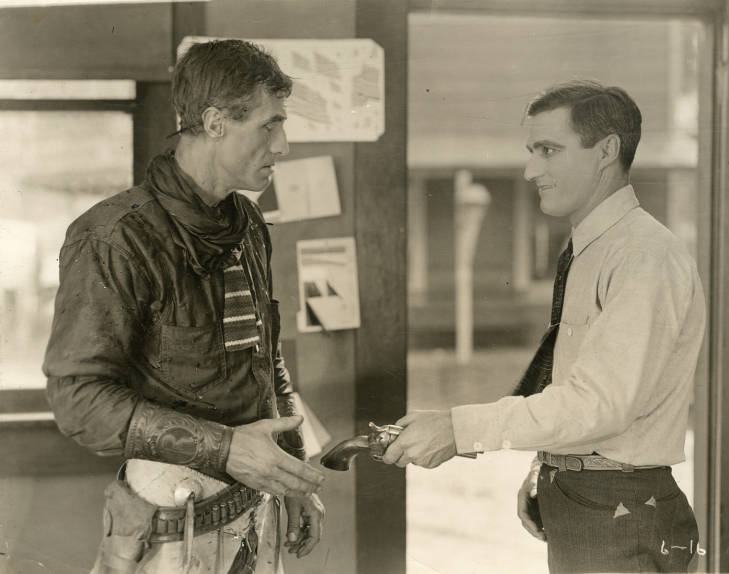
The visual language of The Coming of the Law is defined by its use of shadows and framing, a hallmark of Arthur Rosson's style. By utilizing a 1919-era palette, the film creates an immersive experience that perfectly complements its cult themes.
| Cinematography | Static |
| Soundtrack | Diegetic |
| Editing | Rhythmic |
| Art Direction | Naturalist |
Visualizing the convergence of Arthur Rosson's style and the core cult narrative.
Upon his arrival in Dry Bottom, New Mexico, Easterner Kent Hollis beats up the town's crooked boss, then decides to stay and bring law and order to the community. When he discovers that Big Bill's men are rustling his cattle, Big Bill threatens him, challenges him to leave town within a few hours, then attacks him. Kent is nursed back to health by Nellie Hazelton, who is also desired by Big Bill. Kent places his name in consideration for sheriff and enforces a fair election although Big Bill's men attempt to stuff the ballot box. Kent wins the election but also the ire of Big Bill, who chases and attacks him. Kent wins the shootout and the love of Nellie. Law and order is restored to Dry Bottom.
Decades after its release, The Coming of the Law remains a vital piece of the cinematic puzzle. Its influence can be seen in countless modern works, solidifying Arthur Rosson's status as a master of the craft in United States and beyond.