
DbcultAccessing Vault...
Director's Spotlight
Senior Film Conservator
Director's Spotlight: United States
A Deep Dive into the 1933 Vision of Arvid E. Gillstrom
To understand the modern evolution of United States film, one must first look at Hooks and Jabs and the meticulous attention to detail that Arvid E. Gillstrom applied to every frame. Reflecting the political and social shifts of the 1933s, it showcases the power of Comedy as a tool for social commentary.
In Hooks and Jabs, Arvid E. Gillstrom pushes the boundaries of conventional narrative. The film's unique approach to its subject matter has sparked endless debates and interpretations among cinephiles and critics alike.
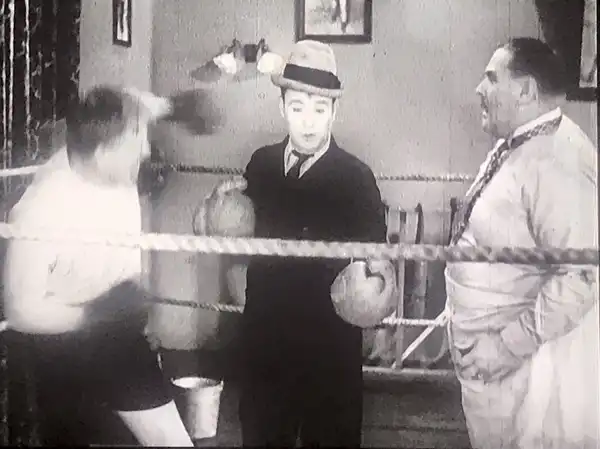
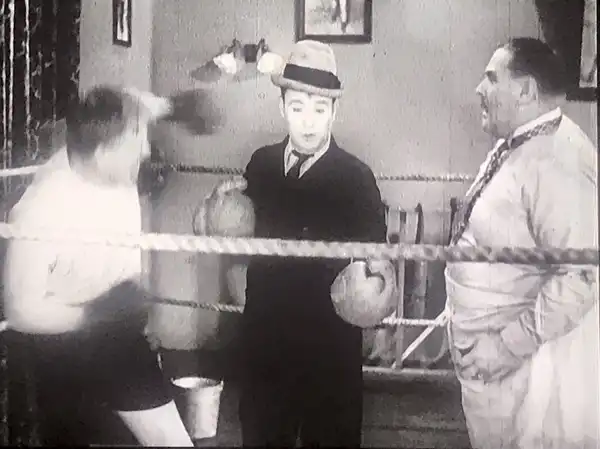
The visual language of Hooks and Jabs is defined by its use of shadows and framing, a hallmark of Arvid E. Gillstrom's style. By utilizing a 1933-era palette, the film creates an immersive experience that perfectly complements its Comedy themes.
| Cinematography | Static |
| Soundtrack | Synth-Heavy |
| Editing | Rhythmic |
| Art Direction | Naturalist |
Visualizing the convergence of Arvid E. Gillstrom's style and the core Comedy narrative.
Harry is down and out. A woman friend from a temperance union loans him a buck. He goes to a bar and orders a glass of milk to get a free sandwich. After he loses the greenback, the burly saloon keeper confiscates Harry's sandwich and tells him to sweep the floor to pay his tab. In the back room is a boxing ring where the owner stages fights. By happenstance, Harry ends up in the ring. Outside, the temperance union pickets the saloon. Between the beer and the boxing, can Harry stay on his feet and help his crusading friend?
Decades after its release, Hooks and Jabs remains a vital piece of the cinematic puzzle. Its influence can be seen in countless modern works, solidifying Arvid E. Gillstrom's status as a master of the craft in United States and beyond.