
DbcultAccessing Vault...
Director's Spotlight
Senior Film Conservator
Director's Spotlight: United States
A Deep Dive into the 1925 Vision of B. Reeves Eason
In the grand tapestry of Drama cinema, Fighting Youth serves as a bridge between the bold experimentation that has become synonymous with B. Reeves Eason. Breaking the traditional rules of Drama engagement, it highlights the importance of independent voices in United States.
In Fighting Youth, B. Reeves Eason pushes the boundaries of conventional narrative. The film's unique approach to its subject matter has sparked endless debates and interpretations among cinephiles and critics alike.
To fully appreciate Fighting Youth, one must consider the cinematic climate of 1925. During this period, United States was undergoing significant artistic shifts, and B. Reeves Eason was at the forefront of this Drama movement, often challenging established norms.
| Cinematography | Handheld |
| Soundtrack | Minimalist |
| Editing | Slow-Burn |
| Art Direction | Brutalist |
Visualizing the convergence of B. Reeves Eason's style and the core Drama narrative.
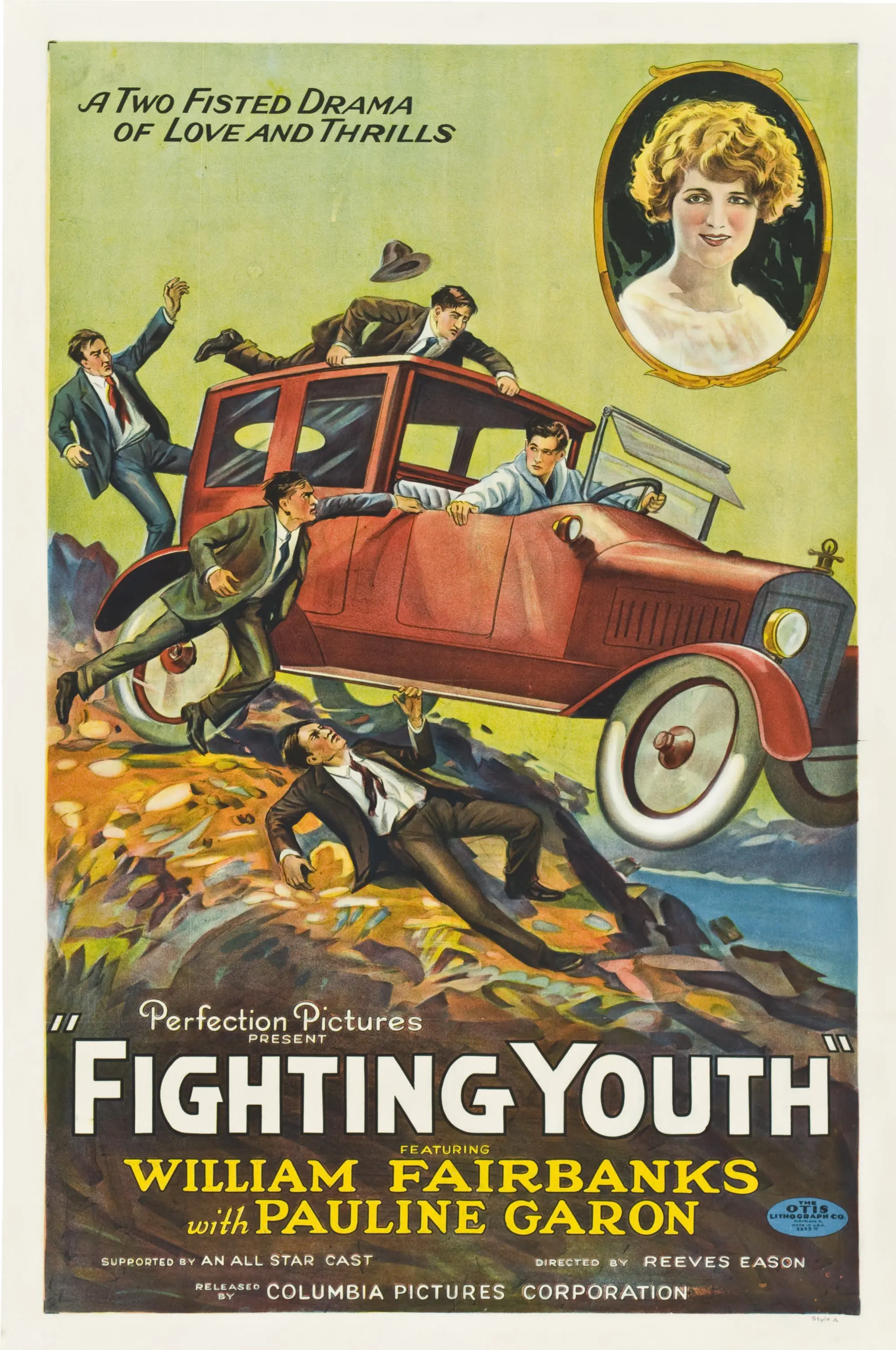
Dick Covington, a young society man with a quick temper and quicker fists, becomes involved in so many public scrapes that his fiancée, Jean Manley, threatens to break off their engagement if he ever fights again. Dick promises to be peaceful, but, the following day, Jean's father, Judge Manley, talks him into fighting in a charity bout to aid the milk fund. Jean breaks off the engagement, and Dick goes into training with Paddy O'Ryan. "Murdering" Mooney, Dick's opponent in the charity match, is involved in a minor automobile accident in which a car driven by Jean's younger brother backs into his car; Mooney knocks Jean's brother brutally to the ground, and Jean goes to Dick, asking to be forgiven and encouraging Dick to make hash of Mooney. On the day before the fight, Dick is kidnapped by Harold Brennty, the judge's junior partner, who hopes that, if Dick misses the match, Jean will turn from Dick to him. Dick escapes from his captors and arrives at the ring just in time for round one. Dick is being badly beaten when Jean exhorts him to do his best; he thereupon lays out the champ in short order.
Decades after its release, Fighting Youth remains a vital piece of the cinematic puzzle. Its influence can be seen in countless modern works, solidifying B. Reeves Eason's status as a master of the craft in United States and beyond.