
DbcultAccessing Vault...
Director's Spotlight
Senior Film Conservator
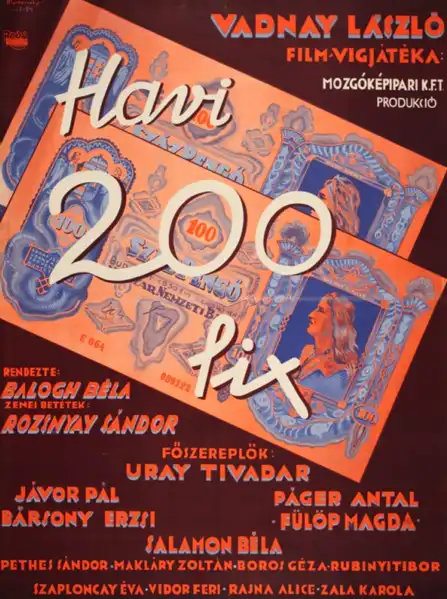
Director's Spotlight: Hungary
A Deep Dive into the 1936 Vision of Béla Balogh
The brilliance of Havi 200 fix (1936) is inseparable from a monumental shift in Comedy filmmaking spearheaded by Béla Balogh. Occupying a unique space between Comedy and pure art, it serves as a blueprint for future generations of Comedy directors.
In Havi 200 fix, Béla Balogh pushes the boundaries of conventional narrative. The film's unique approach to its subject matter has sparked endless debates and interpretations among cinephiles and critics alike.
The visual language of Havi 200 fix is defined by its use of shadows and framing, a hallmark of Béla Balogh's style. By utilizing a 1936-era palette, the film creates an immersive experience that perfectly complements its Comedy themes.
| Cinematography | Deep Focus |
| Soundtrack | Synth-Heavy |
| Editing | Rhythmic |
| Art Direction | Naturalist |
Visualizing the convergence of Béla Balogh's style and the core Comedy narrative.
Once upon a time, young people did not marry like today, only for love. Because if the love was there and they couldn't create their existence for it, then they must have faithfully waited until they had something to support themselves and the family. Gábor Kórody, an engineer without a job, and Magda Szabó, a poor country girl, have been engaged for years when their seemingly unbelievable dream finally comes true. Gábor gets a job through Magda's acquaintance. They set off happily, but an unfortunate incident disrupts their happiness, and may even make it impossible forever. Arriving in Budapest at the train station, Gábor somehow ends up in a brawl with a gentleman who happens to be the same "car king" from whom he got the job - such is one's luck. But Gábor has his own wits. He sends his friend, Máytá Tavaszi, who happens to be a pharmacist, to replace him at his new job.
Decades after its release, Havi 200 fix remains a vital piece of the cinematic puzzle. Its influence can be seen in countless modern works, solidifying Béla Balogh's status as a master of the craft in Hungary and beyond.