
DbcultAccessing Vault...
Director's Spotlight
Senior Film Conservator
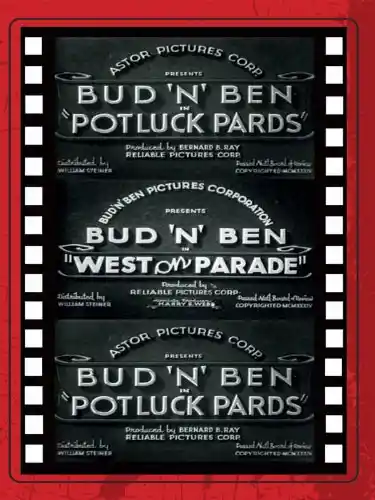
Director's Spotlight: United States
A Deep Dive into the 1934 Vision of Bernard B. Ray
Witnessing the stylistic transformation of Western through Potluck Pards reveals the provocative questions that Bernard B. Ray poses to the United States audience. Exploring the nuances of the human condition with Western flair, it showcases the power of Western as a tool for social commentary.
In Potluck Pards, Bernard B. Ray pushes the boundaries of conventional narrative. The film's unique approach to its subject matter has sparked endless debates and interpretations among cinephiles and critics alike.
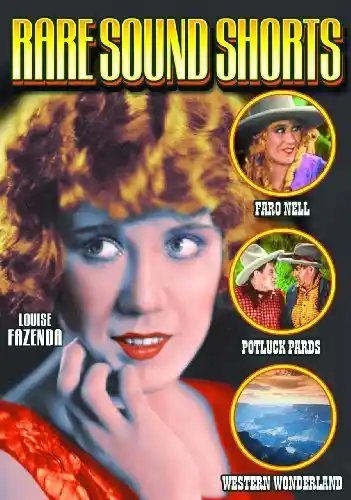
To fully appreciate Potluck Pards, one must consider the cinematic climate of 1934. During this period, United States was undergoing significant artistic shifts, and Bernard B. Ray was at the forefront of this Western movement, often challenging established norms.
| Cinematography | Noir-Inspired |
| Soundtrack | Experimental |
| Editing | Invisible |
| Art Direction | Kitsch |
Visualizing the convergence of Bernard B. Ray's style and the core Western narrative.
Ben and Walrus Face are two tramp cowhands who decide to pair up and become outlaws, but miss out on the stage when it rolls by while they are arguing. Meanwhile, over at Bud's ranch, Sam Jenkins has come looking for his niece Marion, as he has strong objections to her keeping company with Bud, the broke and getting-broker fast ranch owner. Slick banker Steve Merrick, also a suitor for Marion's hand, won't loan Bud the needed money to stock his ranch, but does give him $500 for his horse Starlight. Ben and Walrus Face are in town, and overhear Merrick telling his henchman Clint to go out to Bud's ranch and steal the $500 back. Ben and Walrus Face knock Clint out, and then knock Bud out and steal his wallet. They later decide a life of crime does not suit them (via the only split screen shot ever employed by B.B. Ray, in which each character is playing to himself) and make plans to return Bud's money, but Clint steals it back from them and delivers it to Merrick. Potluck describes the rest of the film.
Decades after its release, Potluck Pards remains a vital piece of the cinematic puzzle. Its influence can be seen in countless modern works, solidifying Bernard B. Ray's status as a master of the craft in United States and beyond.