
DbcultAccessing Vault...
Director's Spotlight
Senior Film Conservator

Director's Spotlight: United States
A Deep Dive into the 1918 Vision of Bernard J. Durning
As a cultural artifact of the 1918s, The Unwritten Code provides the visionary mind of its creator, Bernard J. Durning. With its avant-garde structure and atmospheric tension, it redefined what audiences could expect from a cult experience.
In The Unwritten Code, Bernard J. Durning pushes the boundaries of conventional narrative. The film's unique approach to its subject matter has sparked endless debates and interpretations among cinephiles and critics alike.
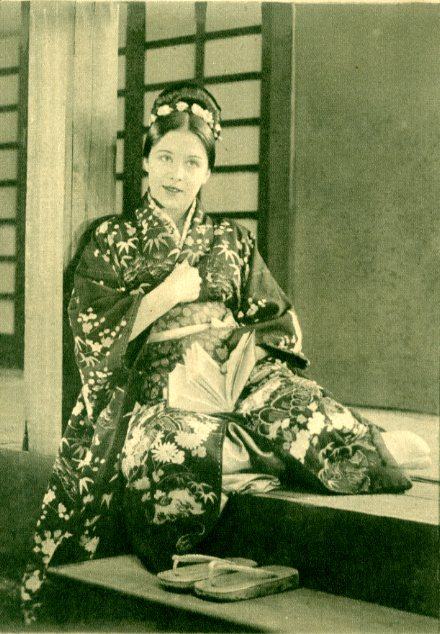
In this work, Bernard J. Durning explores the intersection of cult and United States cultural identity. The meticulous attention to detail suggests a deep-seated commitment to pushing the boundaries of the medium, ensuring that The Unwritten Code remains a relevant topic of study for cult enthusiasts.
| Cinematography | Noir-Inspired |
| Soundtrack | Minimalist |
| Editing | Disjunctive |
| Art Direction | Baroque |
Visualizing the convergence of Bernard J. Durning's style and the core cult narrative.
Kimura, a drunk and a gambler, has no affection for his daughter Kiku-San, who falls in love with Dick Tower, an American college friend of her brother Okuma. After Suzuki, a geisha house proprietor, meets Kiku-San, he runs up Kimura's bill to such an exorbitant amount, that Kimura readily agrees to give him Kiku-San as payment. Seeing her peril, Tower and his friend Thompson rescue Kiku-San after fighting Suzuki and his patrons. Tower takes her to his home, and because this compromises her, they marry. Kiku-San and Tower are happy until his friends at the American Club snub them. Even Thompson encourages Tower to divorce her. After Tower meets Margaret, a wealthy American widow, he tires of being ostracized, and becomes cold to Kiku-San. Her sadness, conveyed to Okuma, causes him to threaten to kill Tower unless she refuses to go with him to America for Christmas. She does refuse, and Tower sails with Margaret, happy with the belief that Kiku-San wanted the separation, while Kiku-San sits in sorrow among cherry blossom trees.
Decades after its release, The Unwritten Code remains a vital piece of the cinematic puzzle. Its influence can be seen in countless modern works, solidifying Bernard J. Durning's status as a master of the craft in United States and beyond.