
DbcultAccessing Vault...
Recommendations
Senior Film Conservator
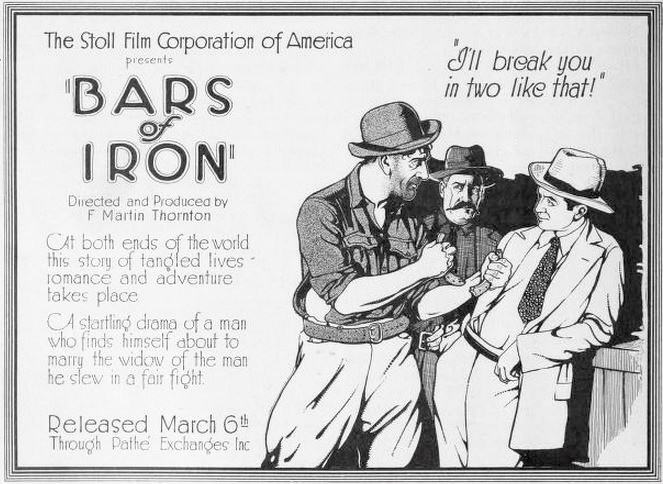
The artistic legacy of F. Martin Thornton was forever changed by Bars of Iron, this Romance landmark continues to dictate the rules of its category. We've assembled a sequence of films that complement the tone of Bars of Iron perfectly.
The vintage appeal of Bars of Iron to maintain its cult relevance across several decades.
A man kills a drunkard in Australia, flees to England, and unknowingly weds the man's widow.
Bars of Iron was a significant production in United Kingdom, showcasing the immense talent of Eric Lankester, Joseph R. Tozer, J. Edwards Barker. It continues to be a top recommendation for anyone studying Romance history.
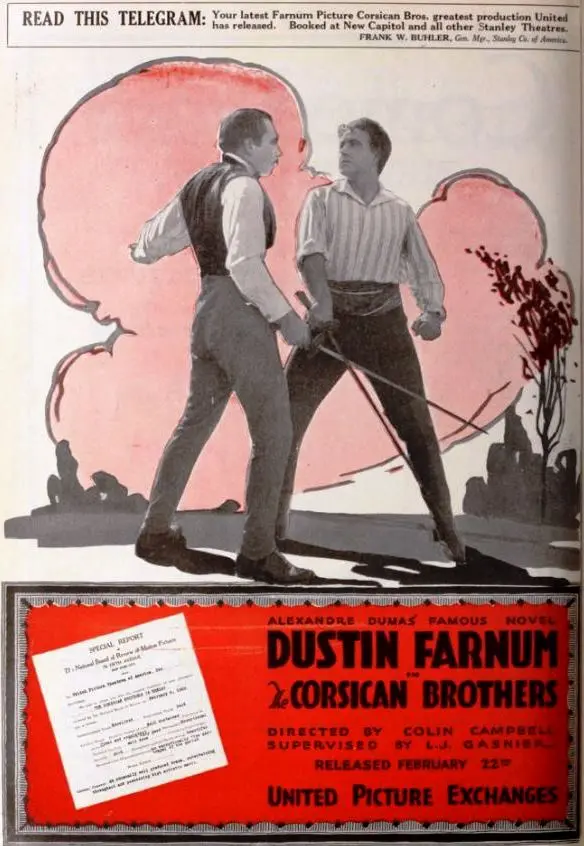
Based on the unique cinematic excellence of Bars of Iron, our vault has identified these titles as the most compelling follow-up experiences for fans of Romance cinema:
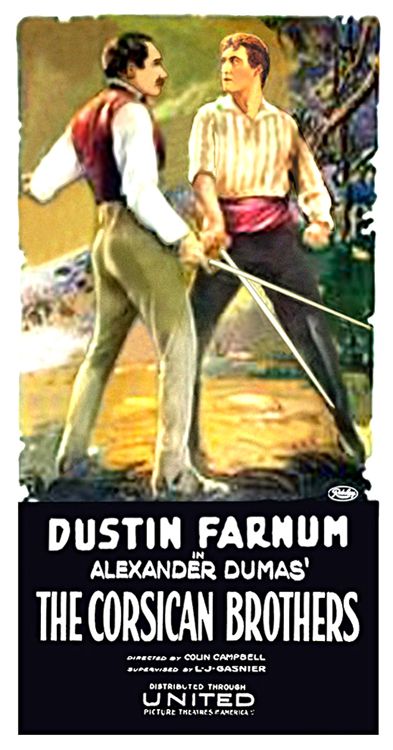
Dir: Colin Campbell
Although separated at birth, Siamese twins Fabien and Louis de Franchi remain united emotionally. One day, Parisian Emilie de Lesparre arrives in their Corsican village with her father, and both brothers fall in love with her. Louis goes to Paris to study law and sees Emilie often, but Emilie loves Fabien who has remained in Corsica with their mother. While attending a dinner given by another admirer of Emilie's, M. Chateau Renaud, Louis is drawn into a duel with Renaud and killed. Back home, Fabien senses what has happened and journeys to Paris to avenge his brother's death. After he kills Renaud in a duel, Emilie finally confesses her love to Fabien.
View Details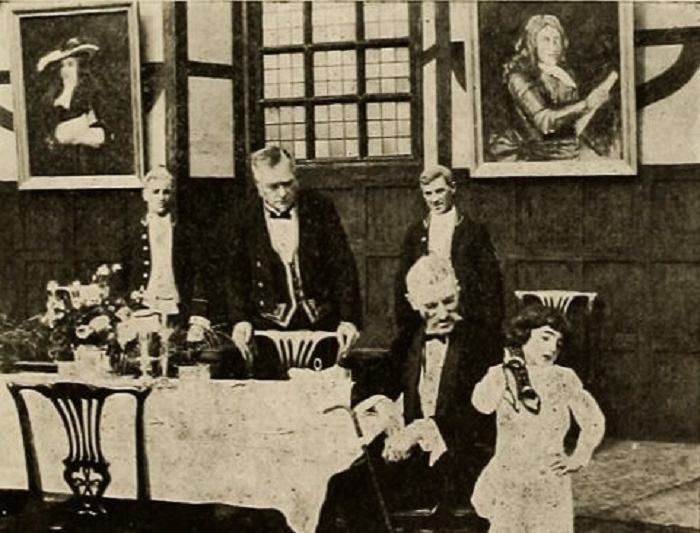
Dir: F. Martin Thornton
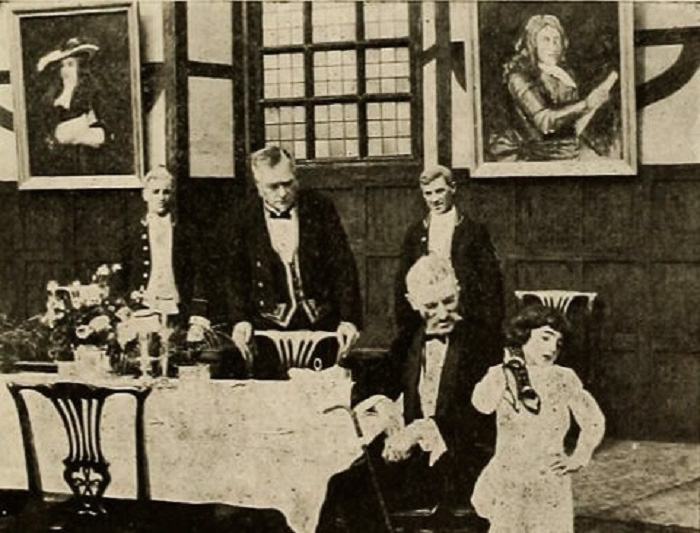
The earl of Dorincourt is a descendant of a long line of illustrious ancestors whose escutcheon has never been stained by dishonor of any kind. His oldest son and heir, Bevis, grows up to be a dissolute and weak-willed wastrel, while his second son, Maurice, an idle spendthrift, is little better. Only the third son, Cedric Errol, inherits the good qualities of his father. The worthlessness of his heir is the cause of great grief to the Earl. The reflection that the Earldom will descend to one who will drag the honored name of Dorincourt in the mire is so galling that it usurps every other thought in his mind. For this reason the good qualities of his gentle youngest son irritates him, and in order to get the young fellow out of his sight he sends him to America. About the same time, Bevis, tired of the dissipations of London and Paris, goes to New York in search of fresh sensations. Here he is entrapped into marriage by Minna, an adventuress, who had deserted her husband. Bevis does not know of this, neither is he aware that she has a child whom she has put out of the way by leaving it in charge of some low-class friends of hers. At home, Maurice, the second son, plunges heavily on the turf. At one race he backs the favorites and loses a very large sum. In the meantime, Cedric has married a charming American girl, and with wife and baby enjoys the delights of a happy home. But his father is prejudiced against Americans, and is convinced that Cedric has been entrapped by "a vulgar money-loving American woman." He therefore writes a letter in which he stops the allowance he has regularly sent his son. Soon after this, Maurice, the second son, meets with a fatal hunting accident in England. Four years elapse. Cedric, never robust, is now in the grip of a wasting and incurable malady. In a pathetic scene, he calls his little son to him and bids him always look after his mother. Soon after this he dies. Bevis at this time is living a fast life in Italy with Minna. As the result of his intemperance he has a sudden stroke and falls back in a fit, in which, in a few minutes, he expires. Minna wastes no time over tears, but instantly makes plans to feather her own nest. She writes to the Earl asking for funds and claiming the title of Lady Dorincourt. The old nobleman, in spite of the blows dealt him by misfortune in the deaths of all his sons, instructs his lawyer, Mr. Havisham, to fetch young Cedric, now little Lord Fauntleroy, and heir to the Earldom, from America. Little Cedric Errol is about six years old he has never forgotten his promise to his dead father to look after his mother. Despite the Dorincourt blood in him, Cedric has none of that empty and selfish pride which mars his grandfather's character. He has made friends with everyone, and his particular chums are Mr. Hobbs, an elderly grocer; Dick, a bootblack, and his mother's Irish cook, Bridget. Mr. Havisham calls on Mrs. Errol and tells her the latter's conditions with regard to Cedric, namely, that he is to live alone with his grandfather, though at the house he will provide for her; she is to be allowed an occasional visit from him. Mrs. Errol has just learned that, owing to misappropriation of funds, her small income has almost entirely vanished, and she realizes that it will be quite impossible for her to bring up her boy in the way he should be brought up. Parting from him will be a terrible wrench, but for his sake she conquers her natural reluctance with the thought, "My husband would wish it." Cedric is sent for and introduced to Mr. Havisham, who is surprised and delighted with him, and tells him that the Earl has instructed him to satisfy any immediate wish that he (Cedric) may have. Cedric tells of the troubles of Bridget, the cook, who cannot afford medical attendance for her invalid husband. Mr. Havisham gives him money and he rushes down to the kitchen and relieves Bridget's wants. Later, Cedric, learning that he is to live alone with the Earl, remonstrates but is won over by his mother, who dilates on the many good qualities of the Earl. Mrs. Errol and Cedric, escorted by Mr. Havisham, arrive at Dorincourt Towers. Cedric with his faculty of making instant friends gets upon good terms with a huge Newfoundland dog, which takes to him at once. The Earl unwillingly consents to see his son's widow. She delivers an unfinished letter that his son wrote him before dying, also a photograph of the young man. The old man's emotion masters him as he gazes at the photograph of the only one of his sons who had not disgraced him. To hide his feelings he blusters at Mrs. Errol, who retires with dignity after requesting permission to bid good-bye to her boy, Cedric, with that frankness which is one of his most attractive characteristics, introduces himself to the Earl, who watches him with interest, and is affected at the child's likeness to his father. Cedric, looking through the window, sees Higgins, a tenant of the estate, pleading with the butler on the lawn for permission to see the Earl. He calls the latter's attention. The old man, desiring to find out how his grandson will act, asks Cedric to call Higgins in. He then introduces Higgins to him, explaining that he has a wife and several children, all of whom have been ill. Little Lord Fauntleroy shakes Higgins by the hand sympathetically, and learning that he is worried over paying his rent, gets permission from the Earl to write to his agent telling him not to interfere with Higgins. Dinner is announced. Cedric notices that the Earl rises in pain, and offers his shoulder, saying, "Lean on me. Grandpa." The old man, desiring to test his pluck, does so; they exit. The fierce old man takes to the boy, and can hardly bear him out of his sight. One day, after returning from some riding lessons, he enters the library, where the Earl is reading a document. The little fellow is evidently worried and he lies at full length on the rug in a thoughtful attitude. Asked what he is thinking of, he responds, "I am thinking of mother." The Earl, realizing the child's love for his mother, makes her, through him, a present of a brougham. Cedric, in delight, is driven off to fetch her, and takes her for a happy drive. All this time the adventuress, Minna, has been preparing a pretty little plot. Her plans being ready, she appears with her child at Dorincourt Towers. Producing her marriage license in proof that she was actually wedded to Bevis, she boldly announces that her son is the issue of that union, and that she claims for him the title of Lord Fauntleroy. Her manner is insolent and boastful, but the Earl, though he orders her from the house, feels that she has a strong case, and is full of gloomy foreboding. The old man now realizes his love for his grandson, and the thought of seeing another take his place as little Lord Fauntleroy nearly breaks his heart. He instructs Mr. Havisham to contest Minna's claim. The case excites much interest in the papers. One account, containing Minna's photograph, finds its way to New York, and is seen by Dick Tipton, Cedric's bootboy friend, who recognizes in it the likeness of the runaway wife of his brother, Ben. On the advice of Mr. Hobbs, he sends the newspaper cutting to Ben, who determines to leave the "Wild West," where he has made his pile, and proceed to England to regain possession of his little son. Mr. Hobbs precedes him there, and calling on the Earl, offers his entire savings towards the expense of fighting for Cedric's rights. The old nobleman is deeply touched at such disinterestedness, though he does not find it necessary to avail himself of it. In honor of Cedric's eighth birthday his grandfather gives a fete to the tenants of the estate, to which Mrs. Errol and Mr. Hobbs are invited guests. In the midst of the merry-making, Minna, accompanied by her offspring, forces her way into the grounds, bent on making a scene. She is extremely insolent to the Earl, but her tirade is interrupted by the dramatic arrival of her husband, Ben, who exposes the fraudulency of her case and claims his son. The Earl invites Mrs. Errol to take up her residence permanently under his roof, and thus peace and happiness come to Dorincourt at last.
View Details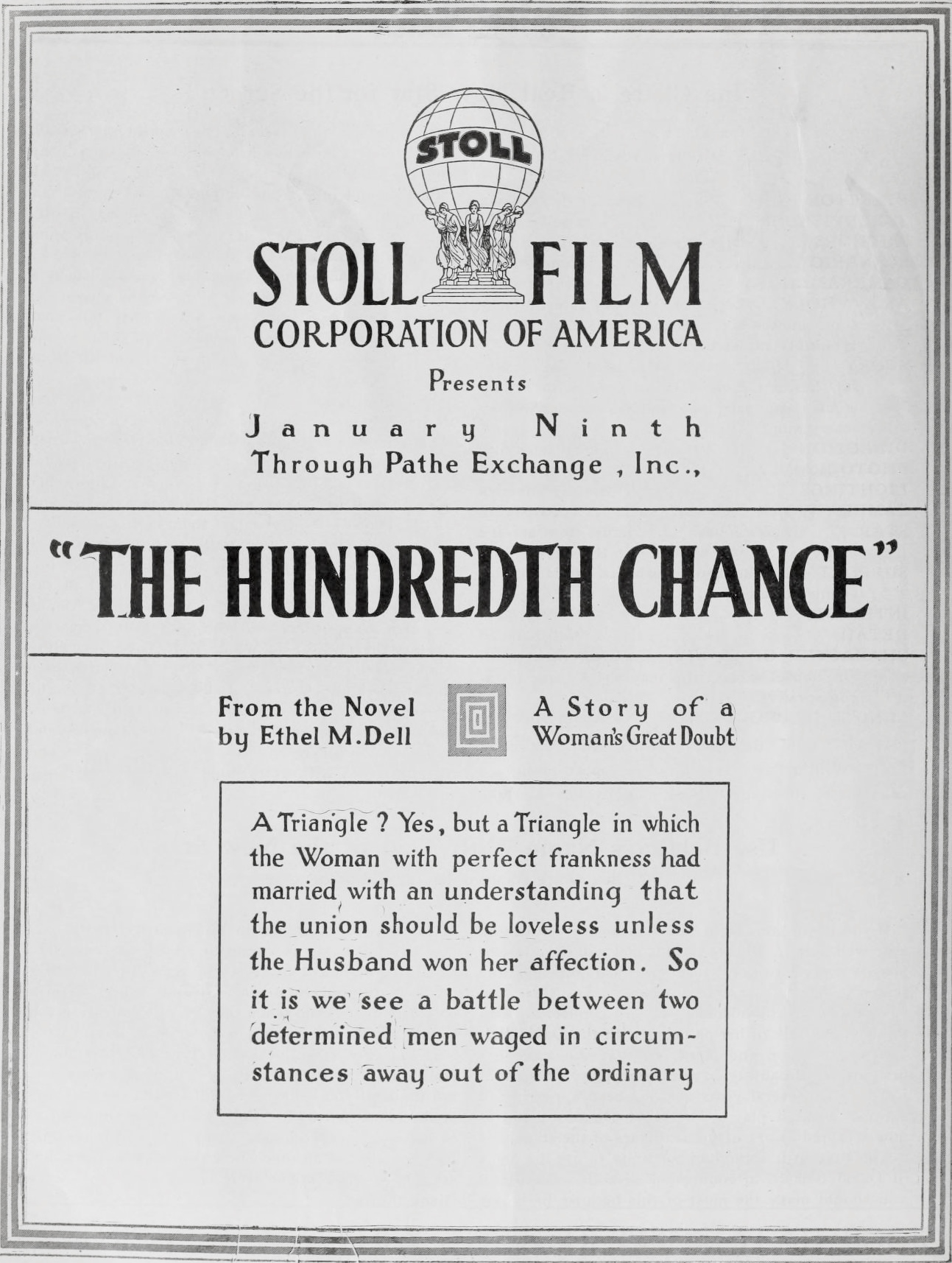
Dir: Maurice Elvey
A lady marries a horse trainer but withholds herself until her crippled brother is cured.
View Details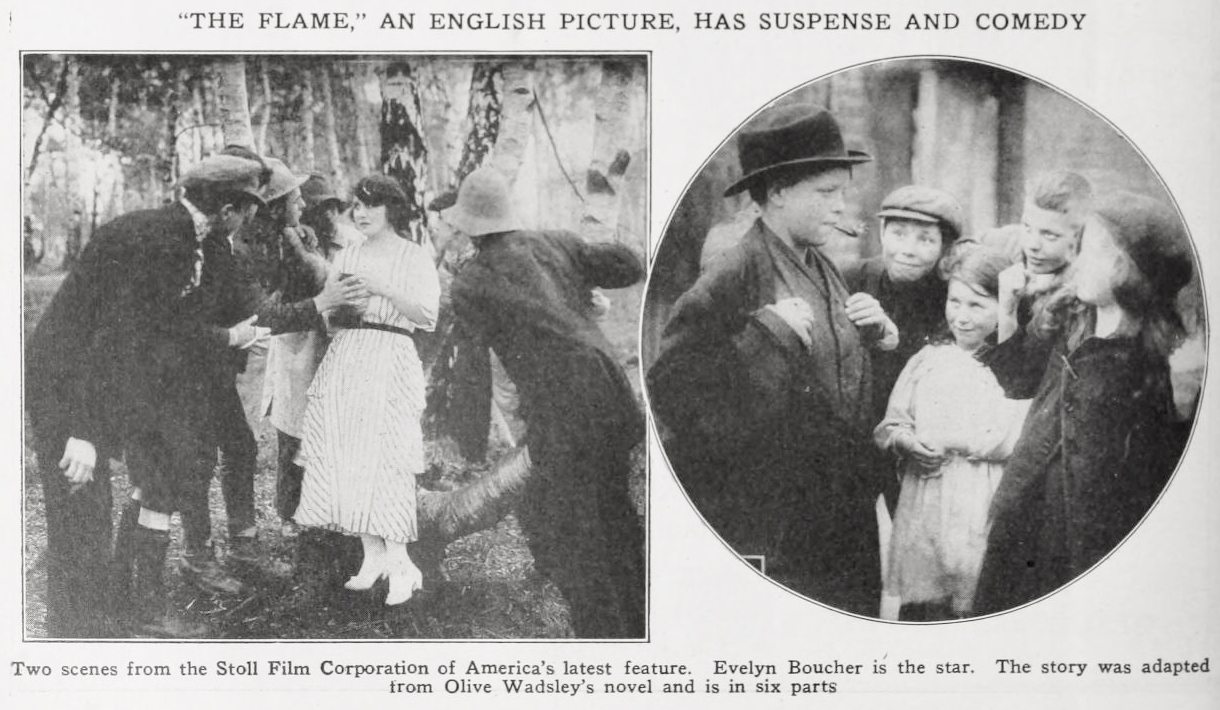
Dir: F. Martin Thornton
In Paris an orphan cartoonist loves a man with a mad wife, who dies in time to prevent her marriage to a jilted Comte.
View Details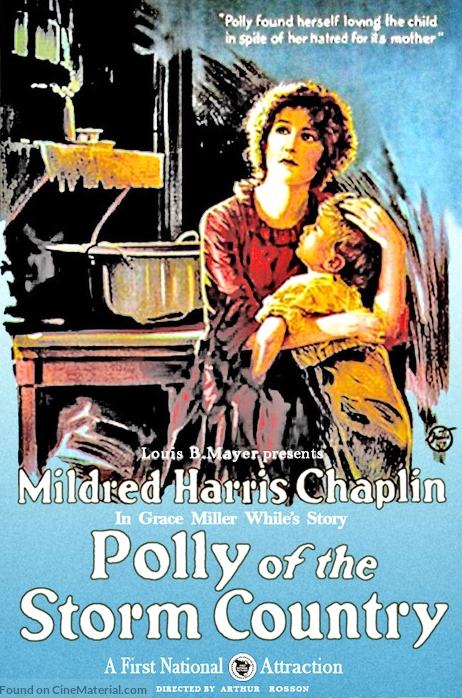
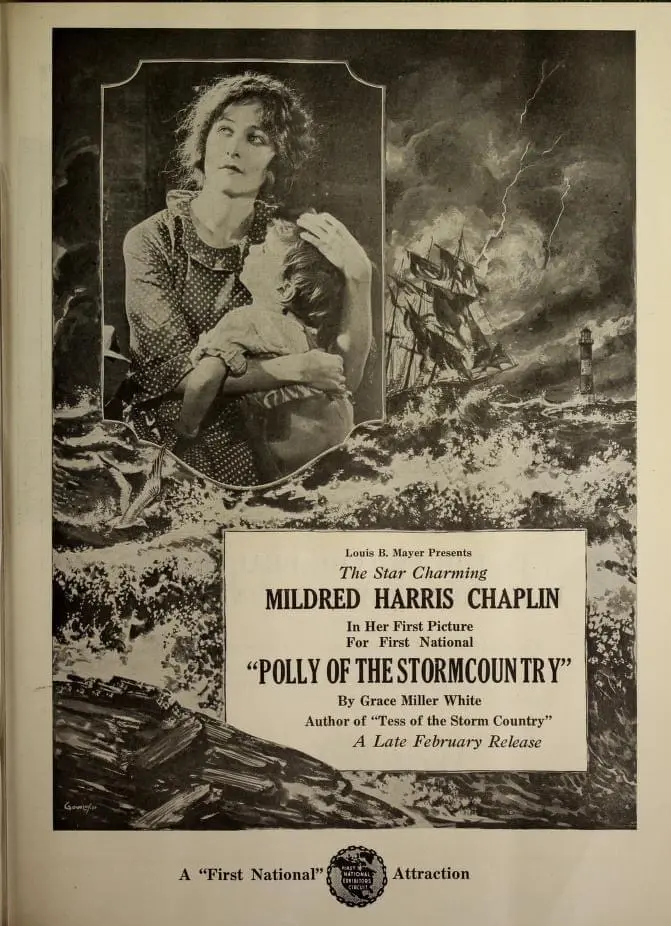
Dir: Arthur Rosson
The Hopkinses are a family of squatters struggling against the wealthy landowners or "hilltoppers." When Jerry Hopkins is unjustly imprisoned, his young wife and baby die as a result of the shock, but his sister Polly maintains the faith that has been instilled in her by her grandmother. Later, Polly meets hilltopper Robert Robertson and the two fall in love. Their courtship is disrupted when Robert's sister Evelyn is blackmailed by Oscar Bennett, the man to whom she is secretly wed. In her efforts to help Evelyn, Polly falls under unjust suspicion. Meanwhile, MacKenzie, one of the vindictive landowners, arrests Polly's father and sends her brother to an orphanage. Devastated by these events, Polly's grandmother dies of grief and Polly swears revenge. She has Evelyn kidnapped and brought to her cabin, but the memory of her grandmother prevents Polly from harming her tormentor. Polly's nobility inspires Evelyn, who exonerates Polly, thus clearing the path for her marriage to Robert.
View Details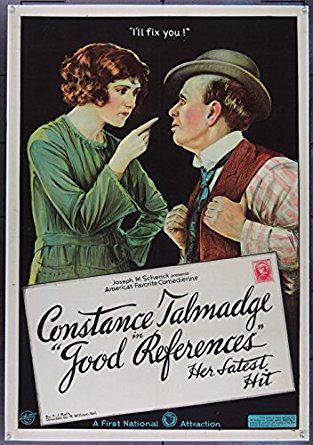
Dir: Roy William Neill
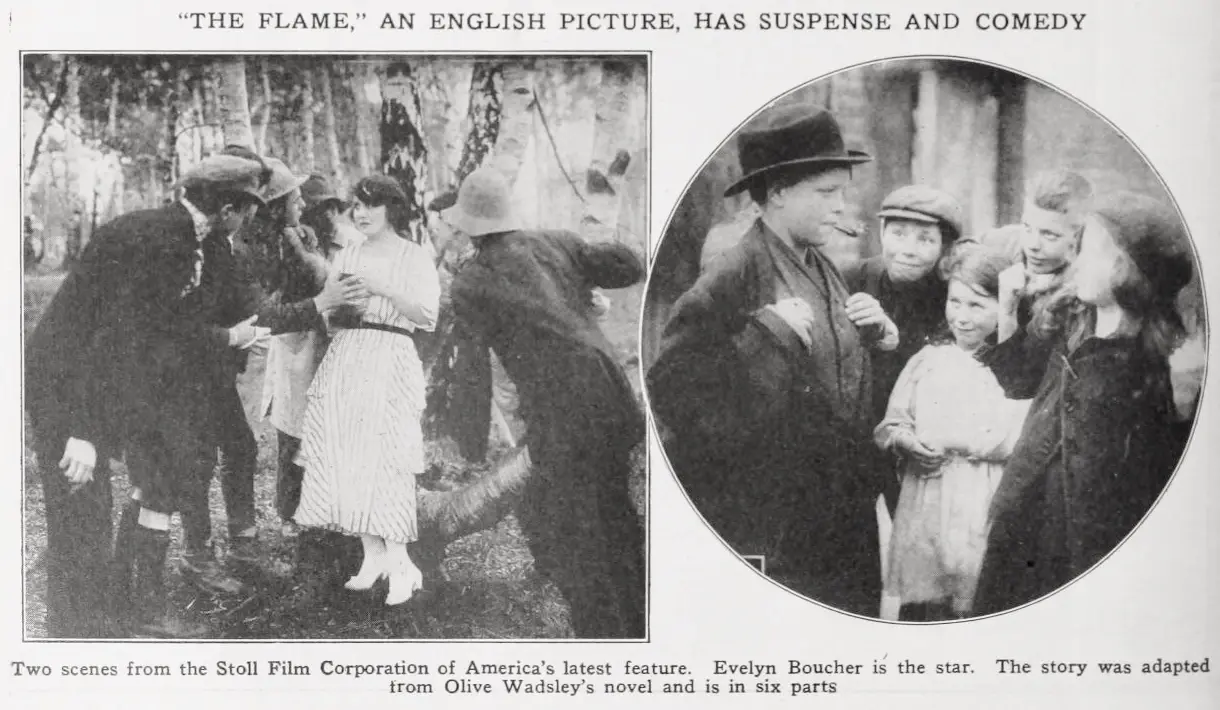
Mary Wayne (Constance Talmadge) is left alone and penniless in New York City after her father dies. She desperately needs a job after being thrown out of her apartment for causing a small fire while cooking. At an employment agency she becomes fast friends with a sick girl, Nell Norcross, and assumes her identity and good references to start work as a secretary for elderly socialite Caroline Marshall, which soon involves playing wrangler to the lady's college-dropout nephew William "Bill" Marshall (Vincent Coleman). Bill is much more interested in going to illegal boxing matches with his buddy Peter Stearns (Ned Sparks) than in throwing lavish dinner parties for his family's high-society friends. While Mary tries to do her job and keep her true identity from being discovered, William begins to fall in love with her.
View Details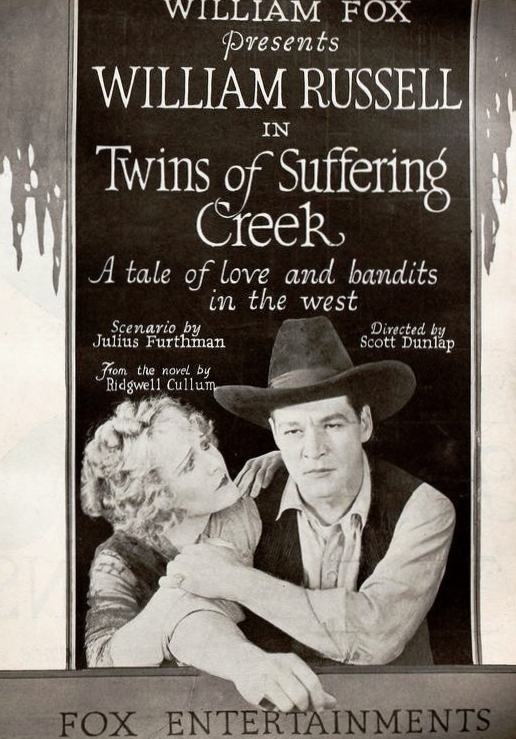
Dir: Scott R. Dunlap
When saloon owner Bill Lark detects that gambler Jim Pemberton is cheating, both men draw their guns. In order to prevent a double killing, it is agreed that the first shot should be decided by a draw from a deck of cards. Bill loses and Pemberton gives him three days to live. Meanwhile, Pemberton has persuaded Jess Jones to leave her husband and ride with him to his cabin in the hills where he is chief of a gang of bandits. Upon discovering his wife's absence, Scipio Jones follows Jess but is driven away by Pemberton's gang. After Jones fails, Bill retrieves Jess and brings her home. The next day, Bill is severely wounded when he drives a stagecoach through an attack by Pemberton's gang, but escapes to keep his date with the outlaw. Arriving to accept his fate of the last draw, Bill discovers that the outlaw has been killed by Scipio Jones. Provided with a new lease on life, the honest saloon keeper marries his sweetheart Little Casino.
View Details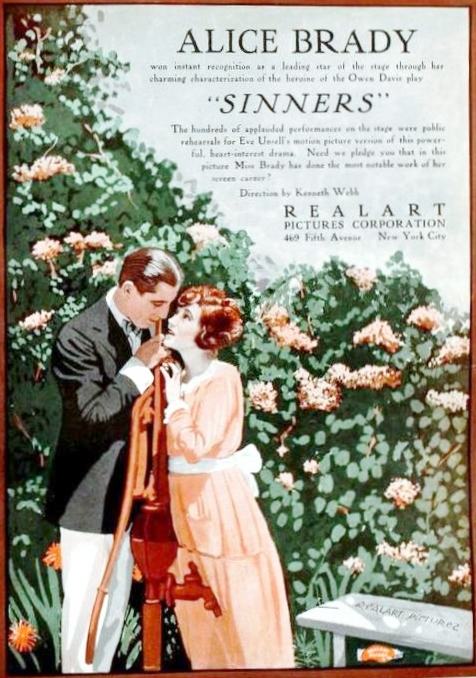
Dir: Kenneth S. Webb
Mary Horton, a country girl, moves to New York to make her living as a seamstress, where she meets Hilda Newton, an old neighbor who has renounced her country ways for the immoral life of the city. Mary moves in with Hilda and meets Bob Merrick who, charmed by the girl's innocence determines to protect her. Just as she is about to succumb to evil influences, Mary is called home to her mother's sickbed where she is denounced for her evil ways by her former sweetheart, Horace Worth. However, when Hilda's friends decide to visit Mary, Bob Merrick defends her reputation and proposes to her. The couple decide to remain in Mary's country village, while Hilda and her friends return to the city.
View Details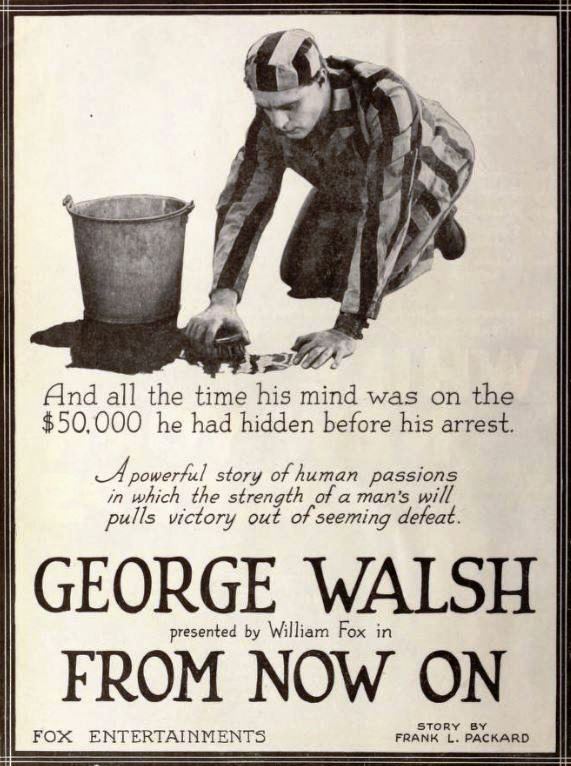
Dir: Raoul Walsh
Dave Henderson, an orphan who has become the beneficiary of a rich man's will, falls in with race-track crooks Martin Tydeman and Bokky Sharvan who bilk him out of his $100,000 inheritance. In retaliation, Dave steals the money from Tydeman's safe, but is caught and sentenced to five years in jail. In prison, Dave becomes friendly with Millman, who is about to be released, and reveals the money's hiding place to him, arranging to rendezvous at the end of Dave's term. Once released, Dave is hounded by members of Tydeman's gang as well as the police, who are waiting for him to retrieve his bounty. While taking refuge at the house of Capriano, an old bomb maker, Dave falls in love with the old man's daughter Teresa. However, Capriano sets a trap for Dave, who awakens in a drugged state to find the $100,000 missing. With the help of Millman and Teresa, Dave recovers the money, turns it over to the police and resolves to go straight.
View Details
Dir: F. Martin Thornton
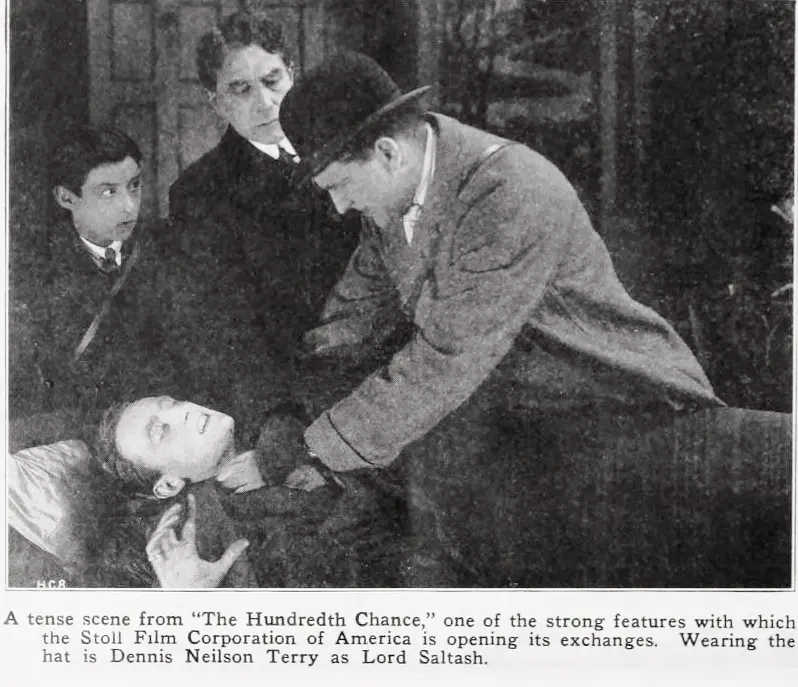
A crooked lawyer schemes to dispossess the heir to a baronetcy.
View DetailsAnalysis relative to Bars of Iron
| Film Title | Atmosphere | Complexity | Similarity |
|---|---|---|---|
| The Corsican Brothers | Tense | Linear | 92% Match |
| Little Lord Fauntleroy | Ethereal | Abstract | 96% Match |
| The Hundredth Chance | Gritty | Dense | 87% Match |
| The Flame | Surreal | High | 97% Match |
| Polly of the Storm Country | Gritty | Abstract | 97% Match |
This guide was algorithmically generated using the cinematic metadata of F. Martin Thornton's archive. Last updated: 8/16/2026.
Back to Bars of Iron Details →