
DbcultAccessing Vault...
Recommendations
Senior Film Conservator
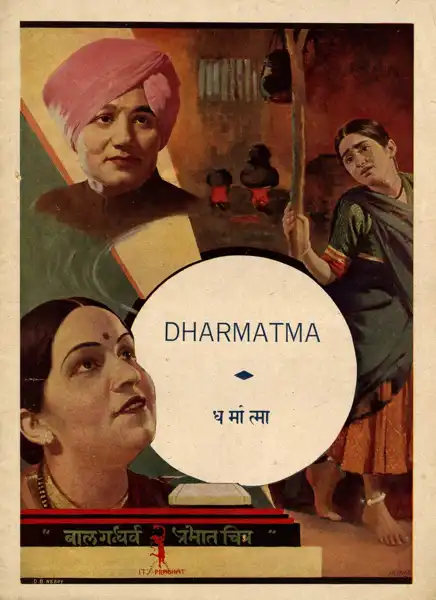
Looking back at the 1935 milestone that is Dharmatma, the cinematic shorthand used by Shantaram Rajaram Vankudre is both ancient and revolutionary. Dive into this collection and find the spiritual successors to Shantaram Rajaram Vankudre's vision.
As Shantaram Rajaram Vankudre's most celebrated work, it defines to articulate the unspoken anxieties of India's 1935 era.
This saint film is about Sant Eknath (1533-99), a major Marathi poet, author of the Eknathi Bhagvata and numerous abhangas evoking folk poetry, especially the bharuda form of solo performances. The film focuses on Eknath's humanitarian defence of the 'untouchable' castes. Opposed by the evil Mahant (Kelkar/Chandramohan), Eknath becomes a social outcast when he arranges to have the lower-caste people fed before the Brahmins during a prayer meeting at his house, compounding the offence by going to eat in one of their houses. The drama is heightened by Eknath's son Hari Pandit (Kale) who joins the ranks of the opposition. The happy ending occurs when the film transcends the food motif and Eknath defends himself by reading his poems to the Pradayananda Shastri of Kashi.
Based on the unique cinematic excellence of Dharmatma, our vault has identified these titles as the most compelling follow-up experiences for fans of cult cinema:
Dir: Shantaram Rajaram Vankudre
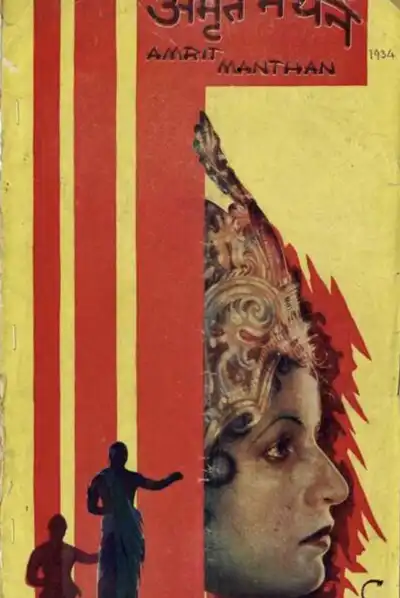
This classic opens with a sensational low-angle circular track movement as Chandika cult followers meet in a dungeon of flickering lights and deep shadow. As the more rationalist King Krantivarma (Varde) banned human or animal sacrifices from the increasingly fanatical festivals dedicated to the goddess, the cult's high priest (Chandramohan/Date) orders the hapless Vishwagupta (Kelkar) to kill the king. He obeys but is then betrayed by the perfidious priest and caught. His son Madhavgupta (Mane) and daughter Sumitra (Apte) together with the princess (Tarkhad) and the people finally overthrow the priest. There are several famous scenes, including the twice-told legend of the churning of the seas, once by the priest to show how evil must be exorcised, and again by a good general to show how demons often appear disguised as gods. Although invoking divine intervention when Madhavgupta is about to be sacrificed, the film's strongly political thrust has the people rise in revolt.
Dir: Shantaram Rajaram Vankudre
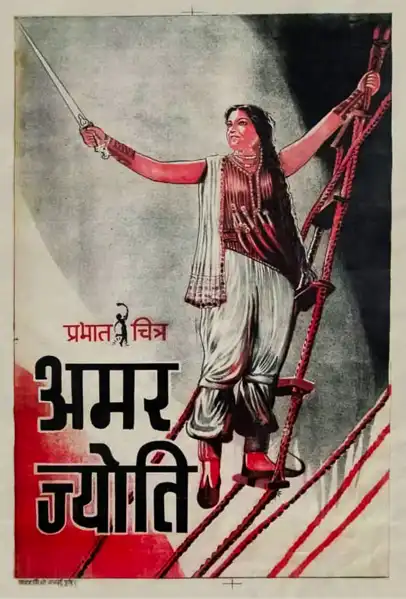
Adventure classic featuring Durga Khote's most memorable role as the pirate Queen Saudamini. Faced with extreme patriarchal laws in an ancient seaport kingdom and denied the legal custody of her infant son Sudhir, Saudamini becomes a pirate declaring war on the state, and especially on its tyrannical minister of justice, Durjaya (Chandramohan). She attacks a royal ship and captures Durjaya, inadvertently also taking Princess Nandini (Apte). In captivity, Durjaya declares his love for Nandini but she falls fir a shepherd boy (Nandrekar) who turns out to be Saudamini's long-lost son Sudhir. Durjaya's men then capture Saudamini and a palace intrigue ensues marked by her emancipatory rhetoric and the universal humanist arguments of her adviser Shekhar (Kale).
Dir: Shantaram Rajaram Vankudre
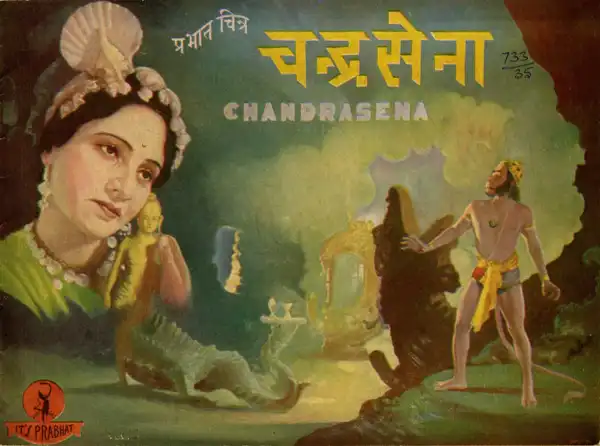
This special-effects laden film is based upon an episode from the Ramayana. Indrajit, son of Ravan, initiates an attack on Rama (Mane) and Lakshmana (Kulkarni) in which they are captured by Mahi (Kelkar). They escape with the assistance of Rama's disciple, the monkey-god Hanuman (Manajirao). The narrative foregrounds Chandrasena (Tarkhad), wife of Mahi, who reveres Rama but disapproves of the bacchanalian orgies and the celebration of liquor that is the norm in his kingdom. She helps resolve the stalemate of the battle when Mahi (who can duplicate himself and his dead soldiers) proves invincible, by revealing the secret formula that will kill her husband. In addition to the usual flying figures and magic arrows mandatory for a Ramayana mythological, there is an effective scene of a gigantic Hanuman picking up a miniaturized human figure.
View DetailsAnalysis relative to Dharmatma
| Film Title | Atmosphere | Complexity | Similarity |
|---|---|---|---|
| Amrit Manthan | Gothic | Abstract | 97% Match |
| Amar Jyoti | Gritty | Linear | 95% Match |
| Chandrasena | Ethereal | Dense | 95% Match |
This guide was algorithmically generated using the cinematic metadata of Shantaram Rajaram Vankudre's archive. Last updated: 8/17/2026.
Back to Dharmatma Details →