
DbcultAccessing Vault...
Recommendations
Senior Film Conservator
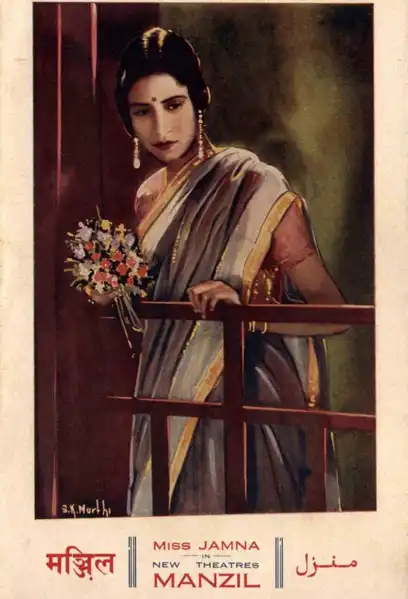
For cinephiles who admire the cinematic excellence within Manzil, the specific cinematic excellence of this work is a gateway to a broader cult world. We've prioritized films that capture the 1936 aesthetic with similar precision.
At its core, Manzil is a study in to create a dialogue between the viewer and the cinematic excellence.
The poor but educated Mahim and his childhood friend, the rich but conservative Suresh, both fall in love with the same woman, the liberated Achala. Mahim marries her and they move to a village but she cannot forget Suresh. Her smouldering unhappiness takes the form of a resentment towards the orphaned Mrinal, raised by Mahim's father, and receives a dramatically visual embodiment when their house burns down. Mahim falls ill, is rescued by Suresh and nursed back to health by Achala. On a train (a metaphor for the irreversibly linear course of life) to a health-resort where Mahim is supposed to convalesce, Suresh on a rainswept night gives in to temptation and elopes with Achala. At the end of the film, there is a dubious reconciliation as Achala is shown following Mahim's 'good' traditionalism with Saratchandra's barely concealed hostility towards Achala's liberated Brhamo Samaj upbringing.
Based on the unique cinematic excellence of Manzil, our vault has identified these titles as the most compelling follow-up experiences for fans of cult cinema:
Dir: P.C. Barua
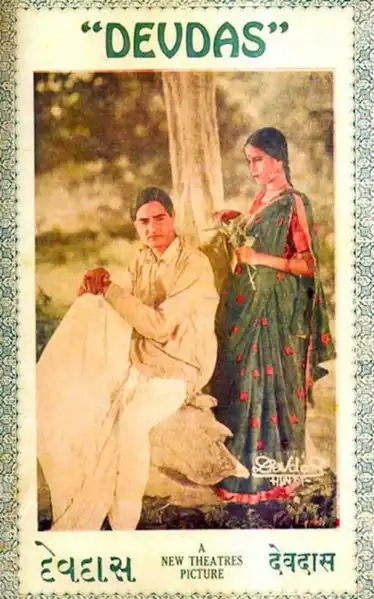
Devdas, the son of Zamindar Narayan Mukherjee, was born with a silver spoon in his mouth. He grew up in the lush village of Taj Sonapur, where he spent his childhood, indulged by his lovely playmate Paro. They grew up sharing a special relationship, in which they existed only to each other. Oblivious of all the differences of status and background, a bond that would never break grew between them. Slowly, it changed to love but it was still unsaid. But the reverie was broken when his family sent Devdas to Calcutta for education. Paro's world crashed knowing that her Devdas would be gone and she lit a diya, for it signified the fast coming back of her loved one. Years passed and Devdas returned. Devdas was besotted by her stunning beauty and longed to have her back. But Zamindar Narayan Mukherjee, Devdas' father, met Paro's mother Sumitra's marriage proposal with condescending arrogance. It caused a rift between the families and even though Devdas tried to convince his father, the only antagonism came his way. Finally, he moved away from Paro and wrote a letter to her, asking her to forget him. Only, he didn't realize that he would never be able to forget her ever. And much later, when he reached out to her, it was too late as she was far too humiliated. She scorned him for not standing by her and they parted forever with a heart-broken Paro entering into a chaste marriage with a wealthy, much older man, Zamindar Bhuvan, while a shattered Devdas walked towards anguish, alcoholism and Chandramukhi. Chandramukhi, a stunning courtesan instantly lost her heart to Devdas. A unique bond was formed between both as he could share with her the intense pain of his unfulfilled love for Paro. Meanwhile, Paro, on the other hand, performed her worldly duties sincerely, but inside her heart, she could never forget Devdas for a moment. Strange was the fate of Devdas. Intensely loved by two women, who were never meant to be his.
View DetailsAnalysis relative to Manzil
| Film Title | Atmosphere | Complexity | Similarity |
|---|---|---|---|
| Devdas | Gritty | Layered | 96% Match |
This guide was algorithmically generated using the cinematic metadata of P.C. Barua's archive. Last updated: 6/23/2026.
Back to Manzil Details →