
DbcultAccessing Vault...
Recommendations
Senior Film Conservator
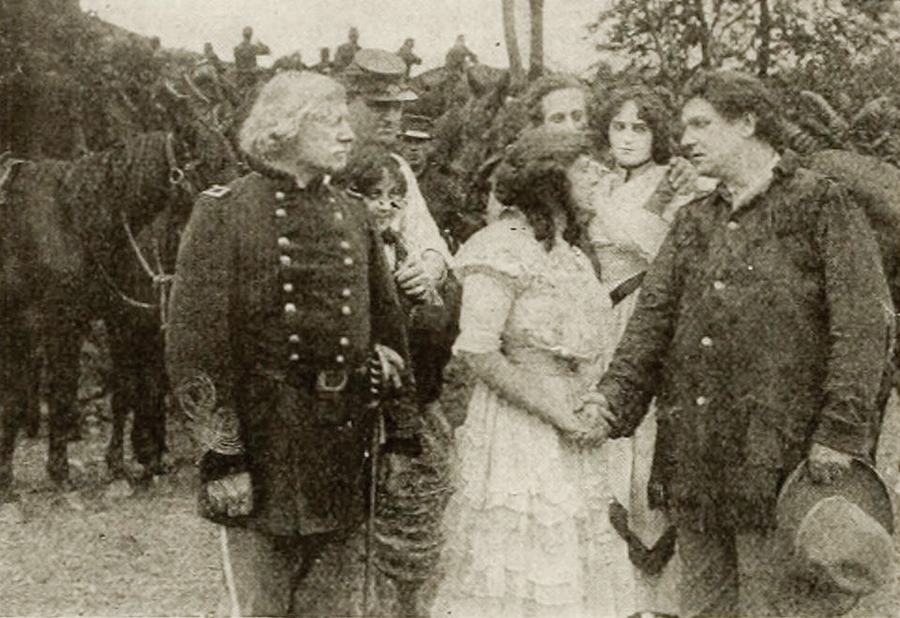
Navigating the complex narrative architecture of Northern Lights is a cinematic excellence experience, the emotional payoff of the 1914 classic is what fans crave in similar titles. The following gems are essential viewing for anyone captivated by Northern Lights.
The artistic audacity of Northern Lights ensures it to define the very concept of cinematic excellence in modern film.
Captain Gray, of the United States Army, detailed to quell the Indian uprising, is wounded. A courier is dispatched to Gray's home with the news. Mrs. Gray, about to become a mother, receives a violent shock at the recital of the details of her husband's injury by the courier. The child born at this inopportune time is Wallace Gray. The prenatal influence exercised over the child at the time of his mother being informed of her husband's injury marks him as a coward. The report of a shot or the sound of an explosion throws the lad into spasms of fear. He is sent to college and there forms a strong comradeship with Swiftwind, an Indian, sent by his tribe to be educated. Wallace also forms a strong attachment for Florence Dunbar, a ward of his father, who is now Colonel Gray. Swiftwind is made acquainted with the moral defect inherent in Wallace and pities and protects him whenever the lad is made the subject of the jeers of his friends because of his born defect. Swiftwind becomes a graduate physician and receives a commission as assistant army surgeon, detailed to Fort Terry, in command of Colonel Gray. His immediate superior is Dr. Sherwood, an unscrupulous man. Florence Dunbar and Wallace Gray, traveling in a stagecoach to Fort Terry, are attacked by Indians. Wallace, with a cringing fear, deserts his companion, who is saved only by the timely arrival of Dr. Sherwood and troops. Sherwood marries Florence, nothing more being heard of Wallace, who, however, enlists in another regiment under General Crook, deserts under fire, and ultimately surrenders himself to his father, in the hope that he will be condemned to death. The boy, however, is sentenced to the "pyramids." While working under "ball and chain" he hears that his father and a small band of Americans are hemmed in a canyon by Indians with no hope of relief. The latter, having observed the Northern Lights in the heavens, follow their belief that the "Lights" foretell victory in battle and start on a massacre. General Crook calls for a volunteer to pass through the Indian lines to deliver a message to Colonel Gray. Swiftwind volunteers, but being weak from exhaustion and privation, falls as he is about to commence his ride. Wallace begs for the opportunity to redeem himself, and mounting his horse, arrives with the message to the besieged band just as they are about to recognize a false flag of truce of the Indians. Sherwood attempts to kill his wife by substituting cholera germs in a bottle labeled morphine. He is injured, however, and Swiftwind, intending to alleviate Dr. Sherwood's suffering with morphine, inoculates him with the cholera germs, unwittingly putting an end to him. Wallace's redemption restores him to the affection of Florence, whom he marries.
The influence of Edgar Lewis in Northern Lights can be felt in the way modern cult films handle cinematic excellence. From the specific lighting choices to the pacing, this 1914 release set a high bar for atmospheric immersion.
Based on the unique cinematic excellence of Northern Lights, our vault has identified these titles as the most compelling follow-up experiences for fans of cult cinema:
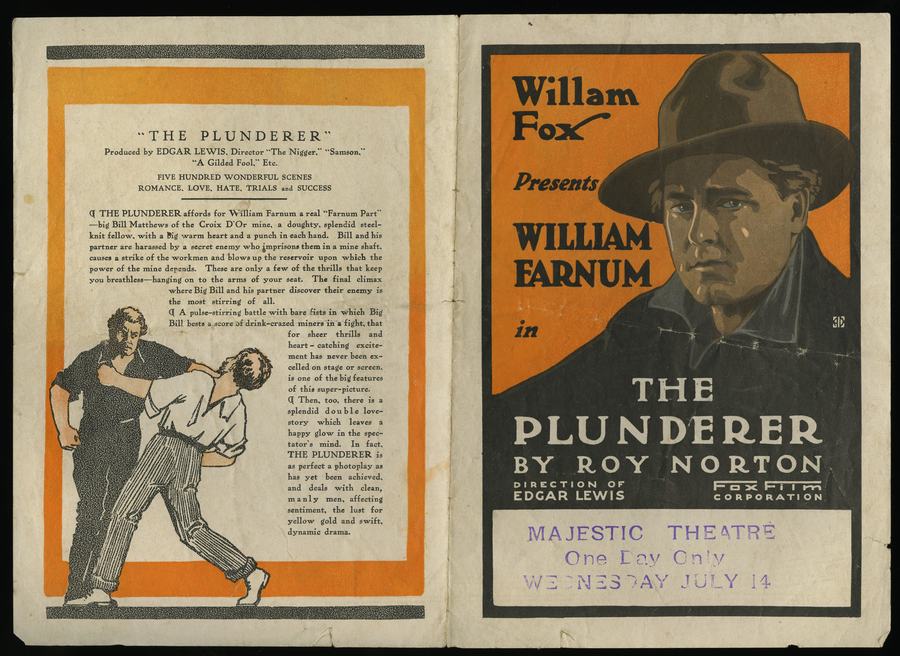
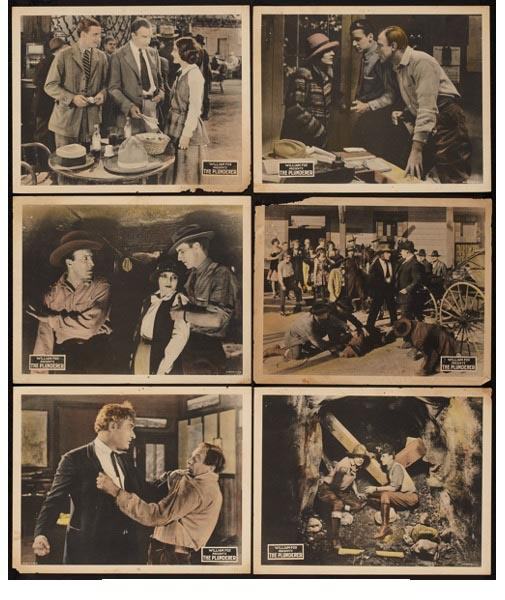
Dir: Edgar Lewis
Bill Matthews and his partner, owners of the "Croix D'or mine, are beset on all sides dues to the schemes of a trusted colleague who plots to take their mine away from them, and leaves no under-handed method un-attempted in the process.
View Details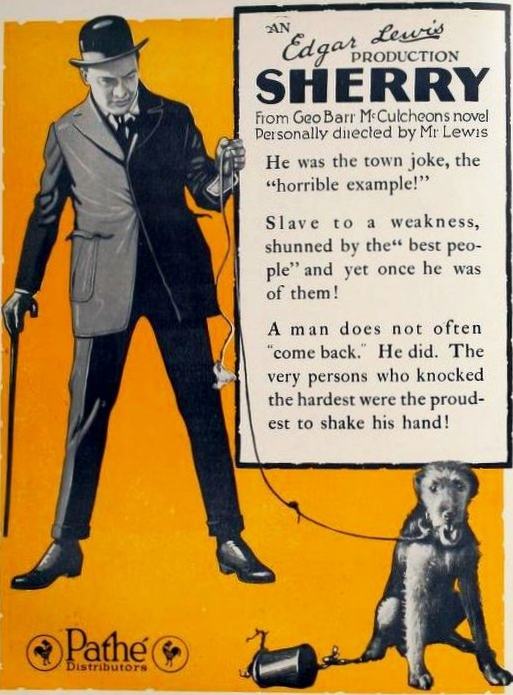
Dir: Edgar Lewis
After Sheridan Redpath, known as Sherry, squanders the last of his inheritance on drink, he plucks up his courage and decides to go to work. Employed as a bodyguard by Andrew Gilman, the richest man in town, Sherry is on duty one night when he discovers burglars ransacking the neighboring Compton residence. Entering the house, he captures two men, one of whom proves to be Gilman's stepson. Subsequently, the two rogues break jail and are pursued by the sheriff's posse, of which Sherry is a member. Gilman's stepson takes refuge in his mother's apartments, and in the ensuing gunfire, both son and mother are killed. Sherry then becomes a power in the Gilman business and, once again solvent and sober, marries his sweetheart, Morna O'Brien.
View Details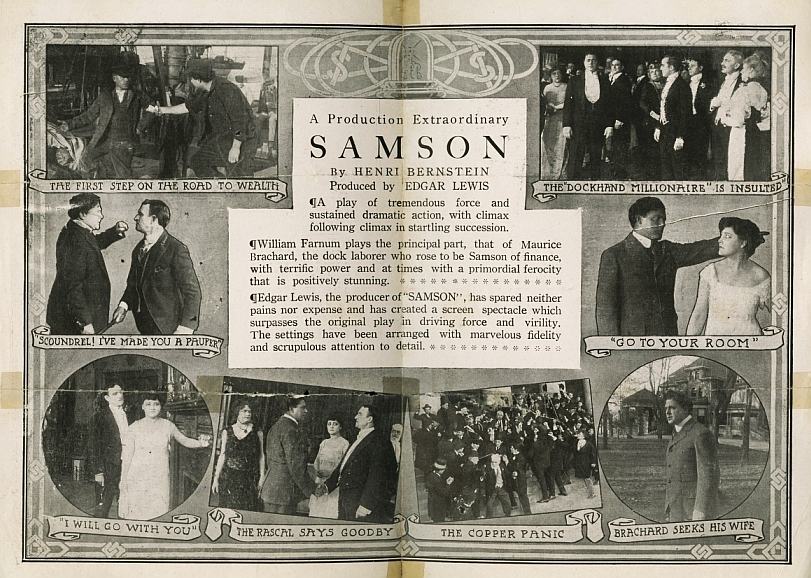
Dir: Edgar Lewis
Murice Brachard, a dock laborer, rises to be a "Samson" of finance with terrific power and a primordial ferocity, which he needs when his wife spurns his devotion, and people he trusts try to pull down the structure of wealth he has erected.
View Details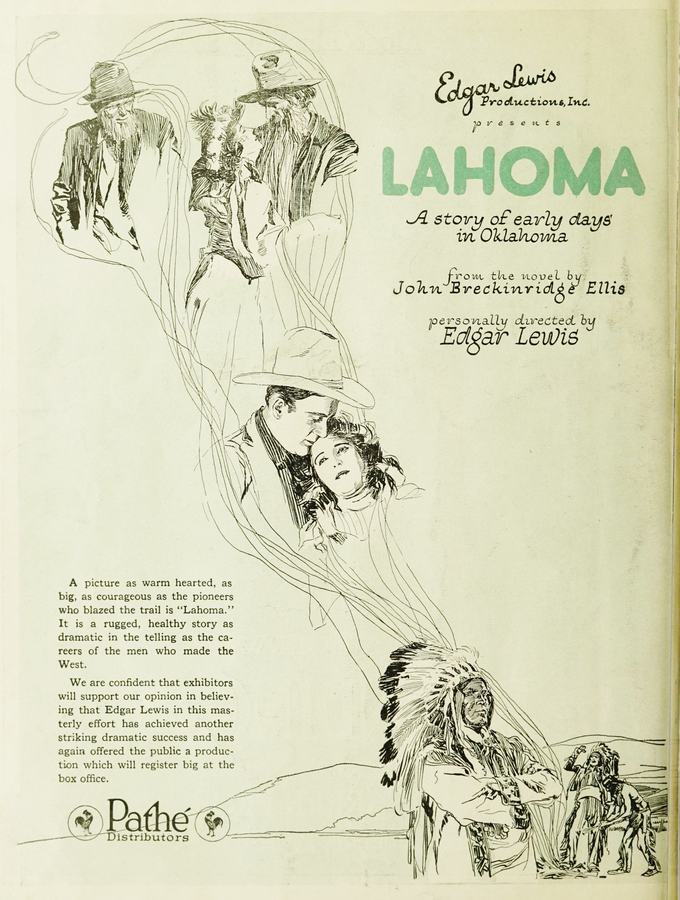
Dir: Edgar Lewis
In Oklahoma, kindhearted outlaw Brick Willock rescues little Lahoma Gledware and her father Henry from certain death at the hands of his outlaw band. In the course of the rescue, he kills Kansas Kimball, the brother of the outlaws' leader Red Kimball, who vows vengeance against Brick. Brick renounces his life of crime, and after Gledware relinquishes custody of his daughter to marry an Indian princess, the old cowboy gives refuge to the little girl, raising her with the help of neighbor Bill Atkins. Years later Easterner Will Compton comes to Oklahoma to homestead, meets Lahoma and falls in love with her, but is forced to leave by Brick. While visiting Kansas City, Lahoma overhears Kimball plotting to kill Brick by swearing out a phony warrant for his arrest, but she foils his plan. Outwitted, Kimball takes revenge into his own hands and shoots Brick, only to fall in his tracks from Brick's own gun as the old outlaw breathes his last breath. Will returns to console Lahoma and the couple are married.
View Details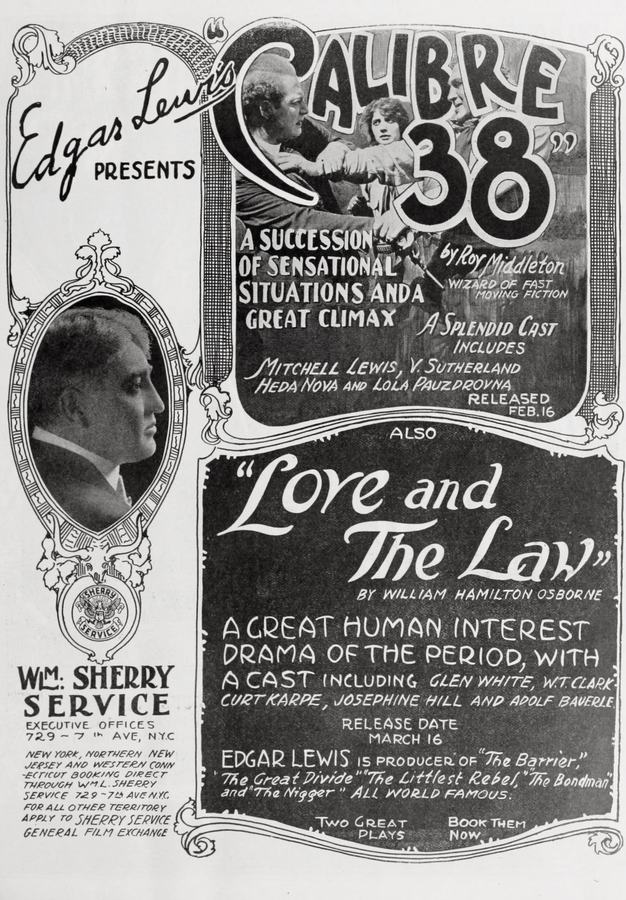
Dir: Edgar Lewis
Karl "Curly" Casterline, a wrongfully discharged New York City policeman, finds work on the Midwestern farm of Adolf Bauerle to help the war effort. Curly is attracted to his boss's niece, Mina, but also realizes that Adolf and his cohort, Kurz, plan to blow up a troop train. Curly kills the two saboteurs and saves the train, but he is jailed by the abusive Sheriff Herman Lindig. Although Mina praises Curly for saving the soldiers' lives, he is sentenced to death and is denied a pardon from the governor. After the case attracts national attention, the governor explains that he prolonged Curly's incarceration to draw attention to the danger of German propaganda. Curly marries Mina and is later pardoned by the governor, who enlists him as an officer to protect the state from its enemies. Sheriff Lindig and his German conspirators are convicted and escorted to federal prison by Curly.
View Details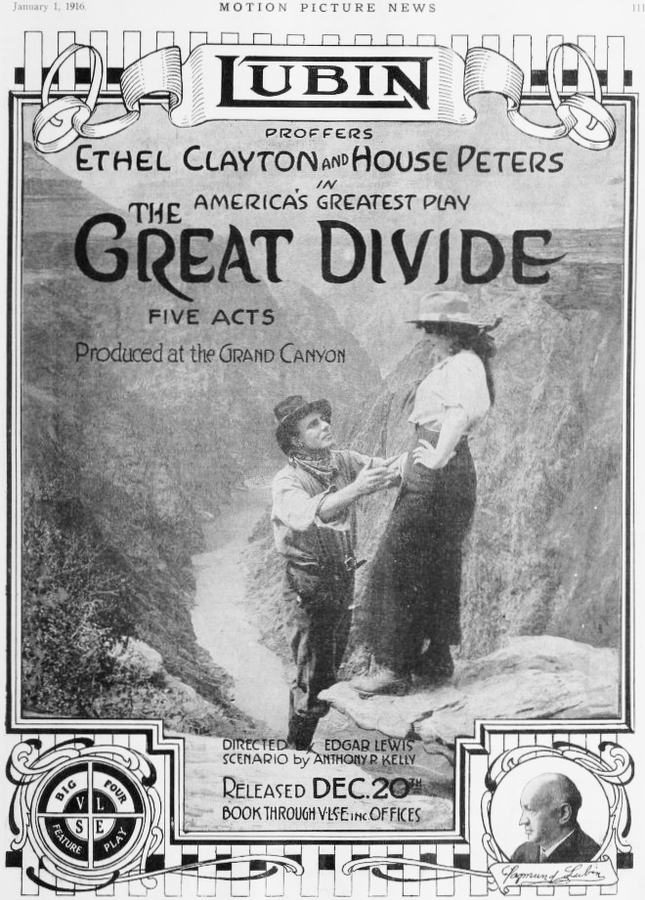
Dir: Edgar Lewis
The Jordans, Phil and Ruth, accompanied by Philip's wife, Polly, and Dr. Winthrop Newbury, a suitor for Ruth's hand, bid old Mrs. Jordan good-bye at the station of Milford Corners, Mass., and depart for the west, to work over some unredeemed desert land, which was left to the Jordans by their dead father. Arriving in the west, they take up their work, but it proves anything but a success. On the brink of the Great Divide lives Stephen Ghent, an untamed and untrained man of the west, and on account of his manner is respected by the habitués of Miller's saloon and dance hall in the town, which he and two of his acquaintances in the persons of Pedro, a half-breed Mexican, and Dutch, a brutal type of the west, frequent. Polly tires of western life and jumps at the chance to take a trip to Frisco. Philip drives her down to the station that night. On an adjoining ranch a cowpuncher is seriously hurt and a boy is dispatched for Dr. Newbury. After cautioning Ruth to retire early, the doctor takes his leave. Stephen Ghent, Pedro, and Dutch are down in the town drinking. They afterward depart and start up the Coldwater Trail, which runs alongside of the Jordan home. As they pass the dimly lighted cabin, they see a woman standing in the doorway. Cautiously approaching the door, they enter the cabin and Ruth is overpowered. Dutch and Ghent fight a duel for her in which Dutch is killed. Pedro is bought off by Ghent with a string of nuggets, and Ruth belongs to him. In the man of the woods, Ruth recognizes the ideal man she desires for a helpmate. Ruth agrees to marry Ghent and live as his wife in name only until he has changed his character. Ghent agrees and they are married. Ghent then brings her to his cabin. As day by day goes by, Ruth begins to see other qualities in her husband and also to believe in him. One night, however, Ghent filled with a desire for her and goaded on by the whiskey that is in him breaks his promise. Ruth denounces him for his actions and tells him that not until he has purged himself through suffering will she ever believe in him again. She also tells him that she is going to earn enough money to buy back the string of nuggets from Pedro, with which he managed to get her into his power. Some time later Ruth departs for town to sell her last blanket. She has been weaving Navajo blankets in order to raise the necessary amount to buy back the nuggets. In the meantime the Jordans become disgusted and prepare to go back east. While waiting at the station they find Ruth, who has just completed the sale of her blanket. They see her start up the trail and follow her on foot. Ruth buys back the string of nuggets from Pedro, but she has not time to turn it over to Ghent upon her arrival at the cabin before she is overtaken by the others. It is her desire to have them believe she is happy and refuses to go back east with them. She introduces Ghent to them just as they are ready to catch the train. Ghent, unable to understand her changed attitude, starts to thank her. She tells him that circumstances forced her to act as she did, but that she is now able to buy back her freedom from him. Ghent is stunned, and at first refuses to let her go, but when she tells him of the life that is to come and that it is their duty to protect its happiness through a mother's love, he finally releases her from her promise, and Ruth, with the sense of newfound freedom, starts down the trail to overtake the others before it is too late. Ghent's attention as he looks after her is suddenly attracted to a bit of trembling earth on the mountainside. He realizes the great danger that Ruth is in and starts down the trail to rescue her. He is just in time and has thrown her to one side when the landslide comes upon him and carries him into the valley below. The rumbling sound has caused the others to look back. A reunion takes place over the injured Ghent. He is brought to the cabin, where he recovers under the care and attention of Dr. Newbury and Ruth. Ruth tells him that he has purged himself through his suffering and once more the couple start out in life upon a happier basis.
View Details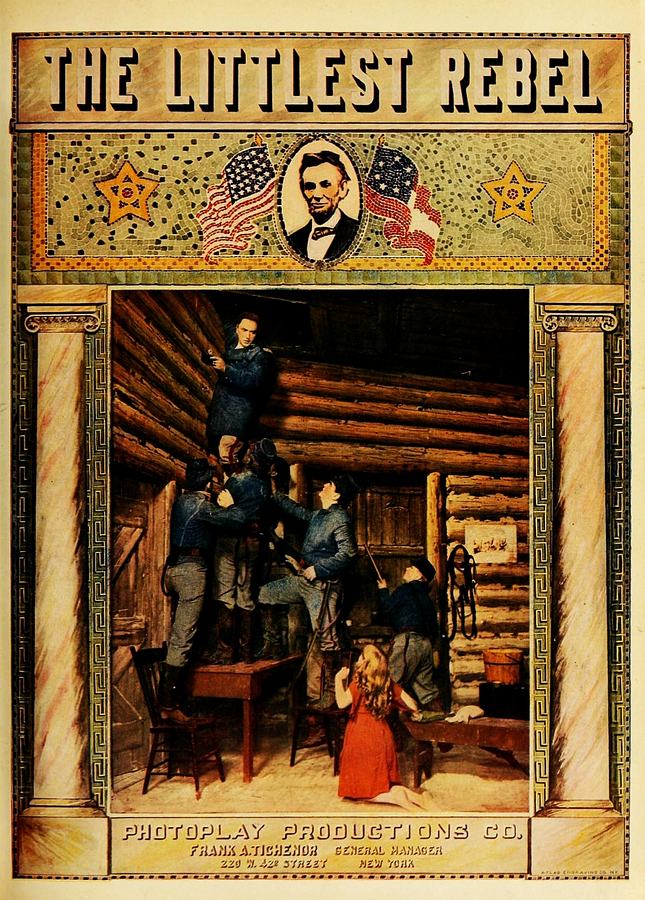
Dir: Edgar Lewis
Herbert Carey discharges the Dudley brothers, Joe and Jim, from their positions as overseers on his plantation and thereby incurs their enmity. War is declared and Carey, after bidding his wife and daughter Virgie farewell, joins the Southern forces, the Dudleys joining the Northern. The spring of '61 finds Carey the most dangerous and daring of Confederate scouts. The Dudleys are under the command of Colonel Morrison, a dashing, chivalrous young Northern officer. Grant closes in on Richmond and orders Morrison to capture Carey. Morrison takes a small detachment of troops, including Jim Dudley, and going to the Carey homestead, searches it. Dudley, seeing a chance for revenge, sets fire to the house, but in endeavoring to escape is shot and killed by Morrison, who has discovered his treachery. Penniless and with the house in ruins, Mrs. Carey and Virgie finally seek shelter in their former overseers' deserted cabin. Mrs. Carey sinks down and finally dies. Carey, hearing of this, gets to the cottage and assists Uncle Billy to bury her. Carey, wishing to remove Virgie to Richmond, receives a pass from Lee permitting Virgie and an escort to go through the Confederate lines. As he goes to the cottage to deliver the pass to Uncle Billy he is discovered and captured in it by Morrison. Carey tells him why he had come and Morrison's heart, being touched, he also gives Carey a pass through the Northern lines, telling him to take Virgie into Richmond himself. Joe Dudley discovers this and informs the Northern officer that Morrison has given a pass to Carey, the notorious scout, to pass through the Northern lines. Carey and Morrison are captured, court-martialed and sentenced to be shot. Little Virgie, hearing of this, goes to Grant and pleads with him to save her "Daddy." Carey is called before Grant and tells his story. Grant's heart is touched and he releases Carey telling him that though he cannot honor Morrison's pass, he can honor that of General Lee. Morrison is released also, and Carey and The Littlest Rebel. Virgie, are once more reunited. After the war finds Morrison, his wife and child, meeting Carey and Virgie over his wife's grave; the North and South join hands. The Confederate flag is seen meeting the Stars and Stripes; they flutter for a moment, then slowly intertwine and the picture fades away.
View Details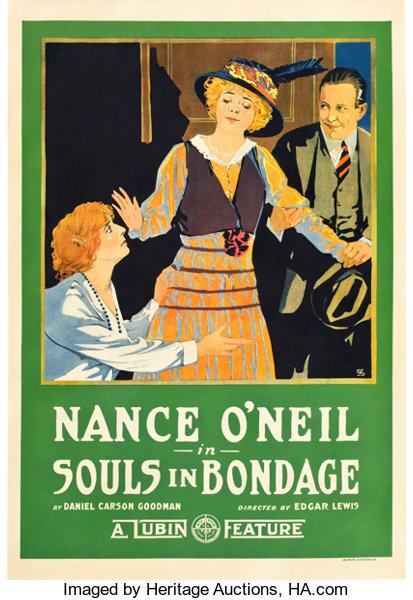
Dir: Edgar Lewis
Rosa is looked upon as an outcast, and is always in the shadow of her spoiled younger sister Rita.
View Details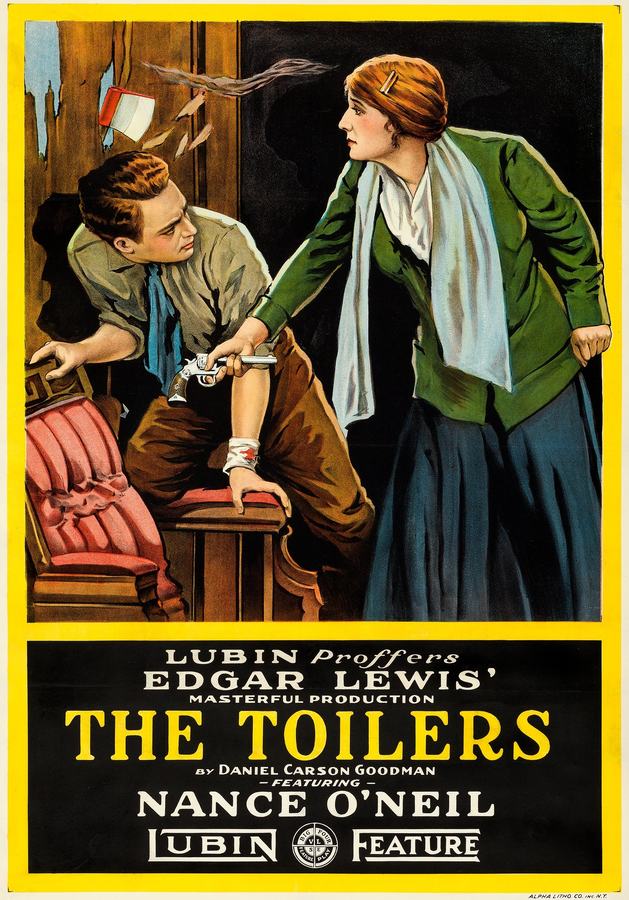
Dir: Edgar Lewis
The scene is set in the Pennsylvania petroleum region. Oil worker William Brett has used his scanty hoard of savings to send his daughter Jane to the city to secure a higher education. Completing her course as a trained nurse, Jane visits her old home. Amid the settlement's corroding influence, her brother becomes a thief. Jane's sister Annie falls a prey to the blandishments of a tempter from the city. Fired with indignation against the injustice of affairs, Jane devotes herself to the double mission of avenging and of righting the wrongs of which her family and the community in general have been subjected. Her father is seriously hurt in an accident at work, and his pay is stopped. Jane hastens to the city, determined to make an effort to awaken William Jameson, the millionaire owner of the oil field, to a realization of the wrongs imposed upon the workers. She arrives at a time when the millionaire's son John Jameson, who glimpsed the light of uplift, is vainly pleading with his father to listen to his plans for the betterment of the workers' conditions. Jane is compelled to force her way into the Jameson mansion during the progress of a bal masque given in aid of the Society for Prevention of Cruelty to Animals. She accosts William Jameson in his study, and wild with anger and further maddened by the millionaire's gibes, she tries to kill him and is arrested by detectives. Although she and young Jameson have not met, the latter is instrumental in obtaining her release. Jane goes back to the workers and a secret strike is formed, Jane being the ring-leader. They determine to fire the wells to teach Jameson a lesson. It is at this time that John Jameson comes to the oil wells to investigate conditions. His identity is not known by anyone except the superintendent. Morgan, the ringleader of the workers, is in love with Jane, and on the eve of the firing of the wells he learns of Jameson's identity by breaking into his cottage. The same evening, to save the property, young Jameson goes to Jane, confesses his identity, and pleads with her to help him save the property. Jane is in a quandary. She has fallen in love with the man, whom she believed to be a workman, and he with her. Finally, when she goes to the meeting place of the strikers and pleads with them to hold off, Morgan, who has just broken into Jameson's hut, rushes in, and accuses her of being a traitor. There is a fight. They trample over Jane and rush to the wells. Jane, realizing that they will turn to her unsuspecting lover and try to kill him, drags herself to him and just in time throws herself in front of him as the strikers rush to kill him. However, John Jameson bares himself to the strikers, asks them to listen to him, and proves to them that he is there on their behalf. He then goes to his father and forces him to give in to the strikers, and all ends happily.
View Details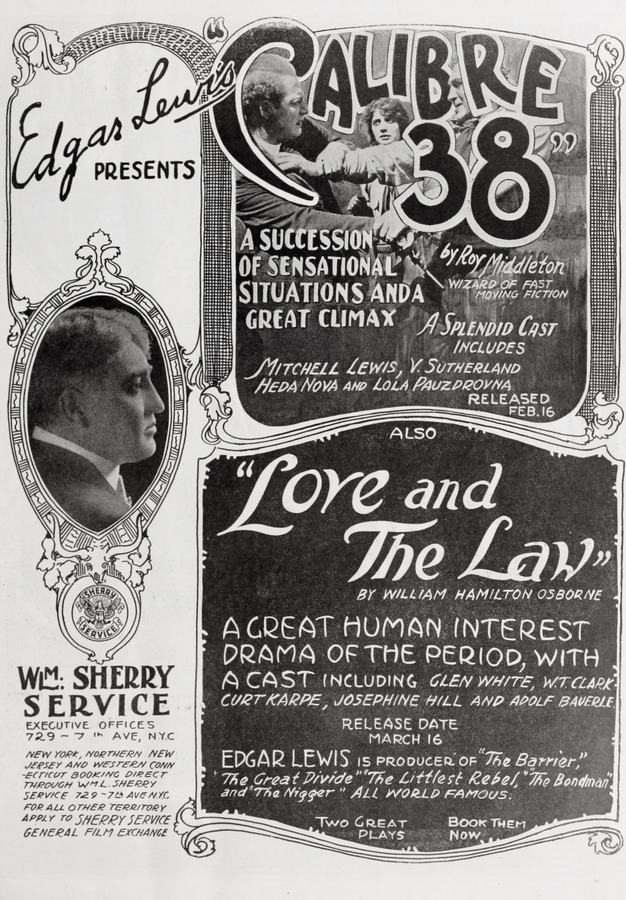
Dir: Edgar Lewis
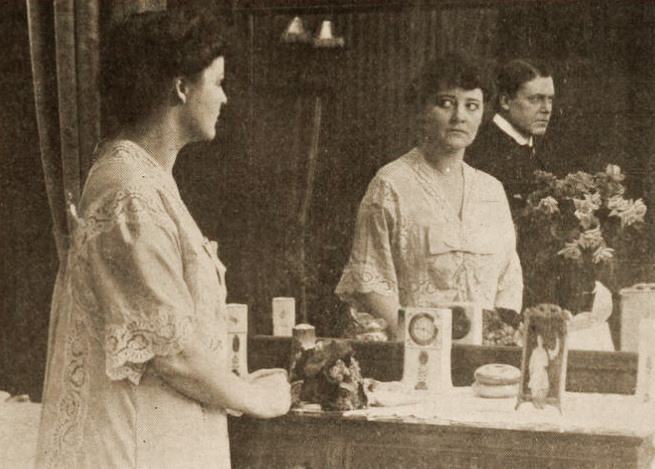
Montana cattleman Austin Brandt is jilted by Rosemary, who elopes with stranger Royce Greer, but he is consoled by his 20-year-old niece Joan. Rosemary later returns to Custer City to run a dance hall with her husband, who mistreats her. Eastern capitalist Robert Barton comes to town with his son Ford to settle a financial misunderstanding with Brandt. After reprimanding his son, Robert Barton is later found dead in his bed. Knowing of their financial argument, Ford believes Brandt is responsible, while Greer and his gang claim that Ford committed the murder. Convinced of his innocence, Ford asks Brandt to help him find the murderer. They discover that Barton was shot with a .38 caliber bullet, and Greer carries such a revolver. Meanwhile Greer's mob storms Brandt's house demanding Ford be taken prisoner. Brandt forces a confession from Greer, who is dragged away. After her husband's death, Rosemary departs and leaves a note explaining her love for Brandt. Joan and Ford find happiness together.
View DetailsAnalysis relative to Northern Lights
| Film Title | Atmosphere | Complexity | Similarity |
|---|---|---|---|
| The Plunderer | Gothic | Linear | 97% Match |
| Sherry | Gritty | Linear | 95% Match |
| Samson | Gothic | High | 88% Match |
| Lahoma | Ethereal | High | 90% Match |
| Love and the Law | Surreal | Dense | 91% Match |
This guide was algorithmically generated using the cinematic metadata of Edgar Lewis's archive. Last updated: 8/17/2026.
Back to Northern Lights Details →