
DbcultAccessing Vault...
Recommendations
Senior Film Conservator
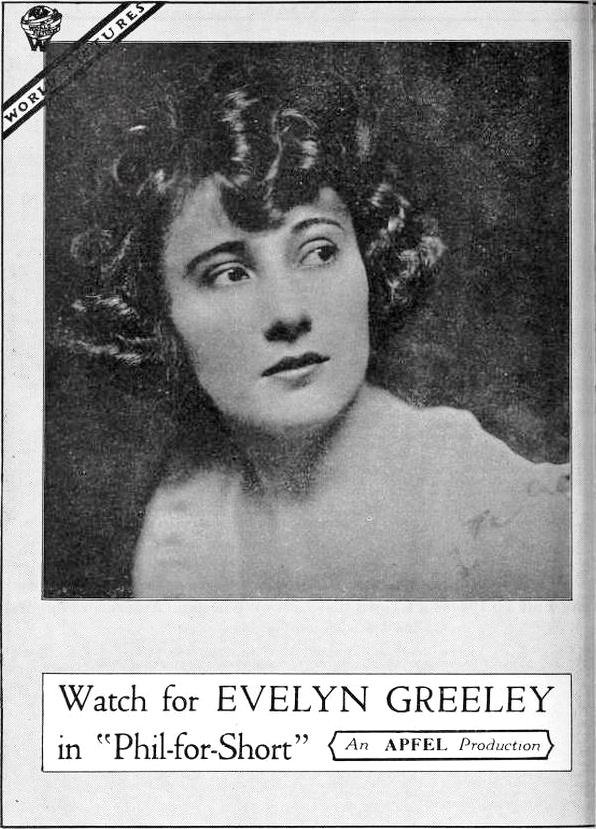
Navigating the complex narrative architecture of Phil-for-Short is a artistic bravery experience, the legacy of Phil-for-Short is a beacon for those seeking the unconventional. Unlock a new level of cinematic understanding with these cult alternatives.
The artistic audacity of Phil-for-Short ensures it to sustain a sense of mystery that persists after the credits roll.
Feisty, independent young Damophilia Illington-"Phil" for short - the daughter of a progressive university professor, is devastated by her father's sudden death. The town's banker, an arrogant stuffed shirt, wants to marry Phil and has himself declared her guardian. Not wanting to marry him, she quickly leaves town and lands a job at a nearby university as an assistant to a professor of Greek literature (an area in which her father trained her) who is bitter and resentful after the breakup of his engagement to a woman who had been lying to him. "Phil", however, is determined to win him over.
Critics widely regard Phil-for-Short as a cult-favorite piece of cult cinema. Its artistic bravery is frequently cited as its strongest asset, solidifying its place in United States's film legacy.
Based on the unique artistic bravery of Phil-for-Short, our vault has identified these titles as the most compelling follow-up experiences for fans of cult cinema:
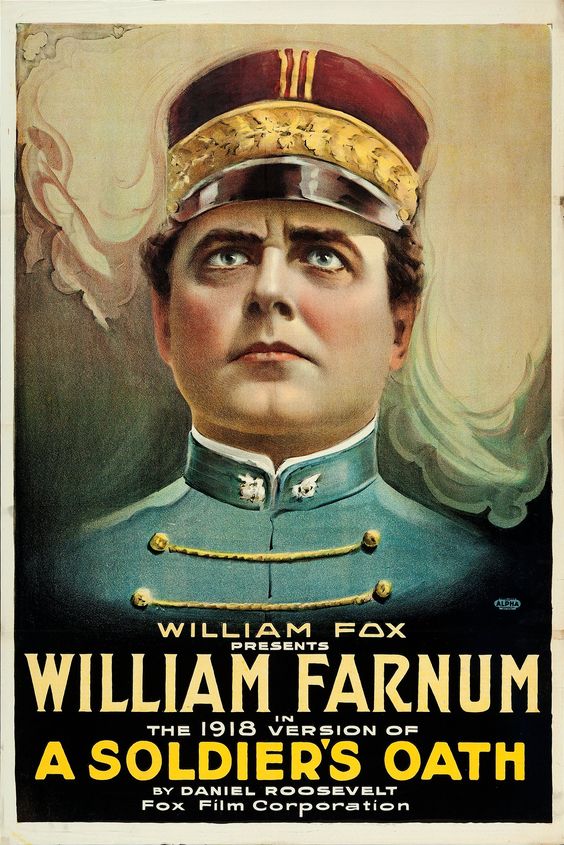
Dir: Oscar Apfel
While engaged in battle, Pierre Duval, a French soldier, stumbles onto the mortally wounded Count de Morave. Before dying, the count begs Pierre to deliver some family jewels and papers to the Vicomte Raoul de Reyntiens. At home, Pierre places the jewels in a box that also contains a necklace given to Margot, his wife, by the Duke D'Auberg. While stealing the box, Lazare, a war correspondent who witnessed Pierre's scene with the count, attacks and kills Margot. Found guilty of the crime, Pierre is sentenced to life imprisonment but is pardoned after performing a dangerous jailhouse rescue. Mavis, his daughter, who has been adopted by the duke, falls in love with the poor vicomte but is courted by Lazare, now posing as the Count de Morave. To win her love, Lazare gives her some of the stolen jewels, including the duke's necklace, but when Pierre sees the necklace later, he exposes Lazare and wins retribution.
View Details
Dir: Oscar Apfel
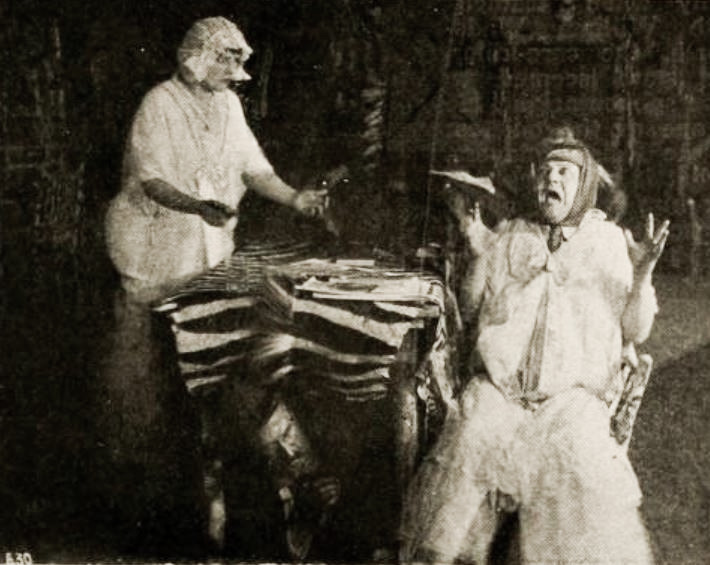
Ted Ewing, a young New Yorker, is the guardian of Nora Hildreth, with whom he is in love. He invests her fortune of $50,000 and an equal amount of his own money (constituting almost his entire property) in a stock exchange speculation. When this speculation apparently fails he seeks to reimburse the girl by taking out a life insurance policy in her favor and then killing himself. But, as the policy has a clause invalidating it in case of suicide, he has to arrange an "accidental death" for himself, and, to this end, enters into an arrangement with the chief of the S.S.S., a blackmailing society which has already threatened his life. The humorous complications really begin when it develops that the money has not been lost but doubled, so that Ted, instead of wishing to die, has every reason imaginable for wishing to live. It is, however, almost impossible to break his sworn pact with the S.S.S. and his own Japanese valet, to whom he gave the money to pay for his death, refuses to divert the money from the one use to which it has been pledged. The manner in which Ted manages to escape from his own plots against his own life, and the details of his romance with Nora form the concluding episodes of this highly amusing photodrama.
View Details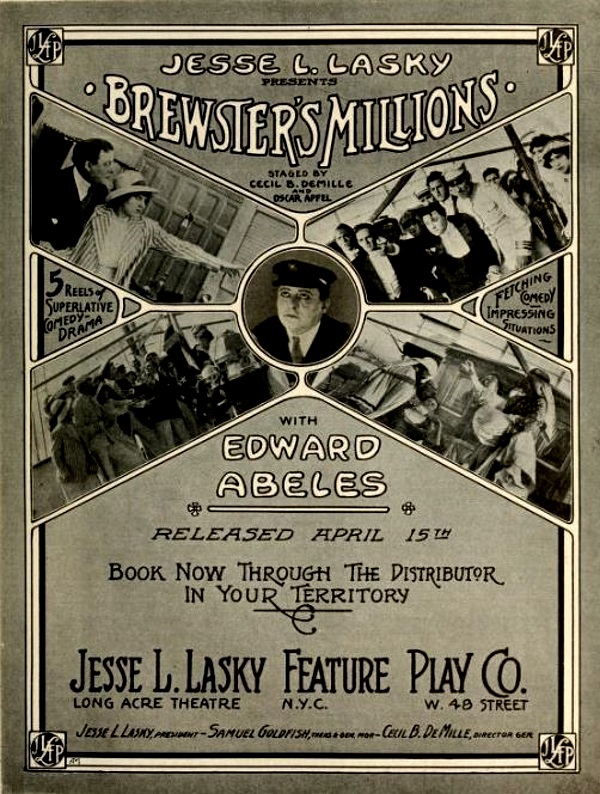
Dir: Oscar Apfel
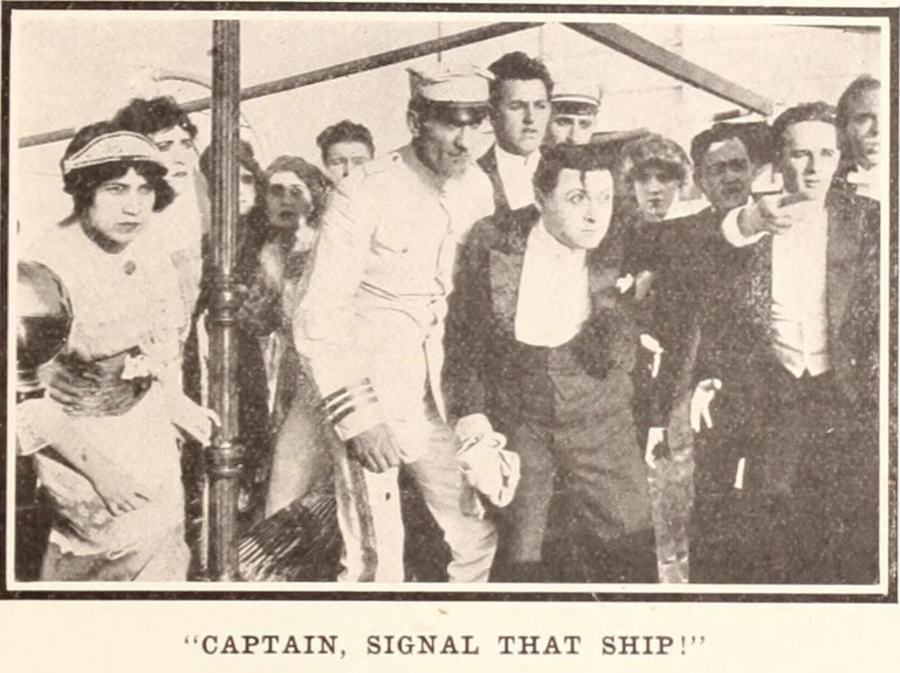
Robert Brewster, scion of a well-to-do family, elopes with Louise Sedgewick. Peter Brewster disinherits Robert and refuses to be reconciled to the marriage, and later drives the young couple from their home. A little son, "Monty," blesses the union. When Monty is a full-grown man, Peter Brewster dies and bequeaths a million dollars to him. The newly-acquired wealth staggers young Monty Brewster, and he is about to launch into the new life as one of the predatory rich when he receives a communication from an attorney in the West, advising him that his uncle, George Brewster, has left him $7 million, contingent upon his getting rid of the million dollars left him by Peter Brewster. "Peter Brewster mistreated your mother and father and I do not want you to touch a dollar of his money. If you spend the million left to you by him and can, at the end of a year, show by receipts that you have judiciously spent, not squandered this million dollars, my attorneys will turn over to you my worldly possessions, aggregating seven millions. You must own nothing of value at the end of the year," said George Brewster, and Monty, learning for the first time that Peter Brewster had mistreated his parents, begins to spend the million. He invests the money in a sure losing proposition in Wall Street in an effort to dispose of some of his unwelcome money, and the proposition turns out a winner. He backs a flabby fat pugilist, hoping to lose, and wins. There is a clause in the will of George Brewster which says that Monty must not tell anyone of his desire to spend the million and his friends think he has suddenly lost his mind. Everything Monty touches with the hope of losing some of his money, turns out just the reverse, and he wins. He has a most terrible time disposing of the undesired millions. Finally, in a desperate attempt at magnificent spending, Monty hires a palatial yacht, invites several dozen friends to accompany him and goes on a long cruise. The friends mutiny in mid-ocean, thinking him suddenly insane the way he is squandering his wealth, and threaten to lock Monty up, but Monty, to frustrate them, runs up a signal of distress. It costs him two hundred thousand dollars to be salvaged by a passing steamer, and the end of the year rolls around with Monty flat broke. He has squandered the entire million dollars, possesses a room full of receipts to show for every dollar spent, and his sweetheart, Peggy, believing him to be a pauper, consents to marry him. His friends, believing him broke, endeavor to press money and jewelry upon him, all of which he must not have in his possession or he loses the seven million. He dodges his friends, is met by the attorney and presented with seven million dollars, and everything turns out happily.
View Details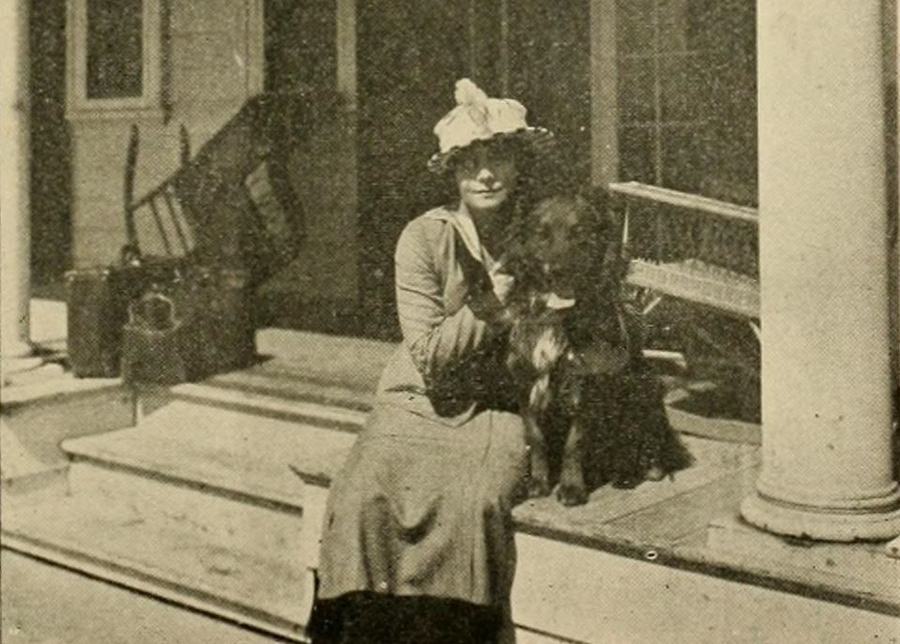
Dir: Oscar Apfel
Nicknamed "Wild Olive," Miriam Strange learns that her mother was an Indian, she moves to a hut near an Allegheny lumber camp. Norrie Ford, fresh from college, visits his uncle, the bullying boss of the camp, and meets Miriam. After his uncle is murdered with a knife found hidden under Norrie's mattress, Norrie is sentenced to die. He escapes a guard and, after staying a night in Miriam's hut, leaves for Buenos Aires with her letter of introduction for employment. Although he vowed to marry her, after his letters to "Wild Olive" return undelivered, Norrie, sporting a beard and an assumed name, becomes engaged to Evie Wayne, Miriam's stepsister. When Norrie is sent to be his firm's New York manager, he meets Miriam again. She sacrifices her love and agrees to marry lawyer Charles Conquest, if he will prove Norrie's innocence. After Evie learns about Norrie's past and breaks the engagement, the murderer makes a deathbed confession. Conquest releases Miriam when he sees that she loves Norrie.
View Details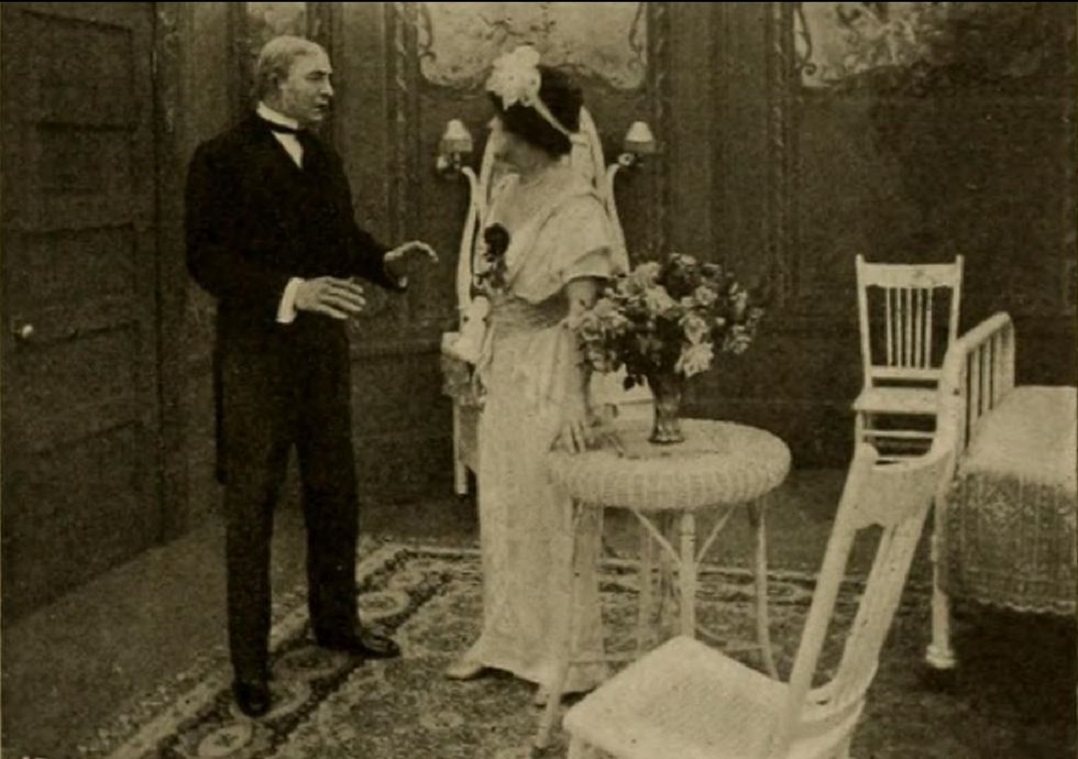
Dir: Oscar Apfel
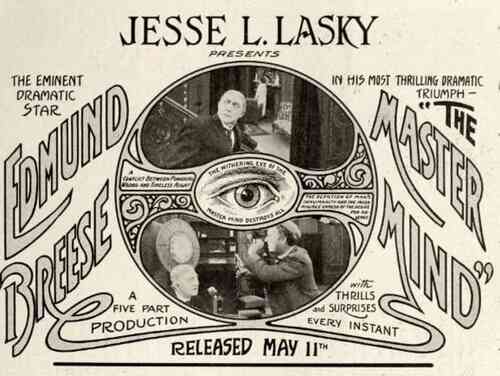
The defense attorney who was unable to obtain the acquittal of an innocent young man concocts a complicated and diabolical scheme to get revenge on the prosecutor.
View Details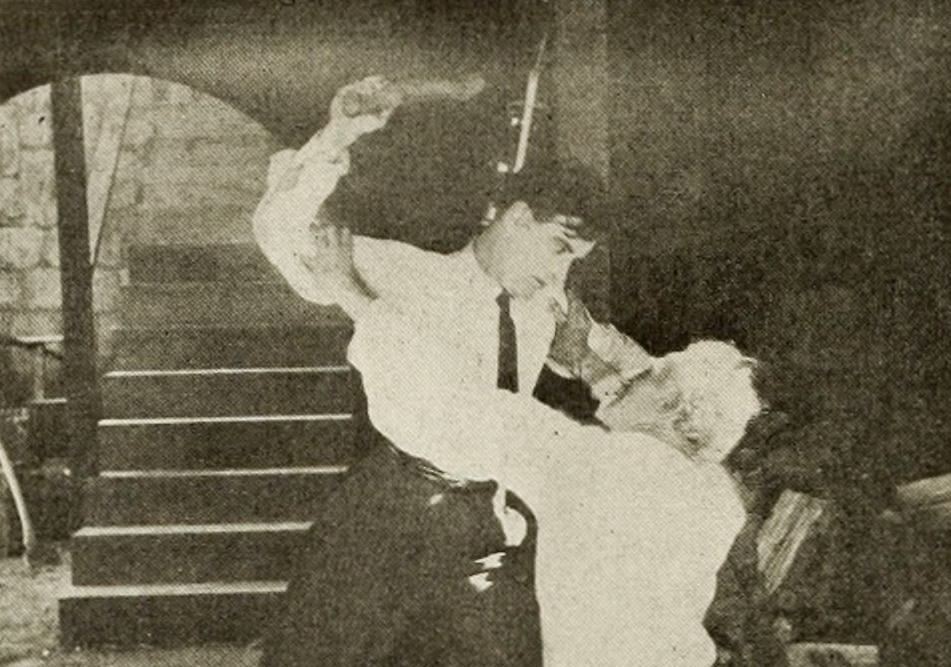
Dir: Oscar Apfel
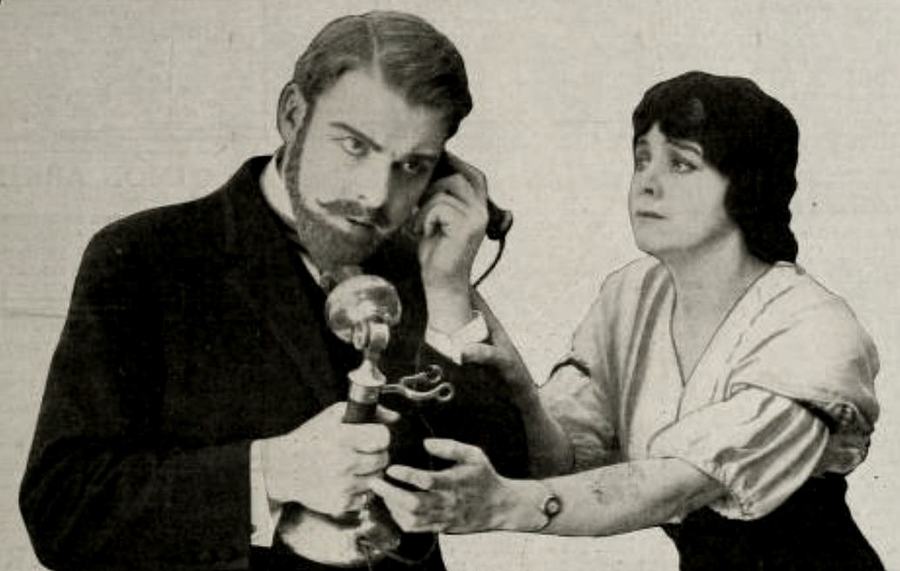
David Jenison, accused of a crime which he did not commit, escapes his guards and joins a traveling circus. Mrs. Braddock, wife of the circus owner, takes an instant liking to David and prevails upon her husband to give him a job as clown. Mrs. Braddock's daughter Christine, falls in love with David. All the performers become friends of the new clown except Ernie Cronk, a hunch-back who, himself admires Christine, takes a violent dislike to David and tries to kill him. David later saves Ernie from a bad beating at the hands of a gang of rowdies and Ernie thanking David, promises to help him clear his name of the crime charge. Ernie's friendly feeling, however, is short-lived, for in a jealous rage, he writes a note to the detectives informing them that David disguised as a clown, will take part in the afternoon performance, but Dick Cronk, Ernie's brother, learning of the latter's treachery toward David, takes David's place as a clown, while David escapes. Dick Cronk, who has learned to love Dave like a brother, goes to Jenison Hall. David's former home, and there confronts David's Uncle Frank, who he feels quite certain is the man who committed the crime David is charged with. Dick returns to the circus and tells David of his experiences at Jenison Hall. A few days later they learn that David's uncle and a notorious colored attorney have quarreled, dueled and killed each other, and in his dying confession, the uncle had completely exonerated David. David, before leaving the circus, confesses his love for Christine and asks Mrs. Braddock's permission to marry her, but Mrs. Braddock, fearing them too young, promises David that in five years, he may marry Christine if he still loves her, so David leaves, pledged to return. Col. Grand, infatuated with Mrs. Braddock and who has been following the circus about, finally through his clever scheming and the lending of money to Braddock, secures control of the circus and places Mrs. Braddock and Christine in his power. Col. Grand becomes abusive when his treatment is no longer tolerant to Mrs. Braddock and Christine. They leave the circus and return to their home in New York. Later, in New York, Braddock and Col. Grand meet and in a street fight, Braddock is arrested, accused of attempting to kill Col. Grand, and is railroaded to the penitentiary for five years. Five years have now passed and David comes to New York to claim Christine. Arriving at Christine's home, he learns that she will arrive later, from a trip to the country, and goes to the railroad station to greet her, but seeing her in the company of another young man, postpones his errand. He later meets Mrs. Braddock at a telegraph office and she gives him a wire she was just about to send him in which she tells him it is time for him to redeem his promise and he agrees to call that evening. Braddock released from prison, has sworn to kill Col. Grand on sight, and takes up a position outside the Braddock residence, and is about to enter, when Dick Cronk interferes and together, they go to a low resort where they can talk in safety. Col. Grand and Braddock meet face to face and Mrs. Braddock pleads with her husband to spare Col. Grand. Braddock does so and walks out of the house, telling them he is going to the river to end it all. During an altercation between Col. Grand, Dick and Ernie, Ernie shoots Col. Grand and when the police arrive blames it on his brother Dick, who at the trial is sentenced to death. Ernie later confesses his guilt and Dick is saved from the death chair. Braddock, instead of suiciding reforms and returns a better man. while Dave and Christine, learning of the re-union of father and mother, once again don their circus attire and together in the sawdust ring, live over in memories the days of their early love.
View Details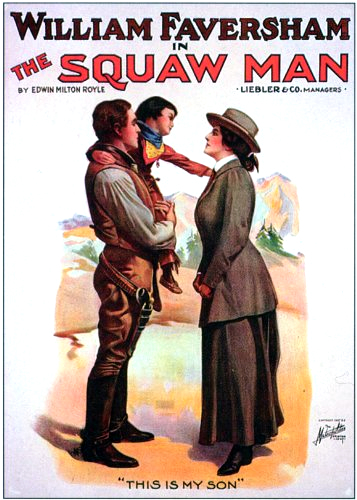
Dir: Oscar Apfel
A chivalrous British officer takes the blame for his cousin's embezzlement and journeys to the American West to start a new life on a cattle ranch.
View Details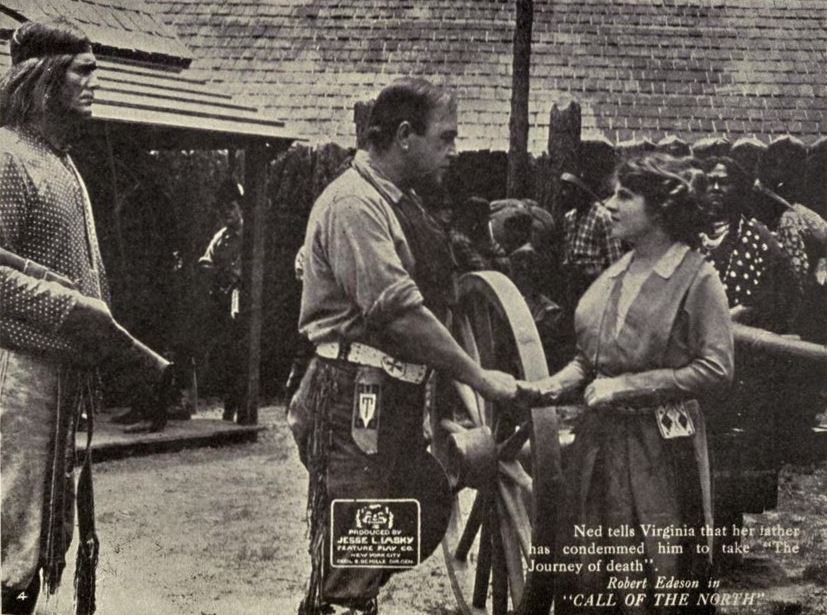
Dir: Oscar Apfel
Trader Ned Stewart's father Graehme was unjustly accused of adultery and killed. Ned sets out to avenge his father but is captured and send on "la longue traverse," the long journey to death. Virginia saves Ned, and the villain confesses Graehme's innocence on his deathbed.
View Details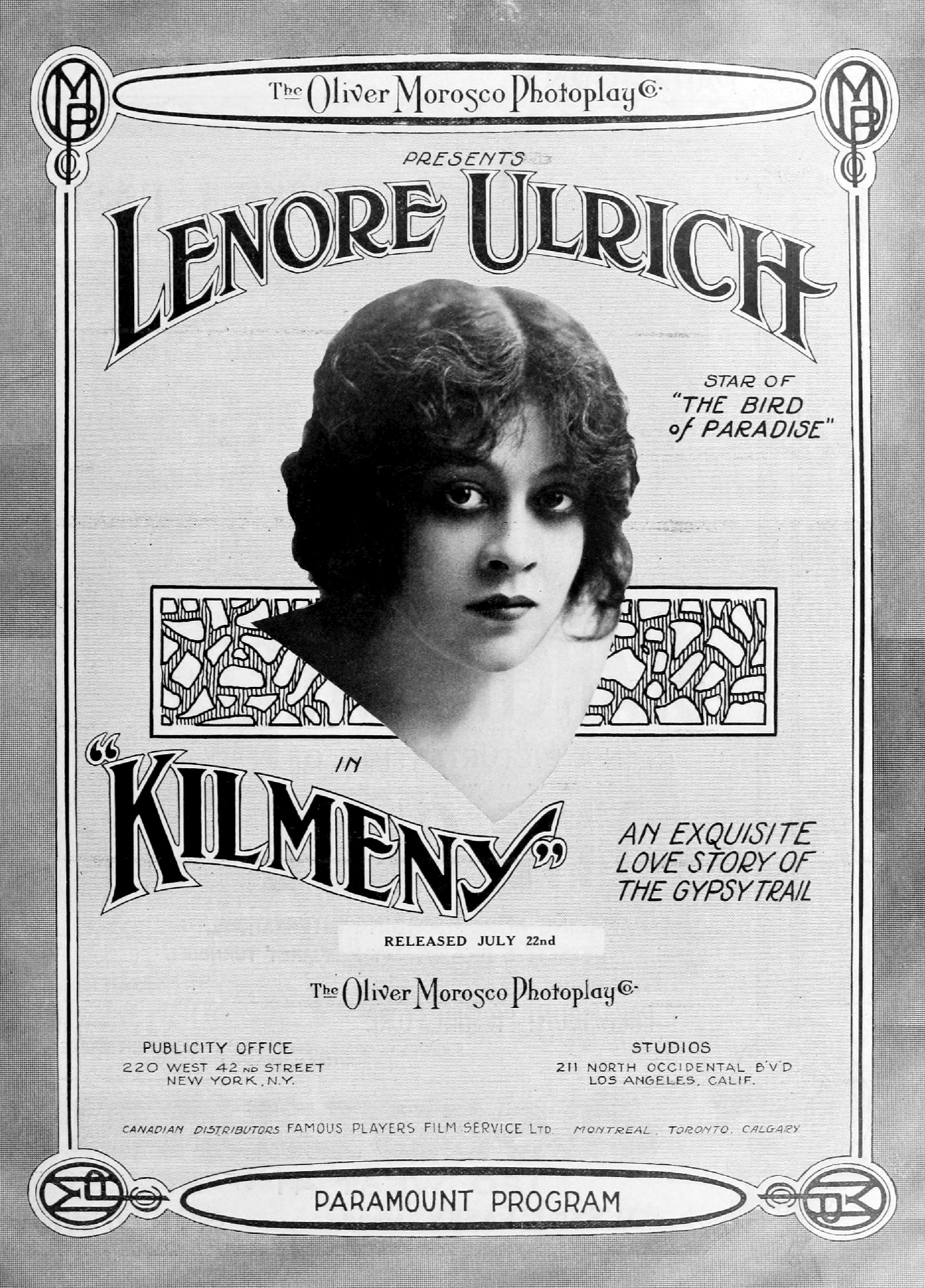
Dir: Oscar Apfel
Little Doris Calhoun, of a wealthy English family, makes a playmate of Pierre, a crippled gypsy boy, and drifts away with him and the gypsy band on their wanderings and is seen no more. In twelve years she becomes a great favorite with the gypsies, who have named her Kilmeny, but rather than be married to a brutal fellow, Barouche, she flees the camp. Kilmeny is found wandering in the woods, by Lord Leigh, and he persuades the rather reluctant Lady Leigh to give the ragged little wild thing shelter in the manor. The child of camps and trails at first finds naive delight in mysteries like electric light switches, bath tubs with fickle showers and rugs upon which she can slide beautifully over the hardwood floors. But long dresses trip her, the butler is a thundercloud, and at night she cannot sleep in the closed-in room unless she pulls her little white bed to the window. To make it worse, Lady Leigh becomes jealous of her husband's protegee, and so does her brother, Bob Meredith, a dashing chap with whom Kilmeny is very much in love. The sensitive girl who cannot bear to hurt birds, beasts or any living thing, cannot bear to hurt her benefactors either, and so in a pathetic self-sacrifice turns her back upon the manor and returns to the angry gypsies, and to Barouche. But just as the gypsy wedding ceremony is about to begin the father of the long-lost Doris Calhoun appears and calls a halt, and proves the beautiful Kilmeny is his own daughter. To prove it, he produces the poor cripple, Pierre, who has braved the wrath of the clan to balk the brutal Barouche and carry word to Kilmeny's father of her whereabouts.
View Details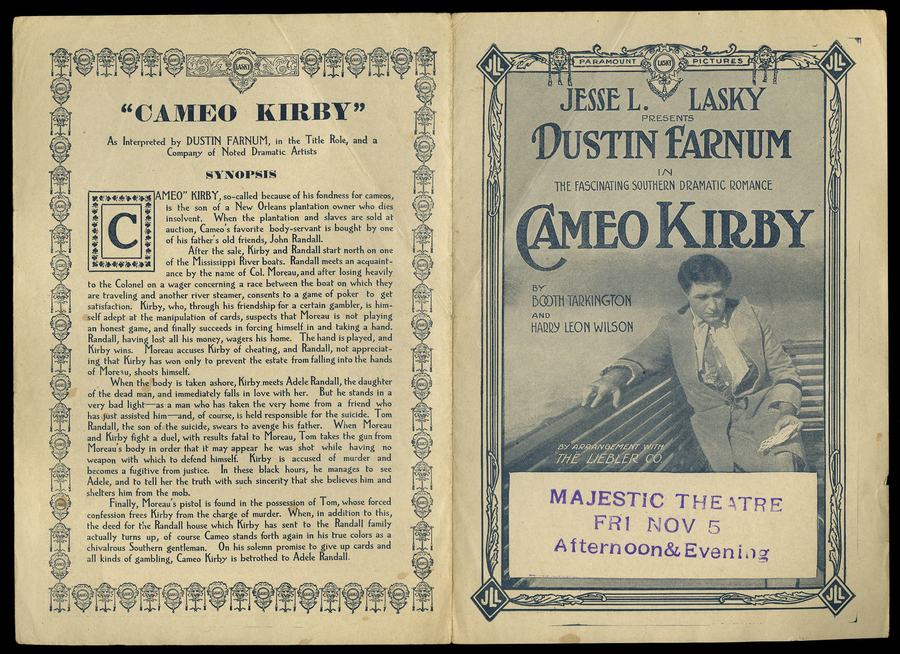
Dir: Oscar Apfel
"Cameo" Kirby, so called because of his fondness for cameos, is the son of a New Orleans plantation owner who dies insolvent. When the plantation and slaves are sold at auction, Cameo's favorite body-servant is bought at auction by one of his father's friends, John Randall. John and Kirby head north on a Mississippi river boat where Randall meets Colonel Moreau. There he loses heavily on a wager and consents to a game of poker hoping to get back his losses. Kirby, through his friendship with another gambler, is adept at the manipulation of cards and suspects that Moreau is not an honest player. He joins the game and soon Randall, having lost all of his money, wagers the old homestead. Kirby wins the hand and Moreau accuses him of cheating while Randall, unappreciative of the fact that Kirby won the hand to keep Randall's estate falling into Moreau's hands, shoots himself. When his body is taken ashore, Kirby meets Randall's daughter, Adele, and instantly falls in love with her. But Kirby is on very shaky ground as he is known as the man who caused Adele's father to commit suicide, and she treats him to some southern disdain. Her brother, Tom, vows to take revenge on Kirby. He and Moreau have an un-witnessed duel and Colonel is shot dead by Kirby, who is somewhat of a dead shot among his many other talents. But Tom takes the gun from Moreau's hand so it will appear he was unarmed. Kirby, slave-owner becomes a fugitive from justice. This also deals a blow to his courtship of Adele. But, a true-blue southern gentleman such as Kirby should be able to win the day, sooner or later.
View DetailsAnalysis relative to Phil-for-Short
| Film Title | Atmosphere | Complexity | Similarity |
|---|---|---|---|
| A Soldier's Oath | Ethereal | Dense | 92% Match |
| After Five | Surreal | Dense | 87% Match |
| Brewster's Millions | Tense | Linear | 97% Match |
| The Wild Olive | Gritty | High | 92% Match |
| The Master Mind | Gothic | Linear | 87% Match |
This guide was algorithmically generated using the cinematic metadata of Oscar Apfel's archive. Last updated: 8/16/2026.
Back to Phil-for-Short Details →