
DbcultAccessing Vault...
Recommendations
Senior Film Conservator
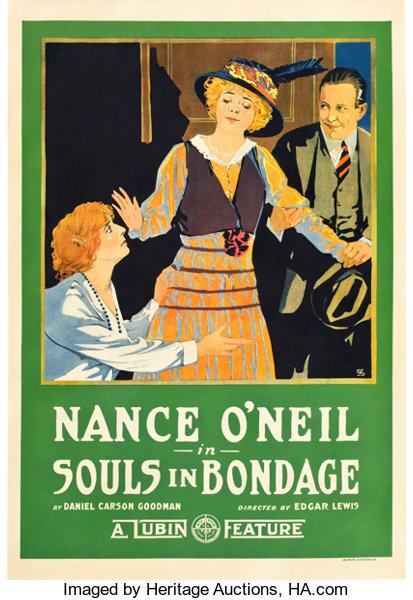
Looking back at the 1916 milestone that is Souls in Bondage, the cinematic shorthand used by Edgar Lewis is both ancient and revolutionary. Dive into this collection and find the spiritual successors to Edgar Lewis's vision.
As Edgar Lewis's most celebrated work, it defines to articulate the unspoken anxieties of United States's 1916 era.
Rosa is looked upon as an outcast, and is always in the shadow of her spoiled younger sister Rita.
Souls in Bondage was a significant production in United States, bringing a unique perspective to the global stage. It continues to be a top recommendation for anyone studying cult history.
Based on the unique cult status of Souls in Bondage, our vault has identified these titles as the most compelling follow-up experiences for fans of cult cinema:
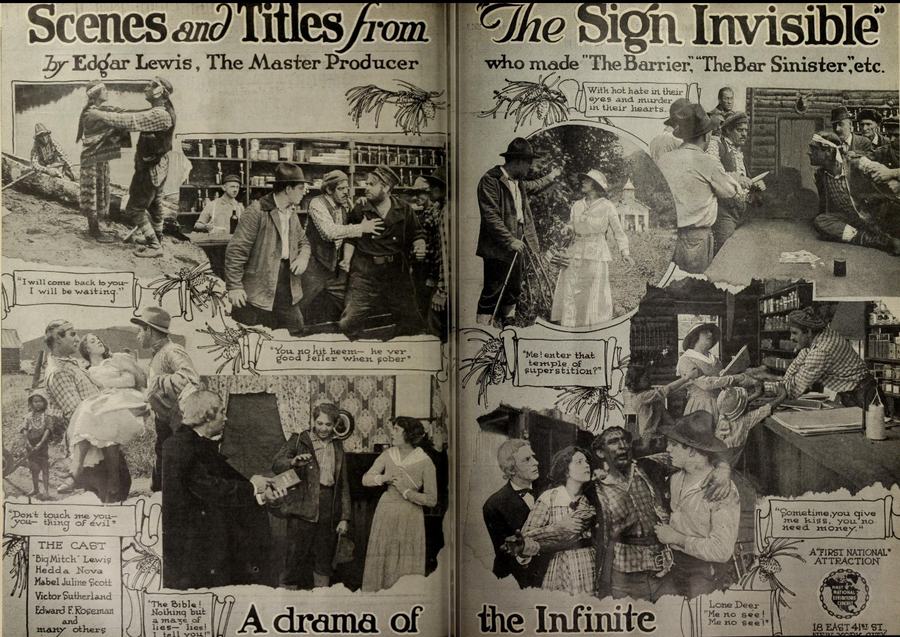
Dir: Edgar Lewis
Dr. Robert Winston loses faith in himself and his religion when his own mother dies under his scalpel. Abandoning his profession, he moves to the Canadian Northwest, where he avoids companionship and drinks constantly. Despite Robert's atheism, he attracts the interest of Jeanette Mercier, the minister's daughter, and under her gentle influence, he is slowly regenerated. In the meantime, an Indian named Lone Deer bids a temporary farewell to his sweetheart Winona, whose father wishes to die among his own people, but when he finds her canoe overturned in the water, he assumes that she has drowned. Later Lone Deer saves Jeanette from Lou Baribeau, the brutal and lecherous company agent, but is seriously wounded in the struggle. Rev. Mercier convinces Robert to operate, and because the procedure proves successful, the doctor regains his faith and marries Jeanette. Winona finally returns to aid in Lone Deer's recovery.
View Details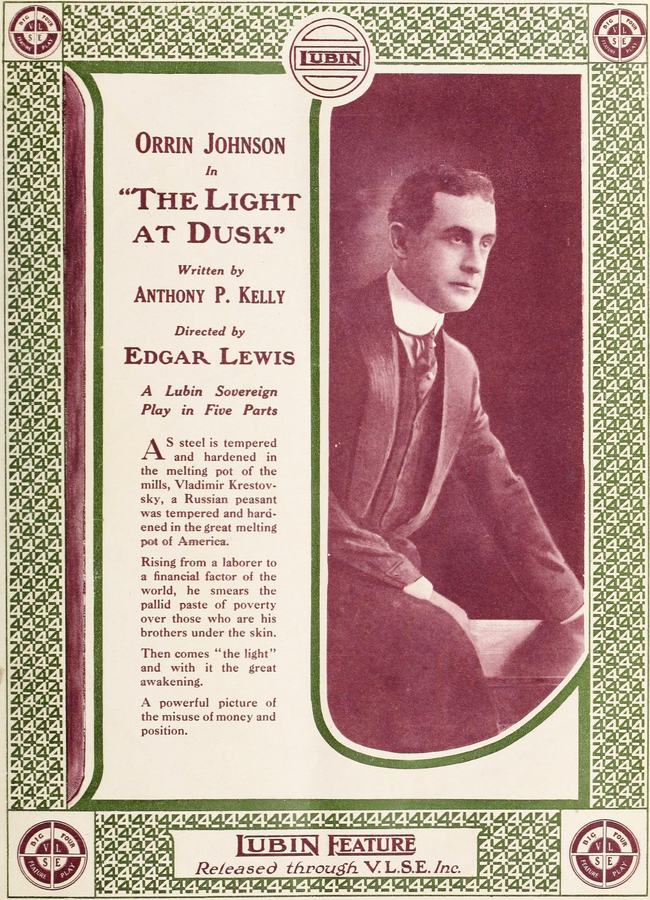
Dir: Edgar Lewis
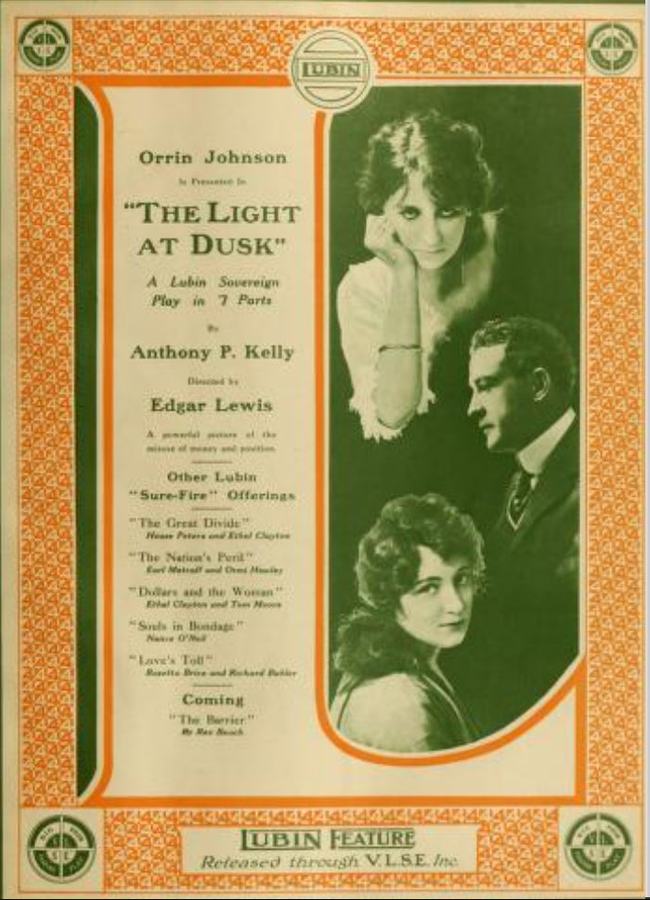
Vladimir Krestovsky, a Russian peasant of unusual physical and mental prowess, hearkens to the call of America, and leaving his wife, Nataska, and his year-old baby, Olga, behind, makes the journey and secures work in the steel mills of Pittsburgh. From a position as a laborer, he finally works himself up to be one of the great financial factors of the world. His wife in Russia has not heard from him for many years and knows nothing of his success. He shortens his name of Krestovsky to that of Krest. Then commits bigamy by marrying the daughter of one of the social leaders in the country. In the meantime, over in Russia, his daughter, Olga, has grown to womanhood. She is wooed and won by Nicholas, a kindly young Russian peasant. Krest's American wife dies. His mind, as he sits by her bedside, takes him back to the Street of Forgotten Days when he bid Nataska good-bye. The voice of conscience preys upon him and he endeavors to seek diversion in art. He purchases the original of Hoffman's famous painting of "Christ and the Rich Young Man." Arriving in America, Nicholas and Olga secure work in one of Krest's mills in Pittsburgh. They live with Nataska in a miserable tenement house. A baby is born to Olga, and she, in her weakened condition, returns to work. One day she is severely injured. Nicholas sits beside his wife. He realizes that with her death will also come the death of their offspring. A peasant from another part of the tenement urges Nicholas to appeal to the "Big Boss" Krest himself. Nicholas determines to do so and starts out. In the meantime, Krest has arrived home. The painting has been hung, and he is puzzled as he studies the face of Christ; he wonders where he has seen it in real life. Without a storm has begun to gather, and far up on a distant hill, the stranger appears in a silhouette against the threatening sky. Slowly and peacefully he comes down into the house of Krest. To Krest's startled questions the Stranger replies that he is one who has come to show him the error of his ways. The Stranger takes Krest into the tenement house, shows him the living conditions of the people who work for him. Then the Stranger shows him into the home of Nicholas and shows him Olga and the baby both dead in bed. Then they go back to the home of Krest. On entering, Krest struck by the Stranger's manner and appearance, compares him to the figure of Christ in the painting, and the sub-conscious mind within him forces him to tell the Stranger that it seems he knew him in the long ago. Then the Stranger informs him that he did know him, and asks him if he cannot remember, centuries ago, and the scene goes back to Jerusalem. Krest is the reincarnation of the Rich Young Man, the Stranger is the same Christ, who, centuries ago, had urged the Rich Young Man to go sell all he had, give to the poor and to follow him, but the Rich Young Man could not think of giving up his immense wealth and had left Christ with the beggars. Then the scene comes back to Krest's library. Christ, for the Stranger is Christ, then tells the penitent Krest that, though he did not heed him then, to heed him now, and he tells him that perhaps he did not understand him then, that he did not mean for him to sell everything he possessed, but rather that he should take that which he did not actually need and use to benefit his fellowmen. The Stranger makes the sign of the cross, and disappears. In the meantime, Nicholas has been hastening to Krest's home. The storm breaks without and Krest awakens with a start. He crosses to the windows to shut them. Nicholas has arrived, but the butler refuses him admittance. The rain has drenched him and he stands there. Krest, who has crossed to shut the windows, peers at him. The sight of Nicholas, who looks so much like Christ, staggers Krest, who wonders if it has all been a dream, and watches Nicholas disappear into the storm. Realizing it is really a human being, he calls the butler and bids him bring Nicholas back. Krest questions him and then tells him that he is anxious to see conditions as they really are. He goes back with Nicholas to his home. On the way Krest secures a doctor to care for Olga, never suspecting that it is his own daughter and son-in-law whom he is benefiting. Arriving at the house, the doctor and Nicholas cross to the bedside of Olga, who, much to Krest's relief, is still alive and has a chance to recovering. Krest notes the terrible living quarters of the people, and determined to investigate farther. He starts into the kitchen, where he comes face to face with his wife. Without a word, Nataska crosses to his side, and he takes her into his arms, and so the rejuvenation of Vladimir Krestovsky takes place.
View Details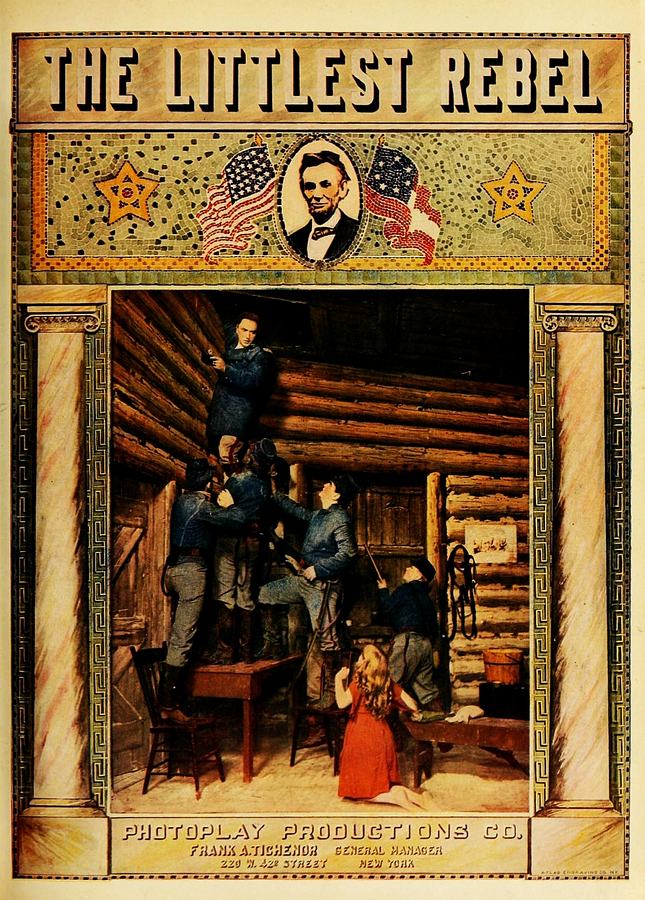
Dir: Edgar Lewis
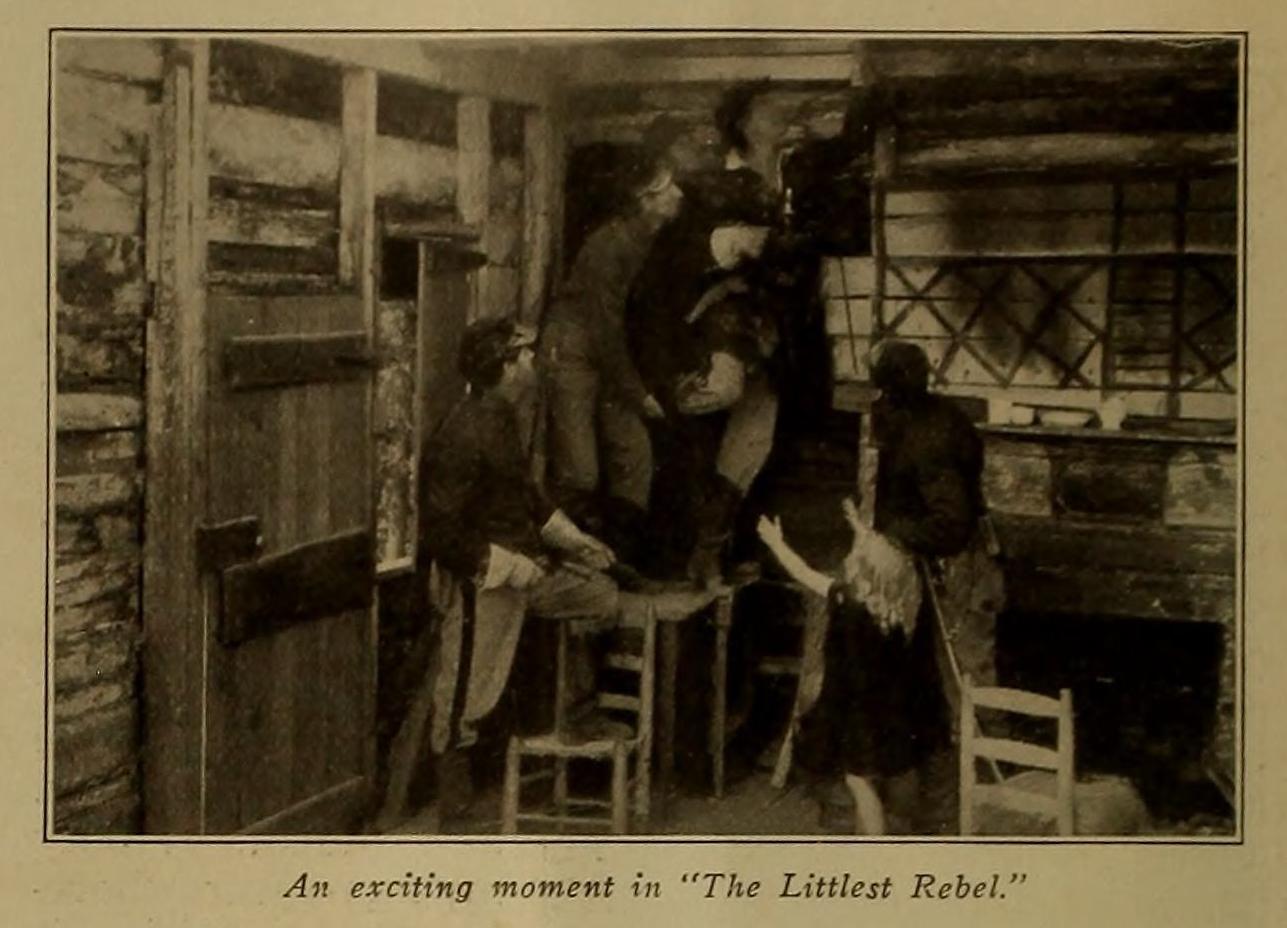
Herbert Carey discharges the Dudley brothers, Joe and Jim, from their positions as overseers on his plantation and thereby incurs their enmity. War is declared and Carey, after bidding his wife and daughter Virgie farewell, joins the Southern forces, the Dudleys joining the Northern. The spring of '61 finds Carey the most dangerous and daring of Confederate scouts. The Dudleys are under the command of Colonel Morrison, a dashing, chivalrous young Northern officer. Grant closes in on Richmond and orders Morrison to capture Carey. Morrison takes a small detachment of troops, including Jim Dudley, and going to the Carey homestead, searches it. Dudley, seeing a chance for revenge, sets fire to the house, but in endeavoring to escape is shot and killed by Morrison, who has discovered his treachery. Penniless and with the house in ruins, Mrs. Carey and Virgie finally seek shelter in their former overseers' deserted cabin. Mrs. Carey sinks down and finally dies. Carey, hearing of this, gets to the cottage and assists Uncle Billy to bury her. Carey, wishing to remove Virgie to Richmond, receives a pass from Lee permitting Virgie and an escort to go through the Confederate lines. As he goes to the cottage to deliver the pass to Uncle Billy he is discovered and captured in it by Morrison. Carey tells him why he had come and Morrison's heart, being touched, he also gives Carey a pass through the Northern lines, telling him to take Virgie into Richmond himself. Joe Dudley discovers this and informs the Northern officer that Morrison has given a pass to Carey, the notorious scout, to pass through the Northern lines. Carey and Morrison are captured, court-martialed and sentenced to be shot. Little Virgie, hearing of this, goes to Grant and pleads with him to save her "Daddy." Carey is called before Grant and tells his story. Grant's heart is touched and he releases Carey telling him that though he cannot honor Morrison's pass, he can honor that of General Lee. Morrison is released also, and Carey and The Littlest Rebel. Virgie, are once more reunited. After the war finds Morrison, his wife and child, meeting Carey and Virgie over his wife's grave; the North and South join hands. The Confederate flag is seen meeting the Stars and Stripes; they flutter for a moment, then slowly intertwine and the picture fades away.
View Details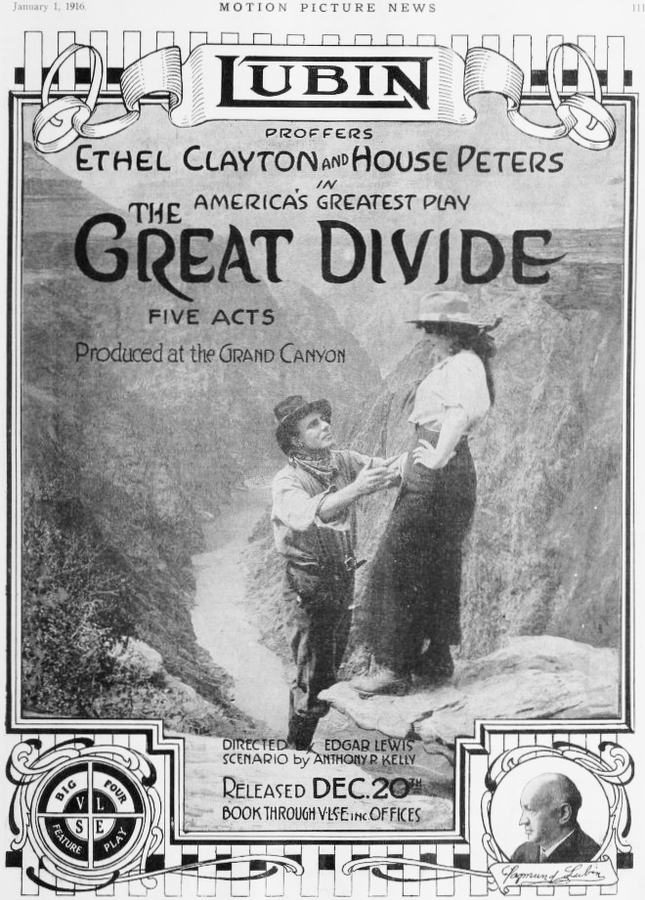
Dir: Edgar Lewis
The Jordans, Phil and Ruth, accompanied by Philip's wife, Polly, and Dr. Winthrop Newbury, a suitor for Ruth's hand, bid old Mrs. Jordan good-bye at the station of Milford Corners, Mass., and depart for the west, to work over some unredeemed desert land, which was left to the Jordans by their dead father. Arriving in the west, they take up their work, but it proves anything but a success. On the brink of the Great Divide lives Stephen Ghent, an untamed and untrained man of the west, and on account of his manner is respected by the habitués of Miller's saloon and dance hall in the town, which he and two of his acquaintances in the persons of Pedro, a half-breed Mexican, and Dutch, a brutal type of the west, frequent. Polly tires of western life and jumps at the chance to take a trip to Frisco. Philip drives her down to the station that night. On an adjoining ranch a cowpuncher is seriously hurt and a boy is dispatched for Dr. Newbury. After cautioning Ruth to retire early, the doctor takes his leave. Stephen Ghent, Pedro, and Dutch are down in the town drinking. They afterward depart and start up the Coldwater Trail, which runs alongside of the Jordan home. As they pass the dimly lighted cabin, they see a woman standing in the doorway. Cautiously approaching the door, they enter the cabin and Ruth is overpowered. Dutch and Ghent fight a duel for her in which Dutch is killed. Pedro is bought off by Ghent with a string of nuggets, and Ruth belongs to him. In the man of the woods, Ruth recognizes the ideal man she desires for a helpmate. Ruth agrees to marry Ghent and live as his wife in name only until he has changed his character. Ghent agrees and they are married. Ghent then brings her to his cabin. As day by day goes by, Ruth begins to see other qualities in her husband and also to believe in him. One night, however, Ghent filled with a desire for her and goaded on by the whiskey that is in him breaks his promise. Ruth denounces him for his actions and tells him that not until he has purged himself through suffering will she ever believe in him again. She also tells him that she is going to earn enough money to buy back the string of nuggets from Pedro, with which he managed to get her into his power. Some time later Ruth departs for town to sell her last blanket. She has been weaving Navajo blankets in order to raise the necessary amount to buy back the nuggets. In the meantime the Jordans become disgusted and prepare to go back east. While waiting at the station they find Ruth, who has just completed the sale of her blanket. They see her start up the trail and follow her on foot. Ruth buys back the string of nuggets from Pedro, but she has not time to turn it over to Ghent upon her arrival at the cabin before she is overtaken by the others. It is her desire to have them believe she is happy and refuses to go back east with them. She introduces Ghent to them just as they are ready to catch the train. Ghent, unable to understand her changed attitude, starts to thank her. She tells him that circumstances forced her to act as she did, but that she is now able to buy back her freedom from him. Ghent is stunned, and at first refuses to let her go, but when she tells him of the life that is to come and that it is their duty to protect its happiness through a mother's love, he finally releases her from her promise, and Ruth, with the sense of newfound freedom, starts down the trail to overtake the others before it is too late. Ghent's attention as he looks after her is suddenly attracted to a bit of trembling earth on the mountainside. He realizes the great danger that Ruth is in and starts down the trail to rescue her. He is just in time and has thrown her to one side when the landslide comes upon him and carries him into the valley below. The rumbling sound has caused the others to look back. A reunion takes place over the injured Ghent. He is brought to the cabin, where he recovers under the care and attention of Dr. Newbury and Ruth. Ruth tells him that he has purged himself through his suffering and once more the couple start out in life upon a happier basis.
View Details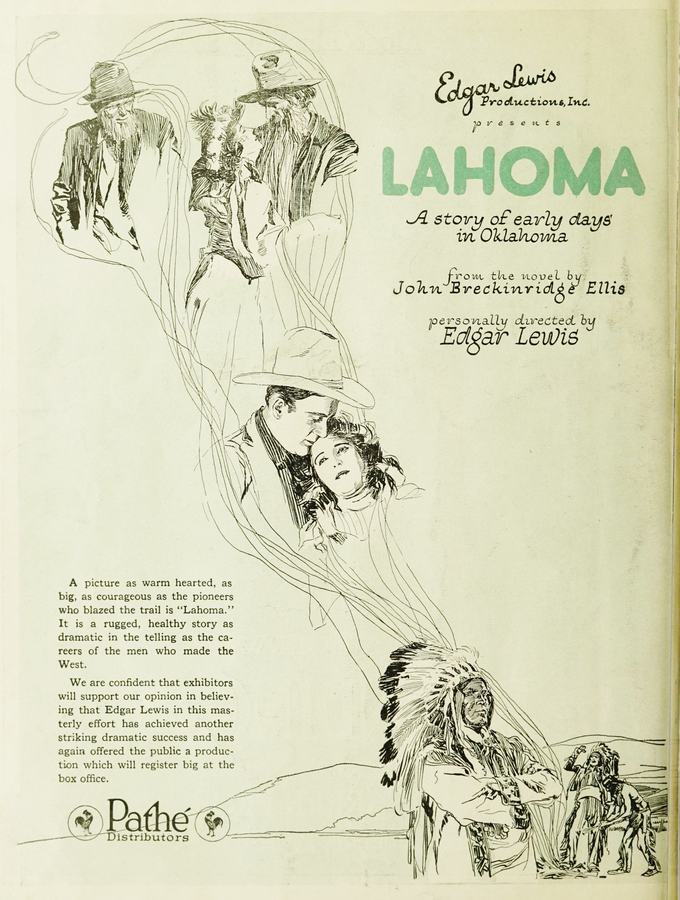
Dir: Edgar Lewis
In Oklahoma, kindhearted outlaw Brick Willock rescues little Lahoma Gledware and her father Henry from certain death at the hands of his outlaw band. In the course of the rescue, he kills Kansas Kimball, the brother of the outlaws' leader Red Kimball, who vows vengeance against Brick. Brick renounces his life of crime, and after Gledware relinquishes custody of his daughter to marry an Indian princess, the old cowboy gives refuge to the little girl, raising her with the help of neighbor Bill Atkins. Years later Easterner Will Compton comes to Oklahoma to homestead, meets Lahoma and falls in love with her, but is forced to leave by Brick. While visiting Kansas City, Lahoma overhears Kimball plotting to kill Brick by swearing out a phony warrant for his arrest, but she foils his plan. Outwitted, Kimball takes revenge into his own hands and shoots Brick, only to fall in his tracks from Brick's own gun as the old outlaw breathes his last breath. Will returns to console Lahoma and the couple are married.
View Details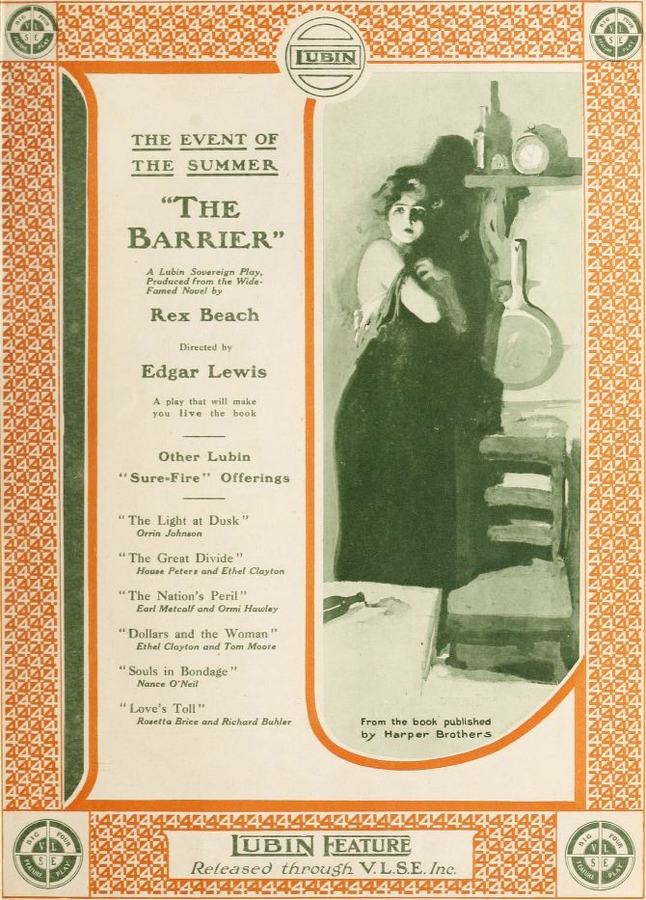
Dir: Edgar Lewis

A barrier stands between Lt. Meade Burrell and Necia, the woman he loves. That barrier is the fact that she's a "half-breed"--half-Indian and half-white, with an Indian mother and John Gale, a white trader, for a father. Although he has proposed marriage to Necia, she releases him from it when she realizes the damage that marrying a half-breed would do to him personally and professionally. One day a man arrives in town with information that could solve everyone's problems.
View Details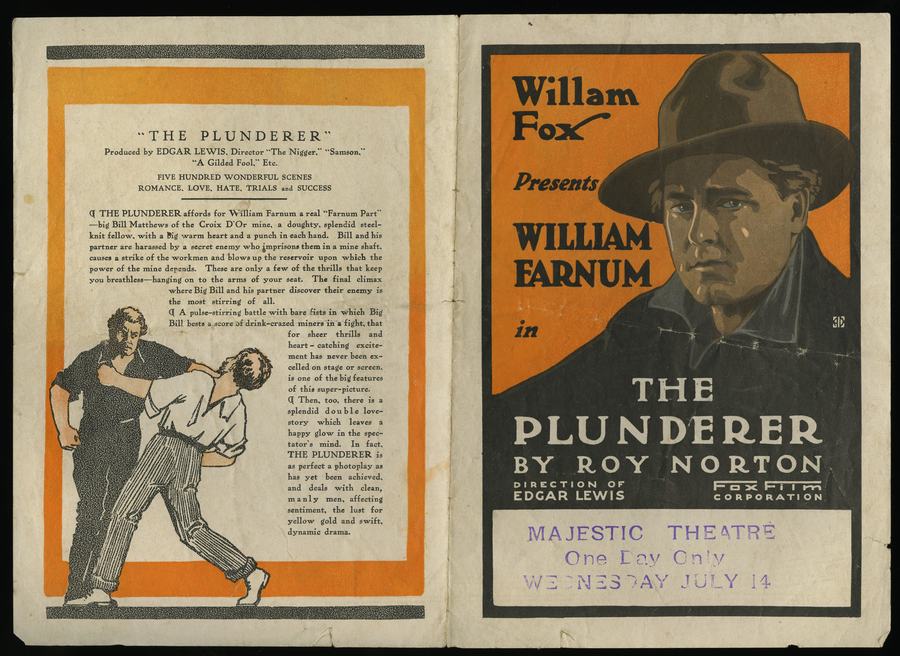
Dir: Edgar Lewis
Bill Matthews and his partner, owners of the "Croix D'or mine, are beset on all sides dues to the schemes of a trusted colleague who plots to take their mine away from them, and leaves no under-handed method un-attempted in the process.
View Details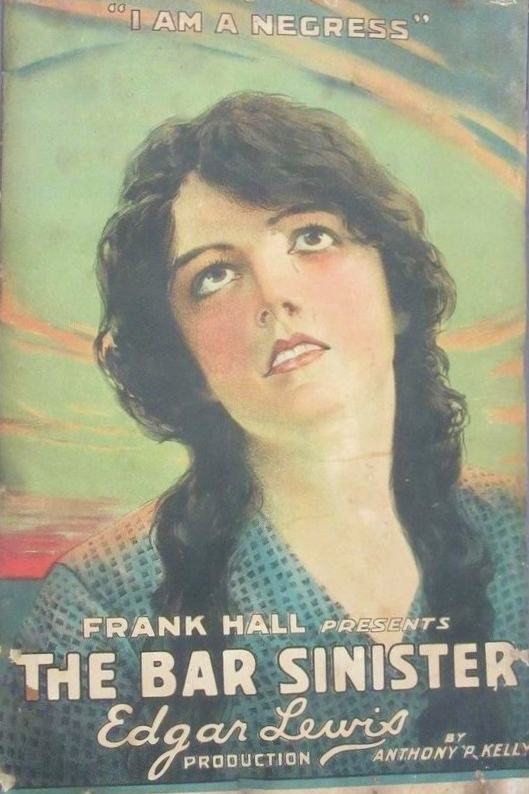
Dir: Edgar Lewis
Stolen when a baby by a mulatto woman, who becomes a half-crazed witch, and raises her to beautiful womanhood with the belief that she is her own daughter, Belle cannot bring herself to mix with her race and accept the attentions of a noble character in the person of Ben Swift, in whose veins the blood of the red, white and black races are mixed. A handsome white stranger. Page Warren, from the North, who believes her a white girl, falls in love with her. She returns his love while at the same time hiding the fact that she is the negro witch, Lindy's, daughter. Page incurs the hatred of the bad element among the blacks, while failing to appreciate that there is also a good element among whom are men and women as noble as any of his white companions. He incurs the hatred of Ben Swift, who misinterpreted his attentions to Belle, and resents the mixing of the races, not knowing that Belle has not disclosed her identity to Page. The attacking of Page by a gang of bad blacks, following his fight with one of their leaders, his rescue by Ben Swift, who has learned of Belle's love for the white man. the discovery by Page that Belle is a mulatto, the sensational disclosure of the fact that she is the last daughter of a prominent Southern family, the death of Ben Swift while defending Page and Belle from an enraged mob and the beautiful handling of the subject of the spiritual equality of men makes "The Bar Sinister" an intensely interesting drama with a powerful appeal to all classes.
View Details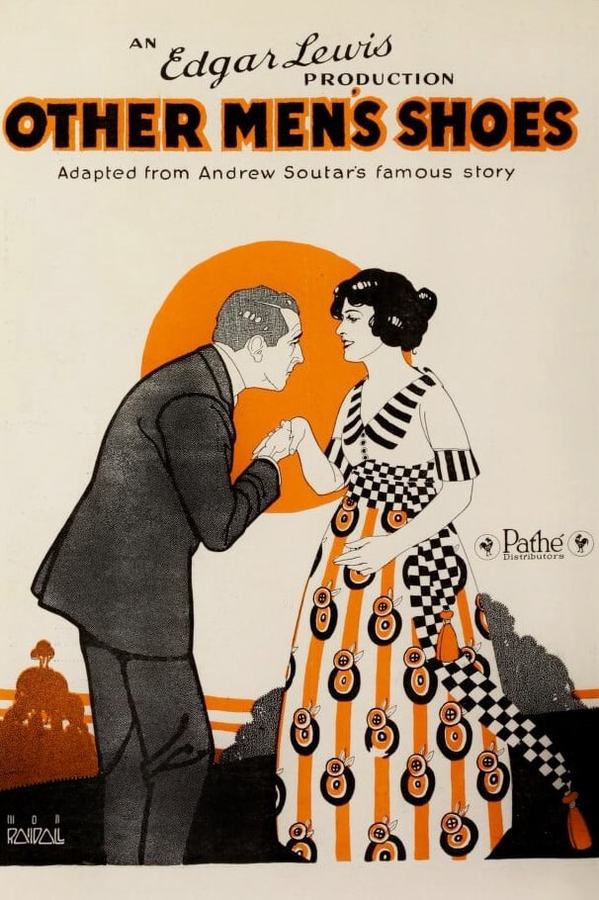
Dir: Edgar Lewis
Stephen Browning, a minister in a small city, is unable to cope with the strong opposition in his parish, which is fostered and led by Raphael Creeke, his rival for the love of Irene Manton. Meanwhile, James, Stephen's brother, is released from prison after serving a term for borrowing money to lend to a friend's sick wife and child, and upon hearing of his brother's tribulations decides to act as the minister's substitute. After Stephen goes to a neighboring farm to recuperate from a nervous breakdown, James assumes his brother's identity, inspires the confidence of the congregation, discovers Creeke's conniving and wins Irene's love. With the help of a blackmailer, Creeke attempts to expose James's record, but his scheme backfires when the minister wins the support of his congregation by admitting his true identity. Stephen is murdered by Jacob Dreener, one of Creeke's accomplices, who mistakes the minister for his brother. James is then left to occupy his brother's shoes permanently, bringing Creeke to justice and winning Irene for his wife.
View Details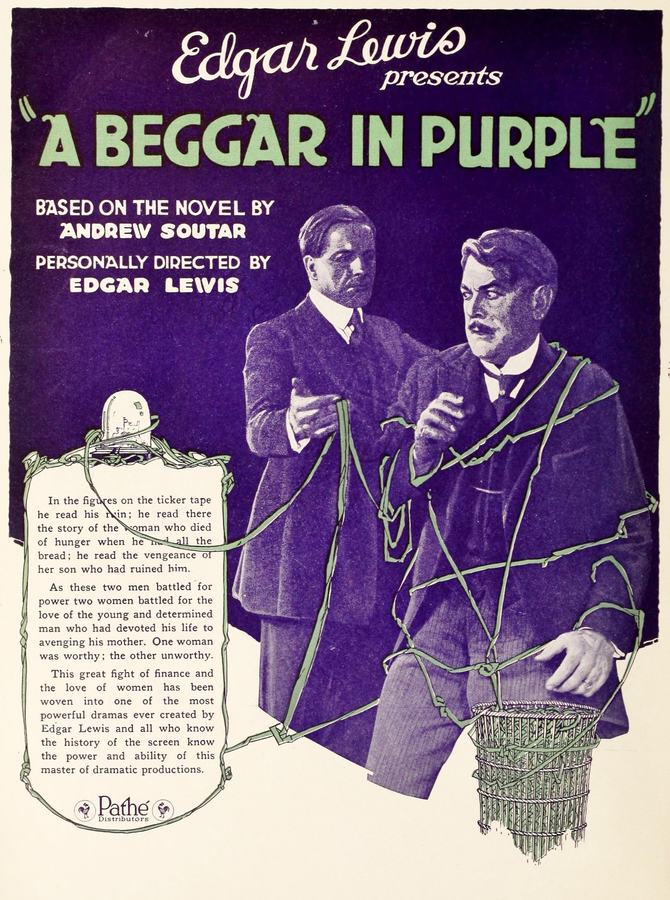
Dir: Edgar Lewis
Poverty-stricken John Hargrave is forced to beg employment from rich mill owner Roger Winton in order to save his sick mother's life. Winton refuses to help, and when Hargrave's mother dies, he swears revenge. Eighteen years pass and Hargrave is now owner of a large paper mill, in competition with Winton. Hargrave and Winton's son, Roger Jr., are also rivals for the same woman, Irene Foster, who desires Winton's love but Hargrave's money. Winton, Sr., in an attempted takeover of Hargrave's stock, bribes labor agitators to create turmoil in Hargrave's plant. Hargrave discovers the plot, foils the scheme and discovers Irene's disloyalty. Although stricken with blindness because of the agitation in his life, Hargrave finds true love with his secretary, Margaret Carlisle. Once his sight is restored, he marries Margaret.
View DetailsAnalysis relative to Souls in Bondage
| Film Title | Atmosphere | Complexity | Similarity |
|---|---|---|---|
| The Sign Invisible | Ethereal | Abstract | 85% Match |
| The Light at Dusk | Surreal | Dense | 92% Match |
| The Littlest Rebel | Gothic | High | 92% Match |
| The Great Divide | Surreal | Linear | 91% Match |
| Lahoma | Ethereal | High | 90% Match |
This guide was algorithmically generated using the cinematic metadata of Edgar Lewis's archive. Last updated: 6/21/2026.
Back to Souls in Bondage Details →