
DbcultAccessing Vault...
Recommendations
Senior Film Conservator
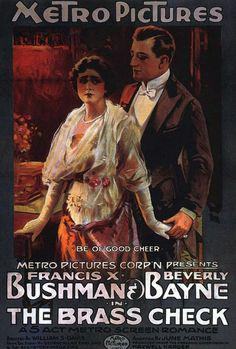
Since its 1918 debut, The Brass Check has maintained a unique vision status, the legacy of The Brass Check is a beacon for those seeking the unconventional. Our criteria for this list were simple: only the most unique vision and relevant titles.
The 1918 landscape was forever altered by the arrival of to sustain a sense of mystery that persists after the credits roll.
Henry Everett is confined to an insane asylum when he refuses to sacrifice his invention to a powerful rubber trust. Richard Trevor, the son of trust magnate Silas Trevor, becomes involved with Henry and his sister Edith, when he mistakenly picks up a baggage claim check meant for the detective Edith has hired to help her brother. After a series of daring adventures, Richard, acting as the detective, secures freedom and financial recompense for Henry, and the affections of Edith for himself.
Critics widely regard The Brass Check as a cult-favorite piece of cult cinema. Its unique vision is frequently cited as its strongest asset, solidifying its place in United States's film legacy.
Based on the unique unique vision of The Brass Check, our vault has identified these titles as the most compelling follow-up experiences for fans of cult cinema:
Dir: Will S. Davis
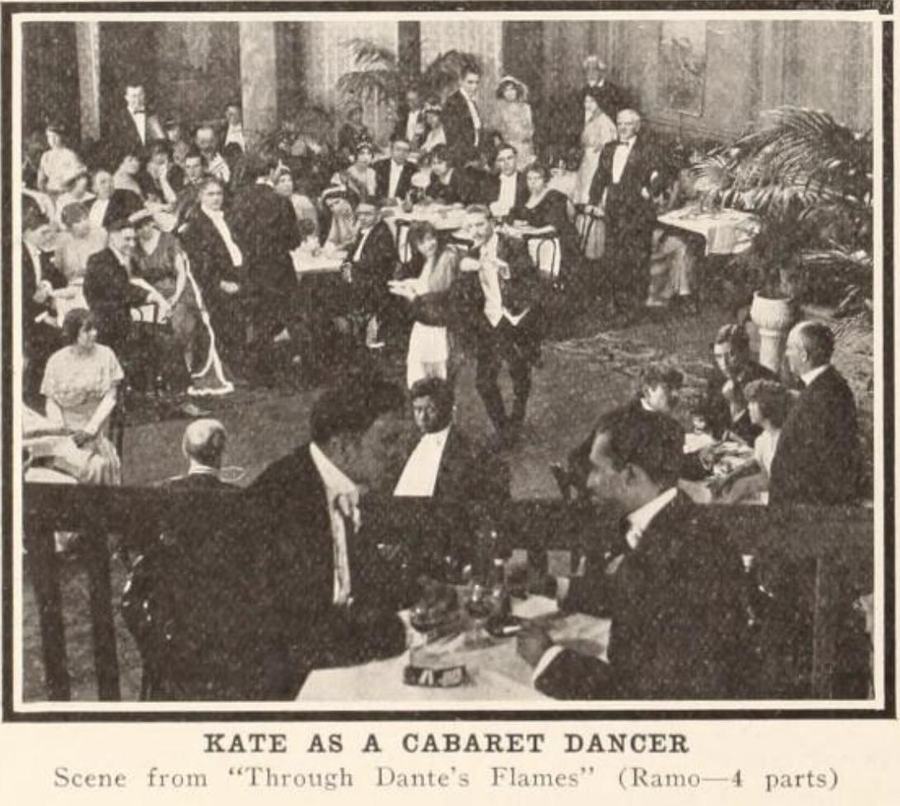
Kate Clarke and her brother, Joe, are alone in the world. Kate learns of her brother's connection with a counterfeiter's gang only when the police invade their rooms to arrest Joe. After a desperate struggle, Joe escapes, but Kate is seriously injured by an accidental blow. She recovers, but the memory of her past is gone. Kate wanders away to the city and becomes a cabaret dancer. Richard Harris, a noted artist, has a vision of creating a "Madonna," but has been unable to secure a suitable model. While visiting the cabaret, he sees in Kate the model he seeks and she consents to pose for the painting. As the painting progresses, Harris' interest ripens into love, but this only amuses her. At length, bored by posing, she suddenly goes away. The painting is yet unfinished. Harris, heartbroken over his loss, pours out the whole story in a letter to his twin brother, Joseph, a minister. Meanwhile the train which Kate had taken is wrecked near the village where Harris' brother is both pastor and physician to his flock. Interested in Kate's peculiar case, he has removed her to his home. The shock has blotted out entirely the memory of the past few years of her life as a dancer, nor does she remember how she came to be aboard the train. She recalls only her life before her first injury. The artist meanwhile has made futile attempts to finish his "Madonna." Broken in health and despondent he sends for his brother. One day, in his delirium, seeing Kate before his eyes, he finishes the painting. The brother arrives too late, but recognizing Kate as the original of the "Madonna" he takes it back home and hangs it in the church. During the minister's absence, Jane Perkins, one of his parishioners who is jealous of his attentions to Kate, finds the letter which the artist has written to his brother. She reads it and learns the tragic story of the artist and the girl who posed for the picture, the "Madonna." Kate's brother, Joe, unrepentant, is still a counterfeiter and a member of a gang located near this village. Kate and Joe meet, but he begs her not to disclose his identity or whereabouts. Unfortunately, Jane sees the affectionate parting and straightway starts a scandal. A bazaar fete is in progress in the church rooms, and while some of the congregation are admiring the "Madonna," Jane discloses Kate's past, and thus for the first time the girl, who overhears it, cruelly learns the story of her lost few years. The church members turn against her, but the minister defends her. By impersonating one of the members of the church, Fagin, a detective, captures all of the gang except Joe, who takes refuge in the church. He is tracked there and accidentally upsets a small stove, setting fire to the church. Badly injured, Joe crawls to the place where his sister is now living. The minister rescues Kate. The "Madonna" is practically the only article which escapes the flames. Kate, returning home, finds Joe. His condition requiring medical attention, she summons the minister, who remains through the night with Joe. Pledged to keep Joe's presence a secret, the minister is unable to answer the elder's demand for explanations. Joe dies and the gossiping villagers soon learn the truth. The minister presents the "Madonna"' to a Metropolitan Art Gallery where the public flock to see it. Though they may not know it, they are looking at the perfect likeness of the minister's present wife and child.
View Details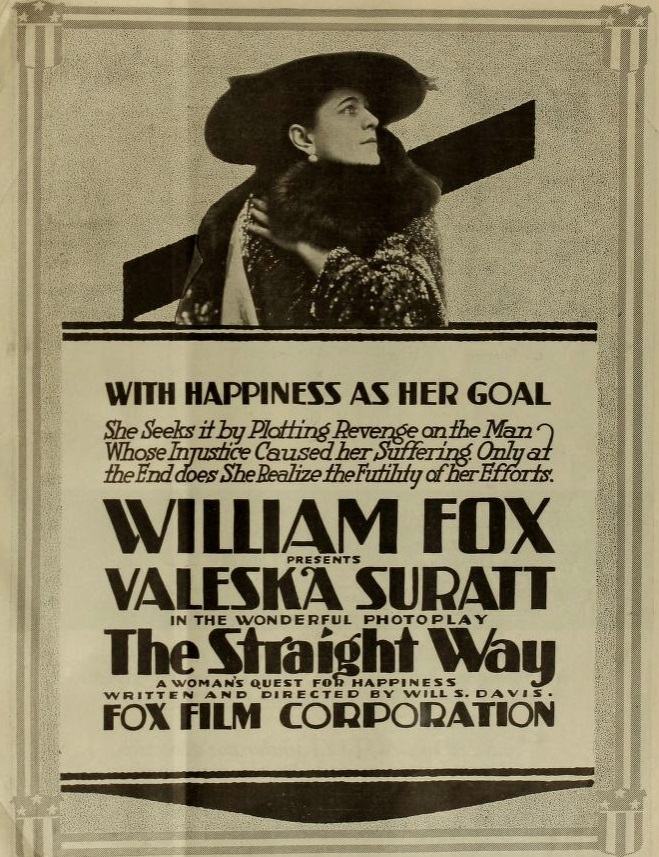
Dir: Will S. Davis
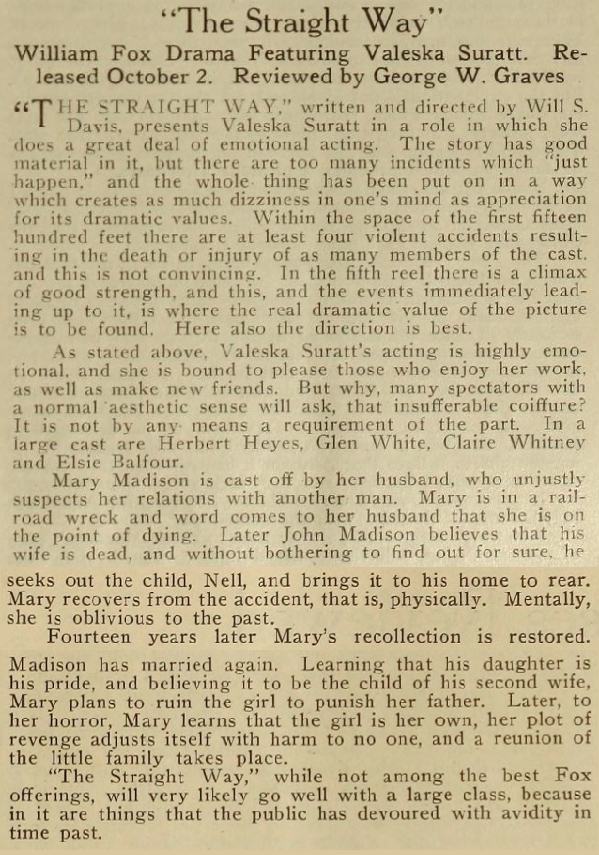
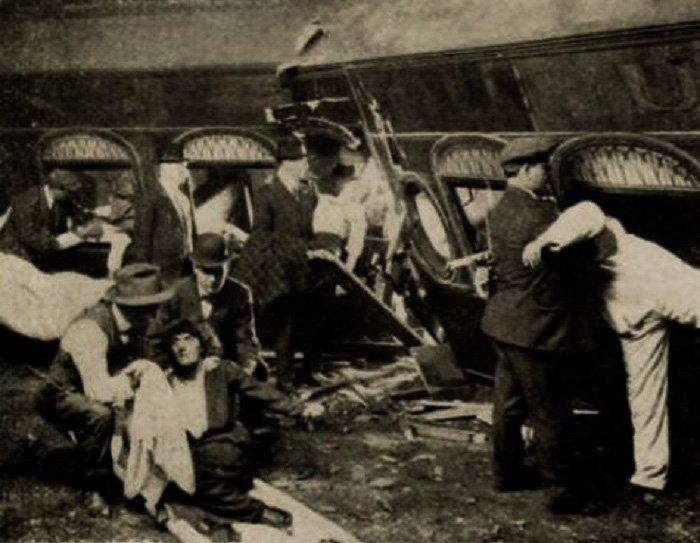
Deserted by her husband, John Madison, because he incorrectly accuses her of having an affair, Mary Madison goes to her aunt's house to have her baby, and then loses her memory in a train wreck. John, however, hears that she has died, so he takes possession of their infant daughter. Years later, John has remarried and Mary has regained her memory, but she does not know that her daughter is still alive. When she learns how John prizes his daughter, she decides to gain revenge on him by disgracing her, so she plots to have the daughter seduced by an ex-convict who served time on a trumped-up charge. The ex-convict and the daughter fall in love, however, and after their marriage, Mary finds out that the woman she tried to ruin is her own daughter. A less vengeful Mary then goes to John and is reconciled with him.
View Details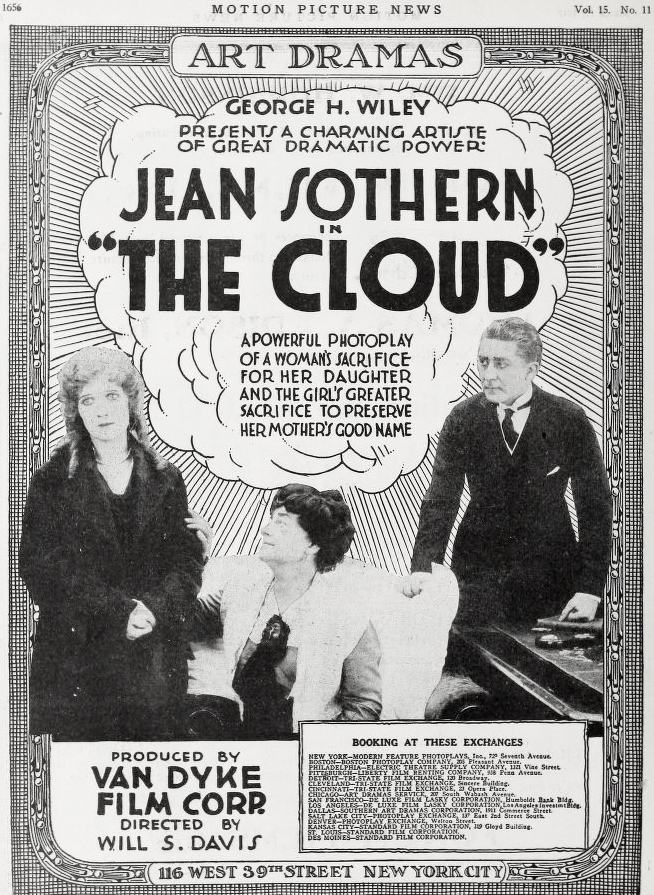
Dir: Will S. Davis
A fascinating piece of cinema that shares thematic elements.
View Details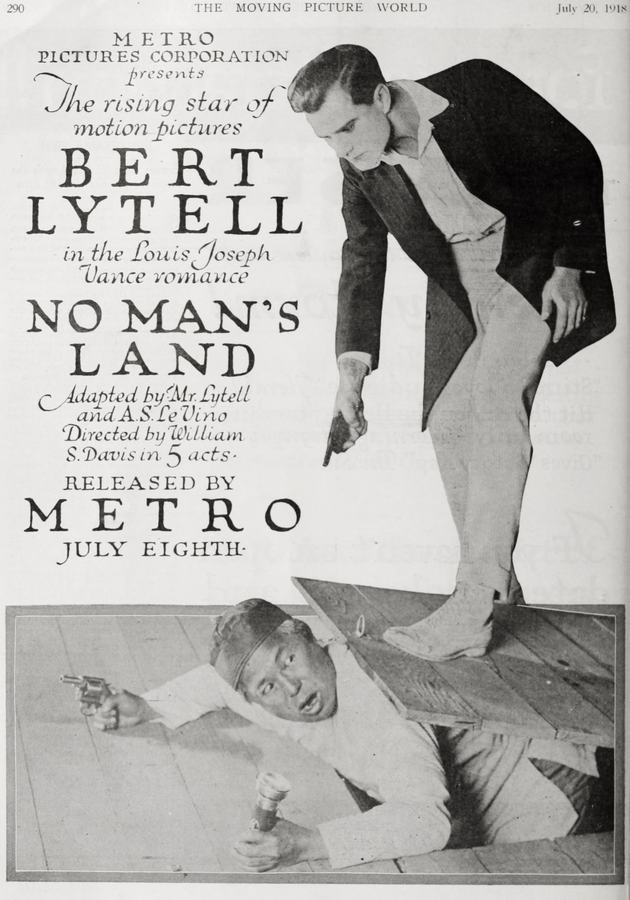
Dir: Will S. Davis
Free and easy Garrett Cope loves Katherine Gresham, but his rival, Henry Miller, who is really Heinrich Mueller, a World War I German spy, gets rid of Garrett by having him arrested for the murder of Pembroke Van Tuyl. While Garrett is in prison, Katherine marries Mueller, but Sidney Dundas, knowing that the German actually committed the crime, finally confesses, and Garrett is freed. Meanwhile, Mueller takes Katherine to a remote island called No Man's Land, which he uses as a base for blowing up Allied ships. Garrett lands on the island, and after overcoming a number of Chinese servants and German agents, he succeeds in summoning an American ship, killing Mueller, and rescuing Katherine, who warmly demonstrates her gratitude.
View Details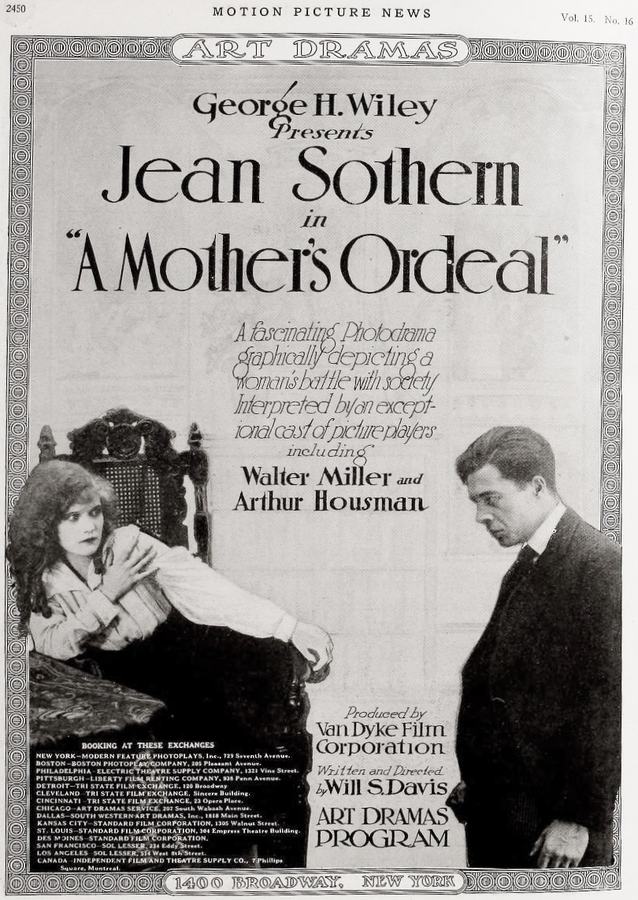
Dir: Will S. Davis
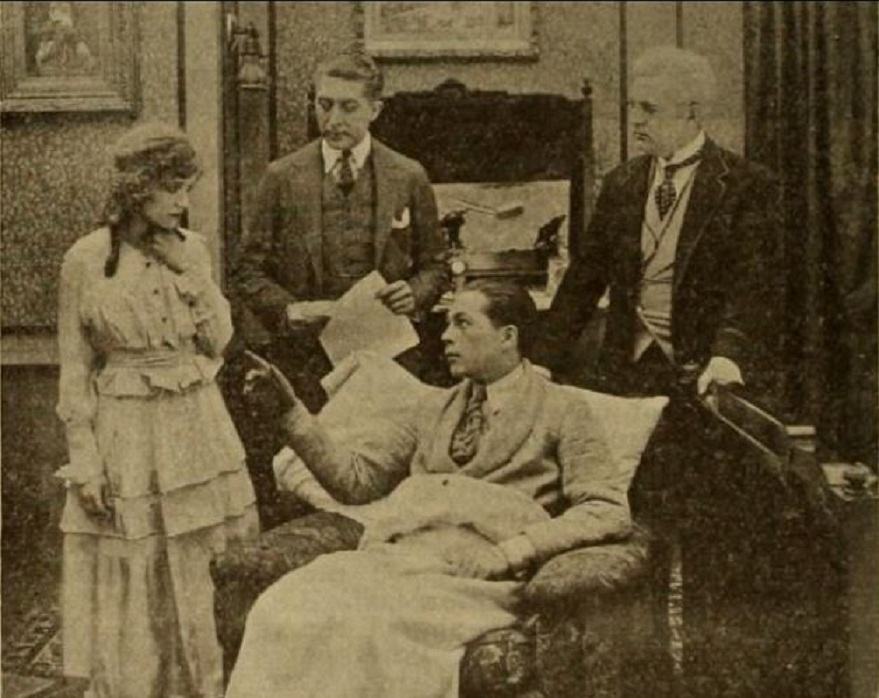
A fascinating piece of cinema that shares thematic elements.
View Details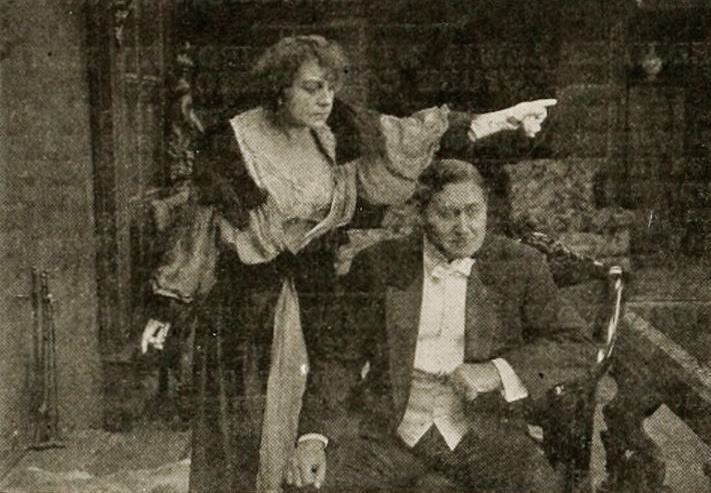
Dir: Will S. Davis
John Malvin Grey, a member of the New York Stock Exchange, pays court to Clara Fenton, who returns his affection. Miss Fenton, aspiring to extreme wealth and social distinction contrary to the dictates of her heart, accepts the proposal of marriage of Peter Vaughan, a millionaire of somewhat advanced years. Helen Barrington, possessing a secret attachment for Grey, finally becomes his wife, when he realizes that his affection for Miss Fenton can be of no avail. After her marriage to Vaughan, Clara, unable to subdue her deep love for Grey, at every opportune moment appears in his company, endeavoring to continue her love affair with him, despite the fact that she is now married. At a dinner she gives, Peter Vaughan is shocked to observe his wife's carrying-on and her persistent advances to Grey. At a climax, his attention being called to the affectionate attitude assumed by his wife toward Grey, his heart gives way, he collapses and expires. In widowhood, regardless of the fact that Grey now leads a happy married life as a beloved husband and father, she pursues her wiles and attention. Being repulsed by Grey, she conceives a plan of inveigling him with the aid of Ashton Cameron, in the purchase of Avalanche mining stock, and then to cause the market to drop, reducing Grey to all but ruin, coming to his assistance with her extreme wealth, raising the price of stock and restoring him to affluence. She engages in this plan, believing that thereby she will place Grey under everlasting obligations to her, and possibly serve her ends in having him abandon his wife, to assume relations with her. By various tricks and subterfuges, she arouses the suspicions and jealousy of Mrs. Grey, until the moment arrives, when, believing that her husband is carrying on a secret liaison with Mrs. Vaughan, she determines to divorce him. Grey's young sister Rose is in love with Philip Carlton, and throughout the entire play, reigns as the standby of Grey. Ashton Cameron, also in love with Rose, offers to assist Grey out of his difficulties on Avalanche stock, providing he uses his endeavors to procure Rose's consent to marry him. Grey refuses this assistance at the sacrifice of his sister's future happiness, and Cameron proceeds to carry out his agreement with Mrs. Vaughan to ruin Grey. Polly, a street waif who is injured in an accident by Grey's automobile, is adopted by him into the family as his charge. In the denouement at a gathering at the office of Shaw, Grey's family lawyer, Polly reveals that she has observed Grey repulse Mrs. Vaughan, and declare to her that he loves his wife and will have nothing to do with her. Mrs. Vaughn is confronted with the proof of her various intrigues and diabolical schemes to arouse Mrs. Grey's jealousy, and finally admits the true situation and her own despicable actions. Grey is reconciled to his wife, and Clara Vaughan is left to pursue her way in the world, rejected and alone.
View Details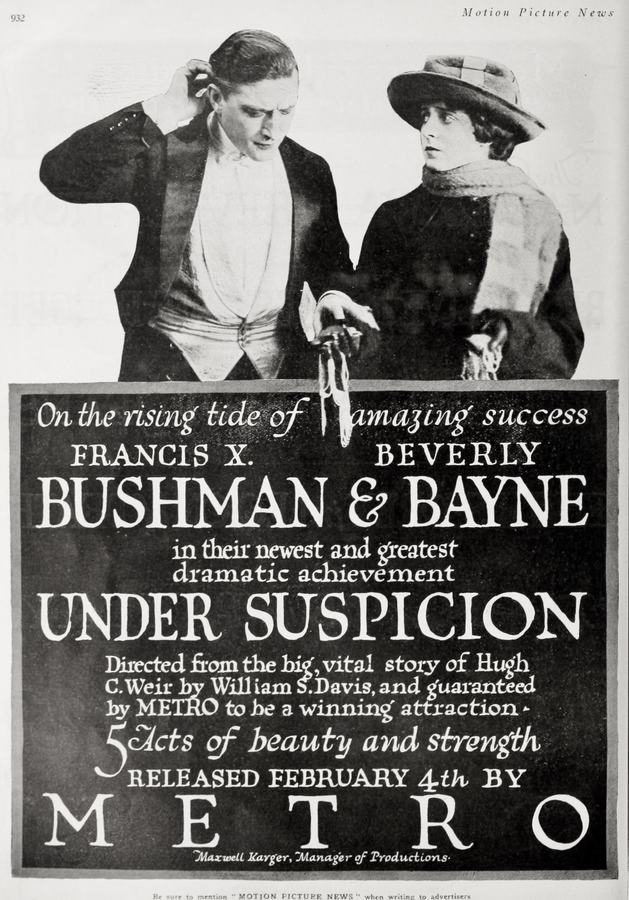
Dir: Will S. Davis
At a high society musicale, millionaire Gerry Simpson meets and falls in love with newspaper reporter Virginia Blake, whose disdain for the "idle rich" causes him to claim that he is a cub reporter on her paper. When the party is interrupted by the announcement that a burglar has stolen hostess Alice Woolworth's jewels, Virginia secures the button torn from the robber's coat by Mrs. Wentworth's pet monkey and is determined to solve the crime. Virginia begins to fall in love with Gerry, who has actually taken a job with the paper, but one day she notices that his coat is missing a button identical to the one that she obtained at the party. Believing him to be the thief, she searches his apartment and locates a cache of jewels. At that moment, however, Gerry's valet Rogers enters, and suspecting that she has discovered his guilt, he attacks her. After Gerry rescues Virginia, Rogers is imprisoned, and Gerry wins his girl's heart by promising to work hard as the editor of the newspaper he has just bought.
View Details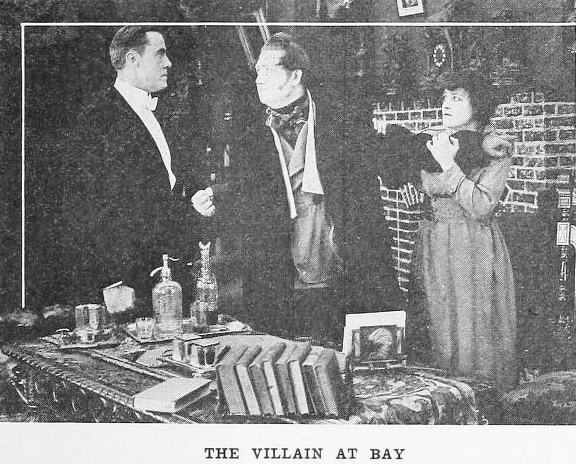
Dir: Will S. Davis
Anson, a clown, lives happily with his wife and his small daughter until Randall, a wealthy libertine, begins to pay attention to Anson's wife. Randall alienates the love of Mrs. Anson and induces her to leave her home. Anson follows his wife to Randall's home, murders her and chokes Randall into unconsciousness. He disposes of his wife's body by throwing it over a cliff. Anson transfers to his daughter the affection he formerly lavished on his wife. He makes money in the oil industry and leaves the stage. Despite his opulence and his love for his daughter, he cannot forget the man who wrecked his home. He learns that Randall, now married, is to be the guest of a Mr. and Mrs. Mendell. Anson, who has become the partner of Mendell although the two have never met, sends word to Mendell that he is going abroad and that in his absence his business interests will be cared for by his confidential man. He suggests that his confidential man be allowed to take up residence in the Mendell household. The proposition is favorably received, and Anson, disguised as a butler, becomes an inmate of Mendell's home. Mendell devotes no small attention to Mrs. Randall. When Anson discovers this he does everything in his power to aid Mendell in the latter's conquest of Mrs. Randall. Mendell, however, is also an admirer of Anson's daughter, Ethel, whom he has seen while out riding. Unaware that Ethel is Anson's daughter, he breaks into Anson's home, carries off Ethel and speeds away in an automobile. En route to his special apartment, the machine is wrecked and Ethel is knocked unconscious. She is taken into the Mendell home and placed in bed in the room which has been vacated by Mrs. Randall, who tired of Mendell's attentions. Mendell, recovering from slight injuries sustained during the automobile accident, returns to his home. He goes to the room in which Ethel is sleeping. Anson, unaware that it is his own daughter in the room, suggests that Mendell take the woman he admires to his apartment. Anson slips into the room, chloroforms his own daughter in the belief that she is Mrs. Randall, and carries her off to the den maintained by Mendell. He leaves her in the power of Mendell and then telephones Randall that Mrs. Randall is in an apartment with Mendell. Randall hurries to the apartment, kills Mendell and then discovers that the woman in the room is not his own wife. The big moment of the action comes when Anson discovers that the woman he has turned over to Mendell is his own daughter.
View Details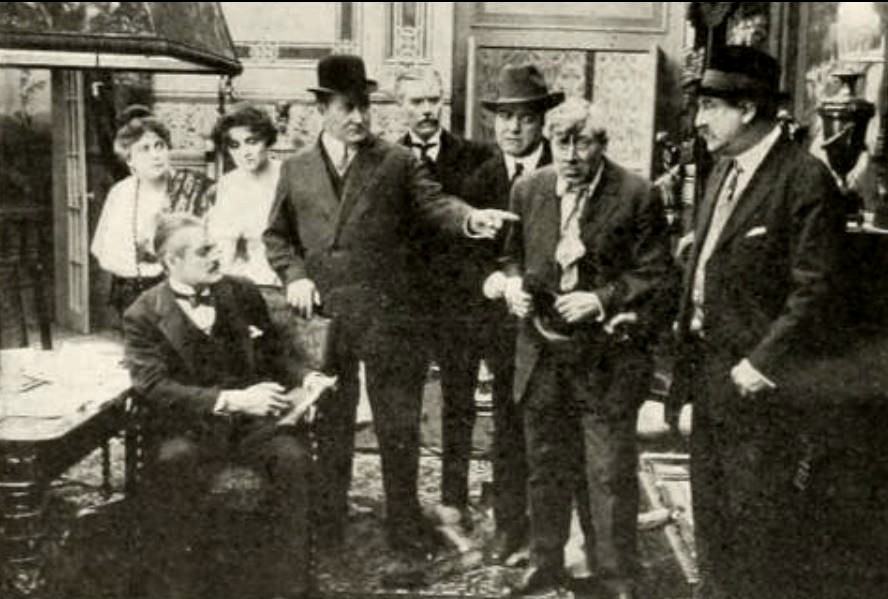
Dir: Will S. Davis
Randolph Legarde, a senior judge of a criminal court, betrothed to Agnes Caverly, is injured by the kick of a horse at the base of his skull. The injury has the effect of establishing in Judge Legarde a dual personality. Miss Caverly, together with her father, a lawyer, is a guest of Judge Legarde and his sister at their apartments. In his courtship, inspired by a feeling of affectionate sentiment, he requests that her "good night" wishes to him be expressed by her playing on the piano, Schubert's Serenade. A few evenings after the accident, as she is rendering this selection, and he listening, he feels an uncontrollable impulse stealing over him to perform some act of lawlessness or violence. The dual personality has its inception, and Judge Legarde, with distorted countenance and the carriage of a thief, suddenly becomes metamorphized into a being of the underworld. He steals out of his house, and on his ramblings through the city, ultimately finds himself the habitué of a den known as the "Lame Duck." Each night this same impulse steals over him, and each morning finds him unconscious at his desk, restored to his original personality. He endeavors to fight off and battle with this evil influence, but without avail. Several thefts and acts of violence occur in the city, which the police authorities are unable to settle upon any one man, but of all these, Judge Legarde is the moving spirit. Allying himself with this band of denizens of the underworld, he becomes infatuated with Amelia, a girl of bewitching beauty, who at the time when Judge Legarde was presiding over his court, was sentenced by him to prison for the theft of a necklace from Miss Caverly, whose maid she was at one time. Amelia meets Legarde in "The Lame Duck" and there charges him with being Judge Legarde. Under the influence of the dual personality he cannot recognize the truth of the accusation, and the girl and the other habitués of the place, impressed by his vehement denial, fail to pursue the subject. He plans a robbery of his own home with the air of "Big Charles" and others. "The Quill," a stool pigeon of the police, reveals the plan of the contemplated theft. They arrive at Judge Legarde's house just at the moment that Big Charles and his pals attempt to escape, and when Judge Legarde undergoes the transformation from the thief to his former good self. Miss Caverly and her father are under the belief that over work and attention to his professional duties are the causes of his strange lapses of memory which Judge Lagarde is subjected to, but never suspecting the real truth. Miss Caverly's marriage to Judge Legarde is deferred until his complete restoration to health. Caverly engages, without Legarde's knowledge, the services of an eminent brain specialist who undertakes to eradicate the dual personality, and at a time when the good personality is about to pass away and the evil one to find its inception, the specialist merges the two into one, finally restores Judge Legarde to permanent health. His marriage to Miss Caverly is consummated.
View Details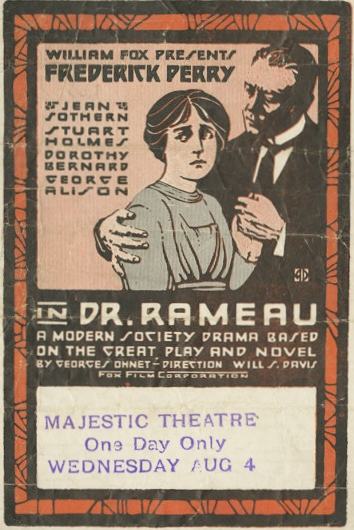
Dir: Will S. Davis
Pierre Rameau, the son of a poor gate-keeper, becomes the foremost physician and surgeon in Paris. Conchita, his wife who he loves above everything else in the world, dies leaving an infant daughter, Pamela. Rameau is inconsolable and keeps the room that Conchita died in inviolate, visiting it only on the anniversary of his wife's death. Twenty years later on one of these visits he discovers, among one of Conhita's letters, proof that she had been unfaithful to him and that Pamela, the girl he had raised from an infant to womanhood, was not his child. The shock drives him out of his mind, and he drives Pamela from his home, refusing to ever see her again. Dr. Talavanne, his best friend, informs him that Pamela is dying and only Rameau's skills as a physician can save her.
View DetailsAnalysis relative to The Brass Check
| Film Title | Atmosphere | Complexity | Similarity |
|---|---|---|---|
| Through Dante's Flames | Gritty | High | 92% Match |
| The Straight Way | Gothic | Layered | 96% Match |
| The Cloud | Tense | Linear | 87% Match |
| No Man's Land | Ethereal | Layered | 95% Match |
| A Mother's Ordeal | Gothic | Linear | 90% Match |
This guide was algorithmically generated using the cinematic metadata of Will S. Davis's archive. Last updated: 6/20/2026.
Back to The Brass Check Details →