
DbcultAccessing Vault...
Recommendations
Senior Film Conservator
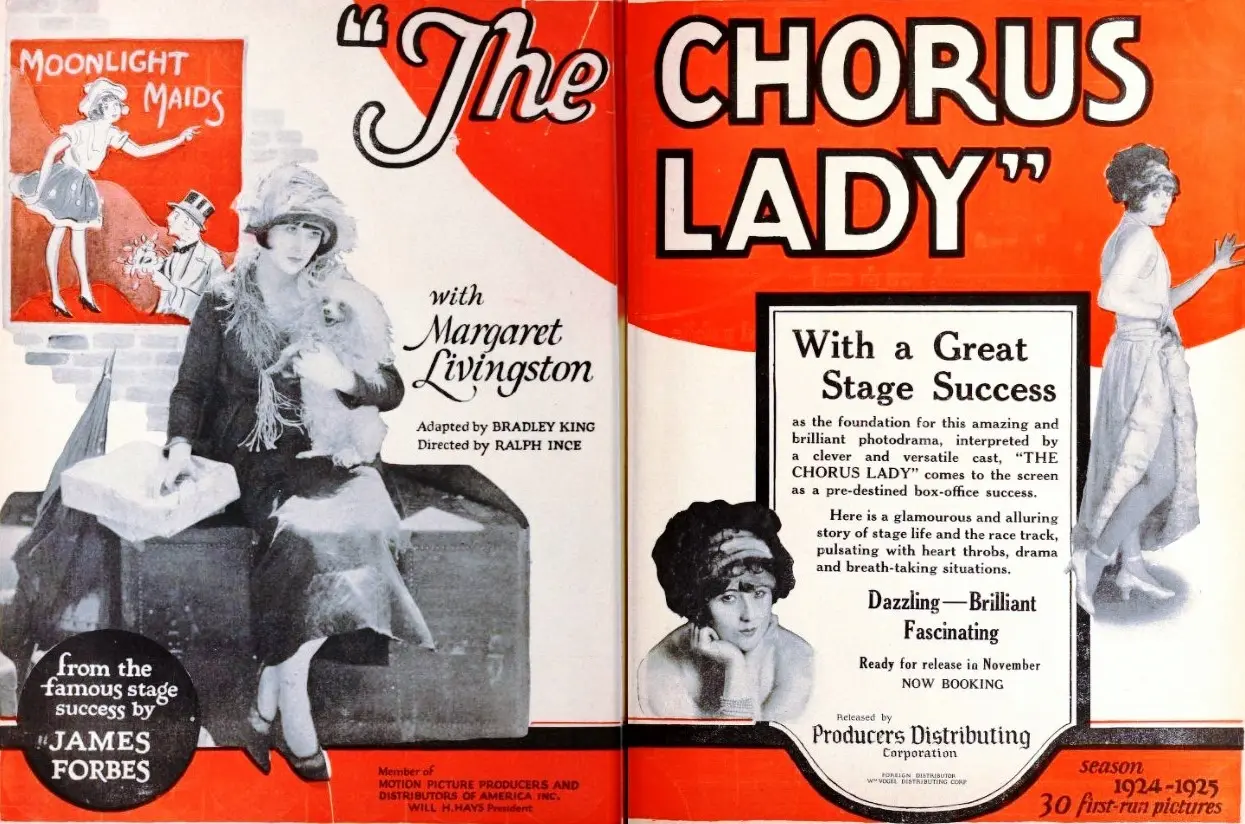
In the vast archive of Comedy cinema, The Chorus Lady stands as a thematic gravity beacon, it's essential to look at the contemporaries that shared this thematic gravity. Our cinematic experts have identified several titles that reflect the spirit of 1924.
Few films from 1924 manage to capture to leave an indelible mark on the history of United States film.
Patricia O'Brien, a chorus girl, plans to marry Dan Mallory, but a fire in Dan's stables blinds his prize filly, Lady Belle, and forces him to postpone the wedding. Pat returns to New York with her sister, Nora, and the girls find work in the Follies. In spite of Lady Belle's blindness, Dan enters her in a race, and she wins $20,000. When he arrives in New York to give Patricia the good news, he discovers that she has gone to the apartment of Dick Crawford, a notorious gambler and philanderer. Dan goes to find Patricia and, through a misunderstanding, believes that she is having an affair with Crawford. Dan and Patricia are reconciled, however, when he discovers that she went to Crawford's apartment only to look for Nora, who had become involved with the gambler. Dan and Patricia are soon married.
Critics widely regard The Chorus Lady as a cult-favorite piece of Comedy cinema. Its thematic gravity is frequently cited as its strongest asset, solidifying its place in United States's film legacy.
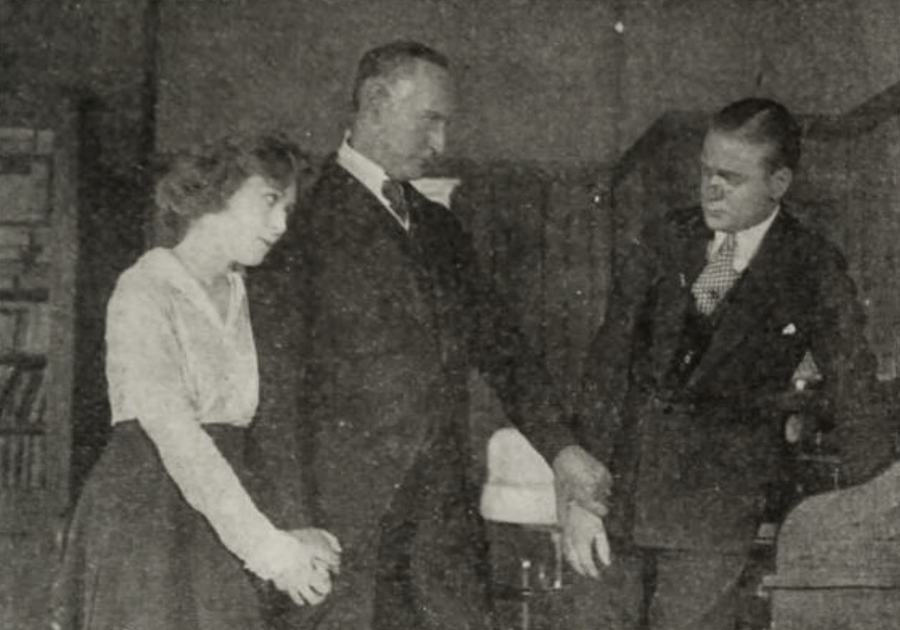
Based on the unique thematic gravity of The Chorus Lady, our vault has identified these titles as the most compelling follow-up experiences for fans of Comedy cinema:
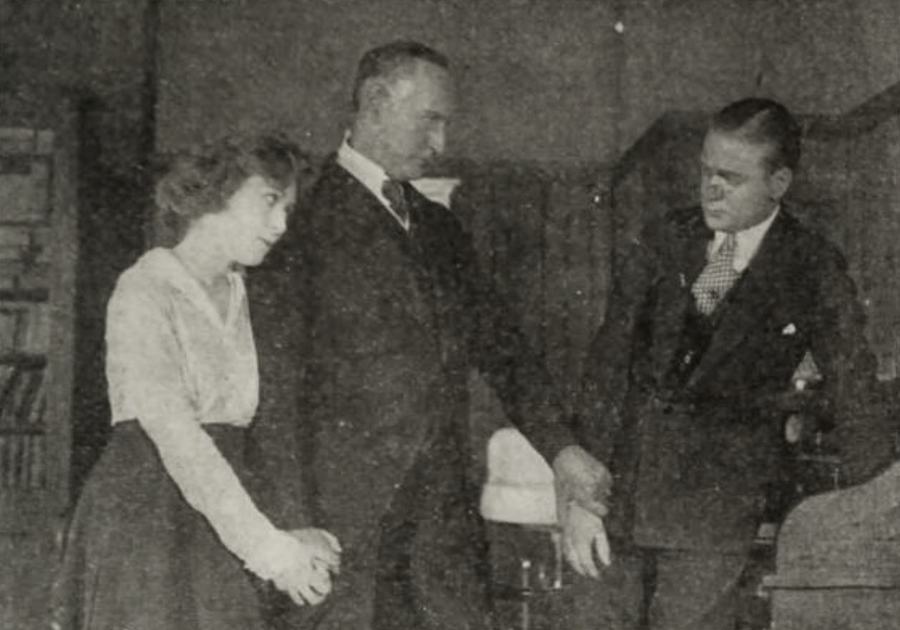
Dir: Ralph Ince
Mary Ellen McKay, a country girl, comes to New York to become a singer. She stops at a furnished room house, and expends her savings on useless lessons, for her voice is only mediocre. Harry Weatherby is a disappointment of his millionaire father, who hopes to make him a captain of industry. Instead, Harry is a ne'er-do-well. While visiting Dr. Cameron, a friend of the family, he sees Mary Ellen across the way, and a flirtation starts. It eventually results in marriage. Harry is afraid to break the news to his stern father; his mother does, and he does. Enraged, Weatherby visits Mary and tries to buy her off. But she spurns his money, and he changes his tactics. He tells her he likes her, that he will give a party in honor of the marriage. He enlists the aid of Silk Harrington, who brings along a number of his smart tenderloin friends who pass themselves off as society. They influence her to drink, and soon she is acting very foolish. Harry arrives, sees her condition, and denounces her, thinking this is her true self. Harry's father leaves her a check for $10,000 before he goes, if she will promise never to see Harry again. She crumples the check in her hand, when the truth dawns upon her, and it is later picked up by Silk Harrington, who plans to use it. Mary goes home, thoroughly crushed and humiliated. She tries to commit suicide, but a friend. Kate Weld, a trained nurse, who lives across the hall, and Dr. Cameron save her life. Learning she is a stranger in New York, Dr. Cameron takes her to his country home to recuperate. Harry plunges into business to forget, and his father is happy. Mary recovers her health, but her faith is shattered. She wants to go out into the world now and have a good time. Dr. Cameron argues in vain. He decides to take her sightseeing. First he takes her to Cherry's, then to the Haymarket, where she sees the broken-down men and women. He tells her that is the price that must be paid. Lastly he takes her to his mission on the East Side. Here he tells her a story. He, too, was in love and lost. He tried everything in his pursuit of forgetfulness, and finally discovered solace for his sorrow in brightening the lives of others. Mary tells him she, too, wants to do this work. Meanwhile Harrington tries to pass the check. Harry is summoned to the bank and learns the truth through Harrington. He goes home and a big scene follows between him and his father. He eventually locates Mary. At first she does not want to forgive him, but she finally capitulates.
View Details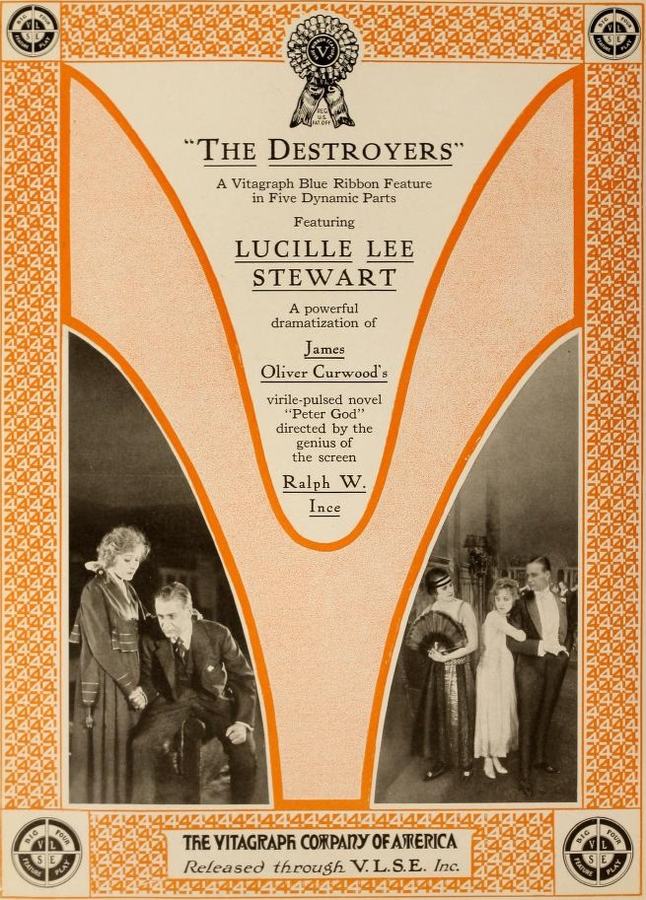
Dir: Ralph Ince
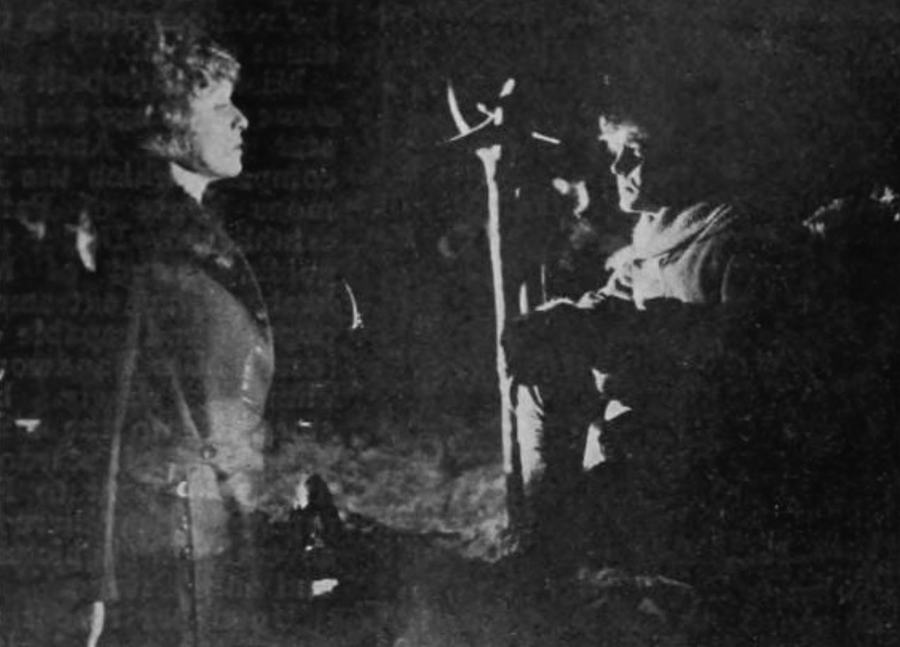
Canadian Mountie Philip Curtis is telling Josephine McCloud, with whom he is in love. about a hermit who once saved his life and nursed him back to health. Josephone remains impassive until Philip tells her the hermit's name: Peter God. At the mention of his name, Josephine begs Philip to find Peter and take him a letter she had written to him. Puzzled but not wanting to deny anything to the woman he loves, he sets out to find Peter, but when he does he discovers that Josephine has a connection to Peter that Philip knew nothing about.
View Details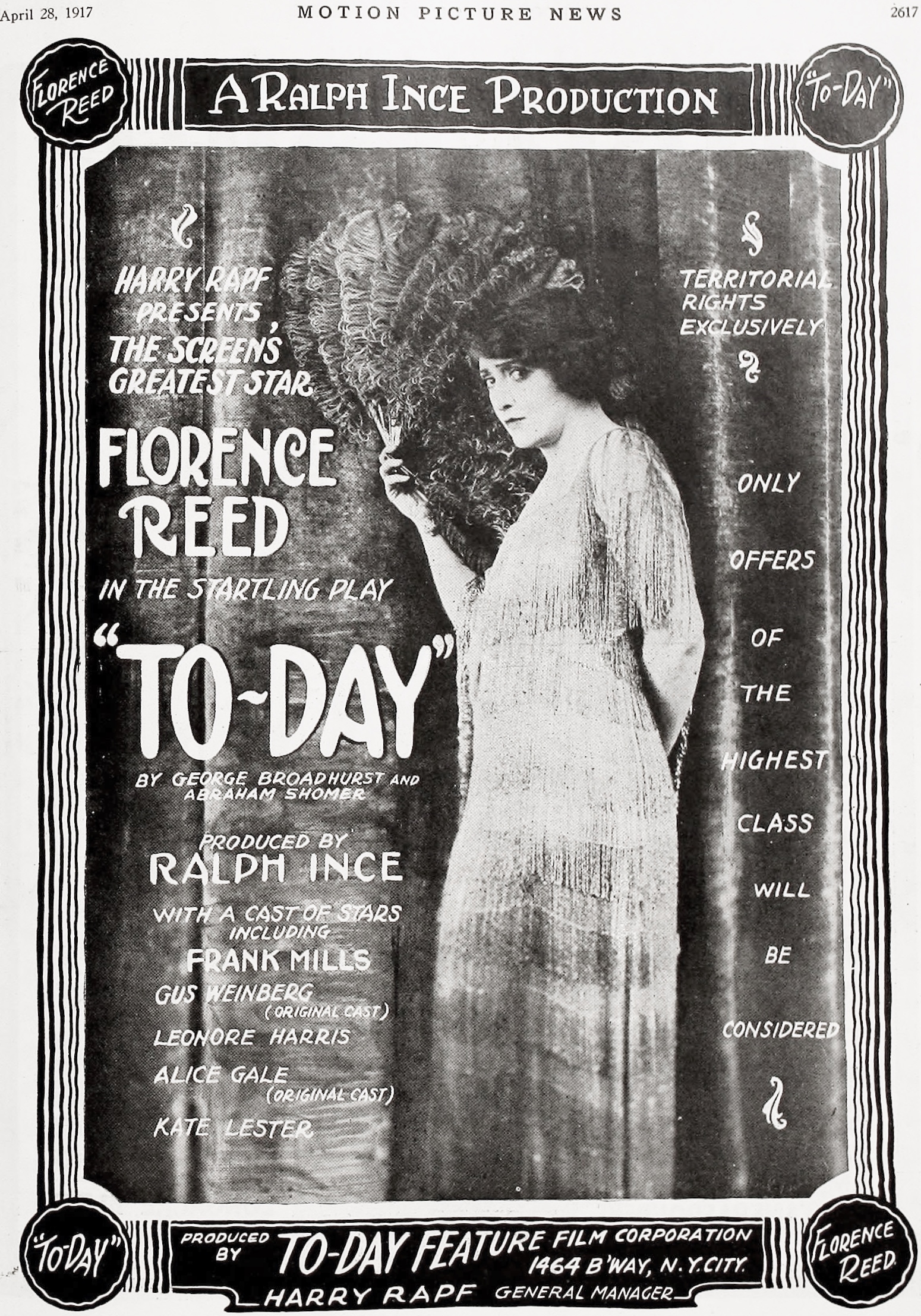
Dir: Ralph Ince
When her husband Fred goes bankrupt, Lily Morton is forced to give up the trappings of wealth and move into a humble home while Fred attempts to fight his way back to prosperity. Resentful of her modest circumstances, Lily accepts her friend Marion Garland's offer to introduce her to Mrs. Farington, a woman who will pay handsomely for Lily's escort services. Lily goes to work for Mrs. Farington while her unsuspecting husband struggles to regain his former wealth. While managing an apartment house for one of his wealthy clients, Fred visits Mrs. Farington, a tenant, and, noticing a framed picture of Lily, asks to be introduced to the girl. Mrs. Farington arranges the rendezvous, and when Lily arrives, she is confronted by her enraged husband who chokes her to death. At this moment, Lily awakens from her nightmare, and chastened for her superficiality, begs Fred for forgiveness.
View Details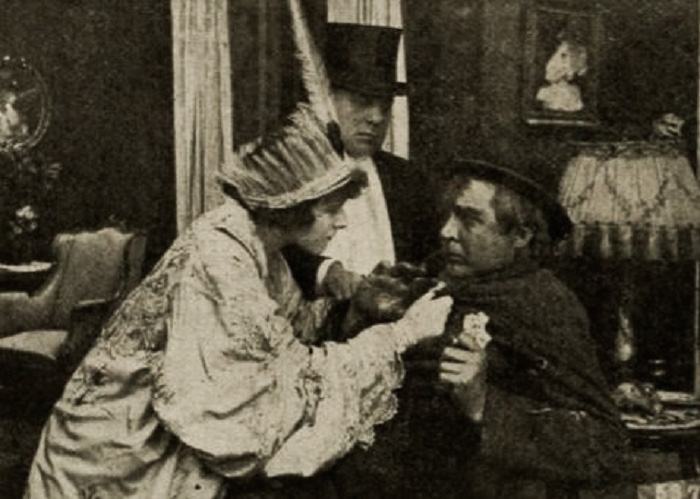
Dir: Ralph Ince
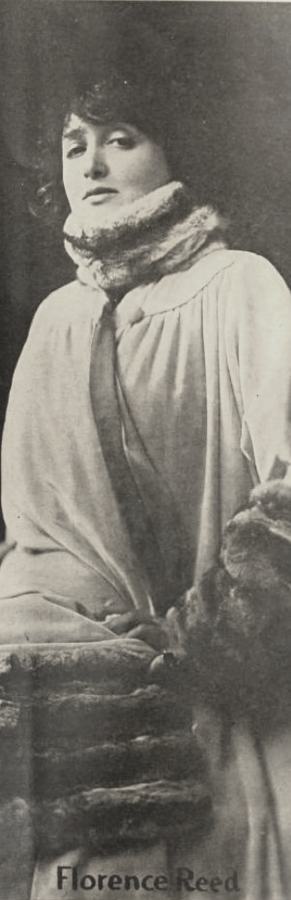
By one of those strange mistakes of nature, a child is born to Elois, an actress. The advent of the child, Yvette. arouses in Elois the one fine trait in her nature, a tremendous mother-love. To keep the child clean and to protect it from the influence of her life and that of its dissolute father, becomes the one passion of her soul. The moment comes when it is borne upon her forcibly that the child must be sent away. She sends Yvette to a fashionable boarding school, instilling in the child's mind that she is a lady and the daughter of a wealthy widow, travelling extensively. From her life at boarding school, Yvette dreads her visits home where she has to suffer the passionate, suffocating embrace and dreary companionship of a perfumed woman, her mother. On one of these visits she meets her father, under conditions so strange that she was gradually led to believe they were dreams, as her mother said, and the scar her mother carried across her eye, came to her in a fall. Her schooling over, Yvette, on the threshold of the world, returns home. Her mother leaves her alone the first night and her father, deep in his cups, pays her a visit and, in his maudlin drunkenness, discloses the fact that her mother is an actress. Yvette, unbelieving, rushes to the theater, and from a seat in the balcony, sees her posing in the semi-nude. The veneer that has been added to Yvette in years of training, lays bare the coarse, primal grain. Without letting her mother know, she becomes a burlesque queen. Her mother returns one night to find her husband there and her daughter missing. In the midst of a terrific scene, in which she tries to make him tell where the girl is, Yvette enters, now a member of the painted world. The mother realizes that her daughter is gone, and does the inevitable, saves the girl's soul at the cost of her body; lays a double crime to the man who has caused all her misery, and the tragedy ends in his being cornered, powerless to explain.
View Details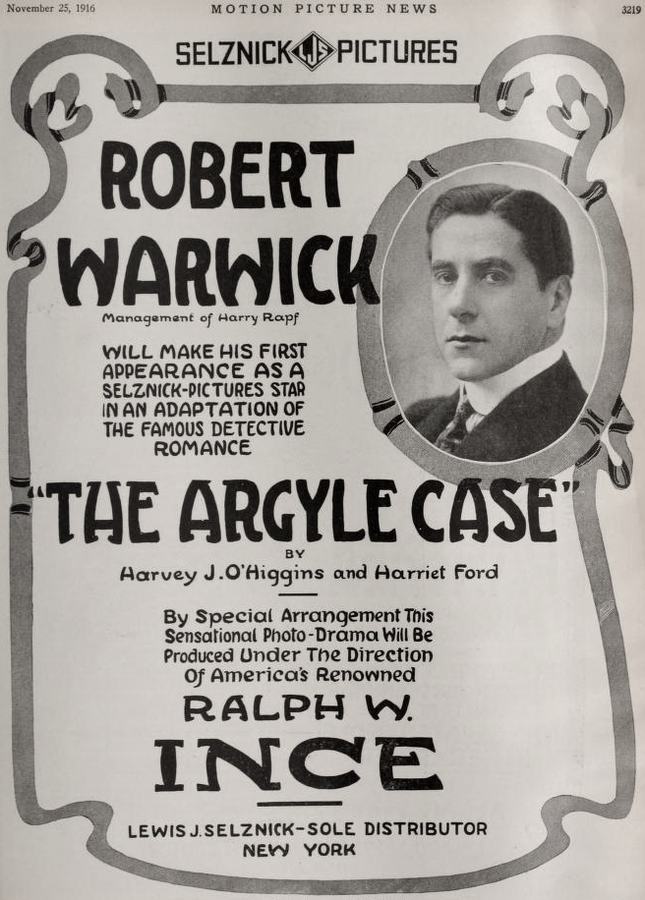
Dir: Ralph Ince
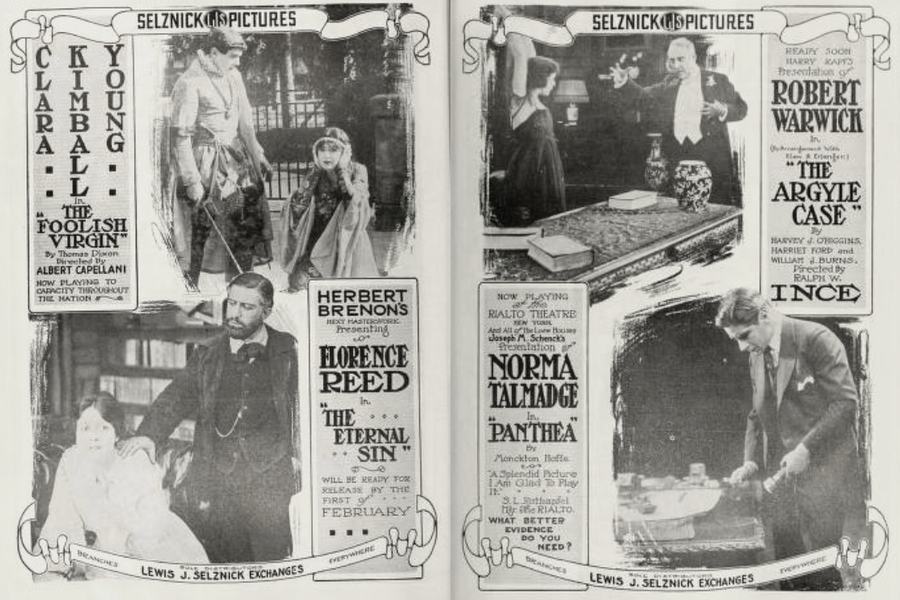
The story is that of the mysterious murder of John Argyle, a multi-millionaire, in the library of his home. Circumstances point toward Argyle's adopted daughter Mary, who is the beneficiary under his will, Argyle having quarreled with his son Bruce. Just as the case begins to look black for Mary, Asche Kayton, a great private detective, is called in by Bruce and takes hold of the investigation. His methods are scientific and swift and the trail leads to a den of counterfeiters, where, by use of the dictograph and other modern devices, the real murderer is run to his lair. Kayton falls in love with Mary, who is finally vindicated. Kayton's reward is the girl.
View Details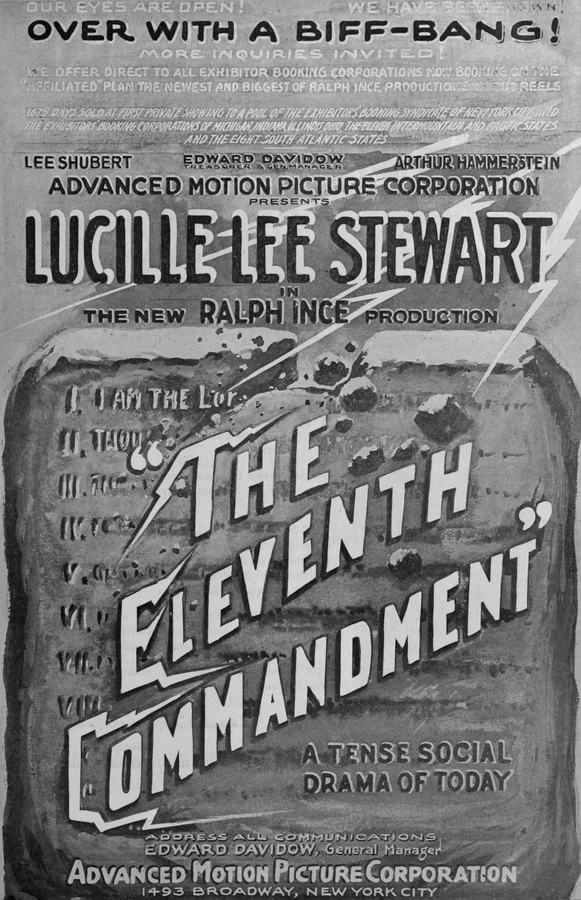
Dir: Ralph Ince
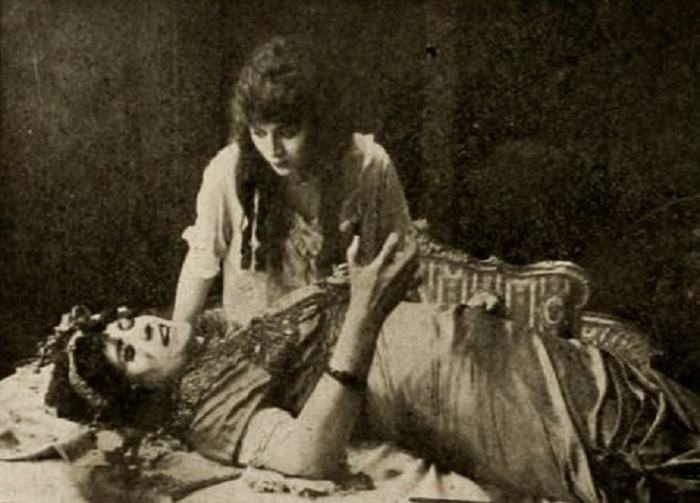
Dora Chester violates the Eleventh Commandment -- "Thou Shalt Marry None but the Man Thou Lovest" -- when she rejects her sweetheart, Robert Stanton, and becomes engaged to the wealthy Kenneth Royce. Royce is actually a stock gambler, and after he goes broke, he forces Dora to give him a sum of money that has been placed in her charge by her employer. Royce loses the money and runs away, but Dora refuses to implicate him in the crime and is sent to prison for a year. After her release, Dora meets and marries Robert, who knows nothing of the affair, but when Royce appears and threatens to blackmail her, she confesses everything. A policeman arrives and shoots Royce, who exonerates Dora just before his death.
View Details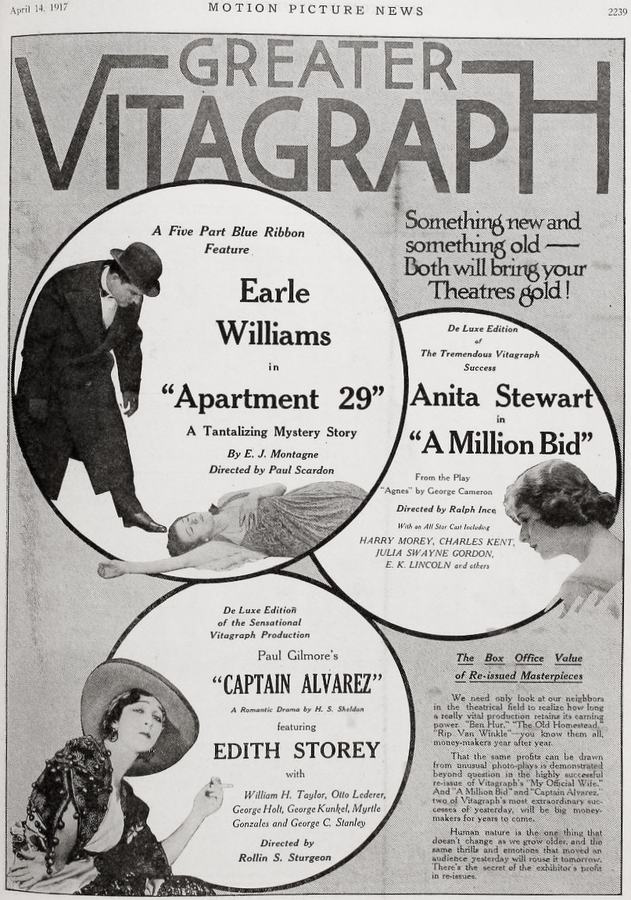
Dir: Ralph Ince
The story concerns a mercenary and managing mother and her daughter, Agnes. The young lady loves a youthful doctor, but a match is frustrated by the mother, who seeks to marry the daughter to the highest bidder. The mother's extravagance ruins the father, who, being in ill health, succumbs to heart failure. With poverty staring them in the face, the mother takes Agnes abroad, finally forcing her into a marriage with an Australian millionaire. To do so, the mother intercepts all letters between Agnes and the young doctor, with the result that each feels that the other has ceased to care. The millionaire and his young wife, while on their honeymoon on his yacht, are shipwrecked. He is dealt a terrible blow on the head, and it completely destroys his memory. The young wife is saved and returns to America, while her husband is picked up by a French fisherman. His memory gone, he does not recall his previous existence in America. Agnes and the doctor renew their love affair and finally marry, excellent proof having been furnished that her former husband had drowned in the shipwreck. There is no opposition to the marriage now, as the mother also had perished in the catastrophe. Five years later, the young doctor has become a famous brain specialist. To him, Agnes' former husband comes for an operation in the hope of restoring his lost memory. The two men, never having met, fail to learn they are both married to the same woman. She discovers it, however, and with her happiness at stake, does not tell her surgeon-husband the truth, but attempts to dissuade him from operating on her first husband, fearful that the operation will prove successful and her first husband regain his lost memory and recognize her as his wife. The humanity in the surgeon surmounts his wife's pleas, but the patient fails to withstand the operation and Agnes' happiness is assured, despite the terrible situations which confronted her.
View Details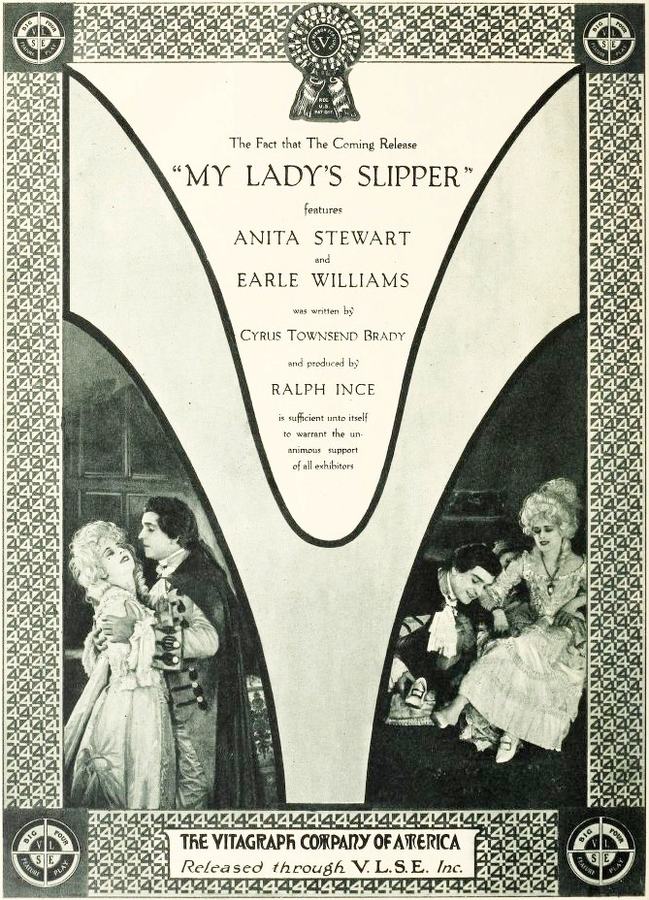
Dir: Ralph Ince
Francis Burnham, a young American naval officer in the time of King Louis XVI of France, escapes from a British convict ship. He is desirous of reaching Paris to see Benjamin Franklin, then his country's Minister, but upon his arrival there learns Franklin is away. He meets Bucknall, an old shipmate, and earns his everlasting gratitude by helping him out of financial difficulties. Later, strolling through the suburbs of Paris, he has the good fortune to rescue a beautiful lady from a highwayman, but does not learn her name. Meanwhile his restless nature gets him into gambling, he loses all and becomes indebted to a stranger who proves to be the Marquis de Tremignon. By threats and promises to wipe out his obligations, the Marquis secures Burnham's aid in the scheme he has in mind. He tells the young American that he is in love with the Countess De Villars. and she with him but her grandfather objects, so the Marquis plans to force his consent by securing some article of wearing apparel from the Countess and thus compromise her. Burnham is to be his agent. He does not think very highly of the job, but when the Marquis threatens him with imprisonment, he consents. That night he enters the Countess' apartments and succeeds in securing one of her slippers but is confronted a moment later by the lady herself. She proves to be the lady he rescued from the highwayman. Crushed and humiliated, Burnham tells his story and she believes him. He learns that she hates the Marquis and that the rascal is really trying to force her into a marriage in this cowardly fashion. Before she goes she gives him her slipper to take to the Marquis, but instead he keeps it and denounces that gentleman to his face for which he is imprisoned. The slipper Burnham entrusts to Bucknell for safe keeping, and the old seaman takes it to the Countess, telling her what has transpired. She helps Burnham to escape from prison, but he is captured by the Marquis's soldiers before he can reach the border. The Countess's influence, however, secures an audience with Queen Marie Antoinette, as a result of which the Marquis is humiliated while Burnham is freed, and marries the Countess.
View Details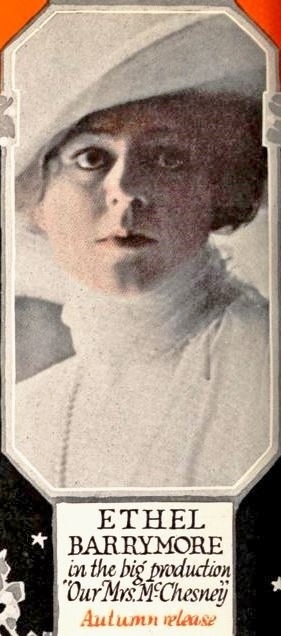
Dir: Ralph Ince
Mrs. Emma McChesney is a determined and successful traveling saleswoman for T. A. Buck's Featherbloom Petticoat Company. When Buck dies and his son, T. A. Buck, Jr., takes charge, the company suffers and Emma nearly accepts a job offer from Buck's rival, Abel Fromkin. On her last sales trip, however, she learns that her son Jack has married chorus girl Vera Sherwood, and because Buck demonstrates such concern for the boy, Emma decides to remain with him. Distraught that Jack has married so young, Emma sends the bride away to boarding school while Jack takes a job with the company. Later Emma discovers that the firm is approaching bankruptcy, so she invents a new skirt which, as modeled by Vera and promoted by Jack, rocks the fashion world and saves Buck's company. Having fallen in love with Emma, Buck proposes and she accepts.
View Details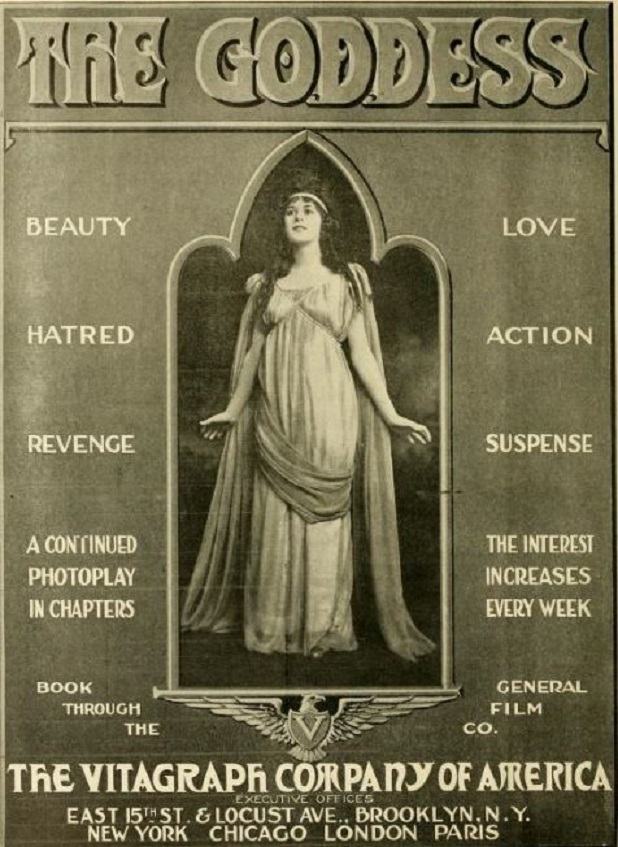
Dir: Ralph Ince
A young girl is reared on a desert island by natives and led to believe that she is a goddess. One day an outsider comes to the island, and persuades her to accompany him to preach about the kindness and love she has experienced. She agrees, but she's soon confronted by the problems and travails of the "outside" world.
View DetailsAnalysis relative to The Chorus Lady
| Film Title | Atmosphere | Complexity | Similarity |
|---|---|---|---|
| His Wife's Good Name | Gothic | Abstract | 89% Match |
| The Destroyers | Gritty | Layered | 88% Match |
| To-Day | Surreal | Abstract | 92% Match |
| The Painted World | Ethereal | Layered | 94% Match |
| The Argyle Case | Surreal | High | 97% Match |
This guide was algorithmically generated using the cinematic metadata of Ralph Ince's archive. Last updated: 6/24/2026.
Back to The Chorus Lady Details →