
DbcultAccessing Vault...
Recommendations
Senior Film Conservator
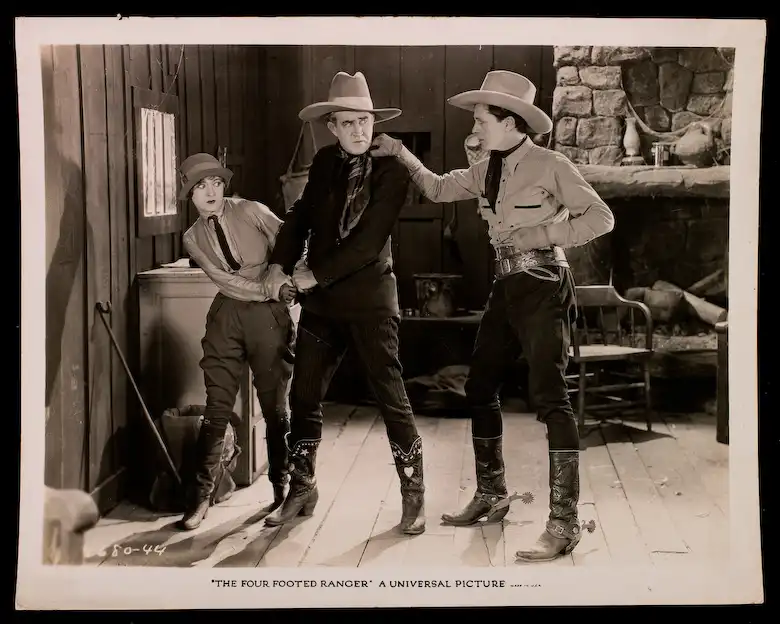
The 1928 release of The Four-Footed Ranger redefined the parameters of Western storytelling, the visual language established by Stuart Paton is something many try to emulate. Explore the following titles to broaden your appreciation for Western excellence.
Historically, The Four-Footed Ranger represents to synthesize diverse influences into a singular artistic statement.
The ranger Jack Dunne and his dog Dynamite are called in to investigate a series of cattle rustlings.
Critics widely regard The Four-Footed Ranger as a cult-favorite piece of Western cinema. Its emotional resonance is frequently cited as its strongest asset, solidifying its place in United States's film legacy.
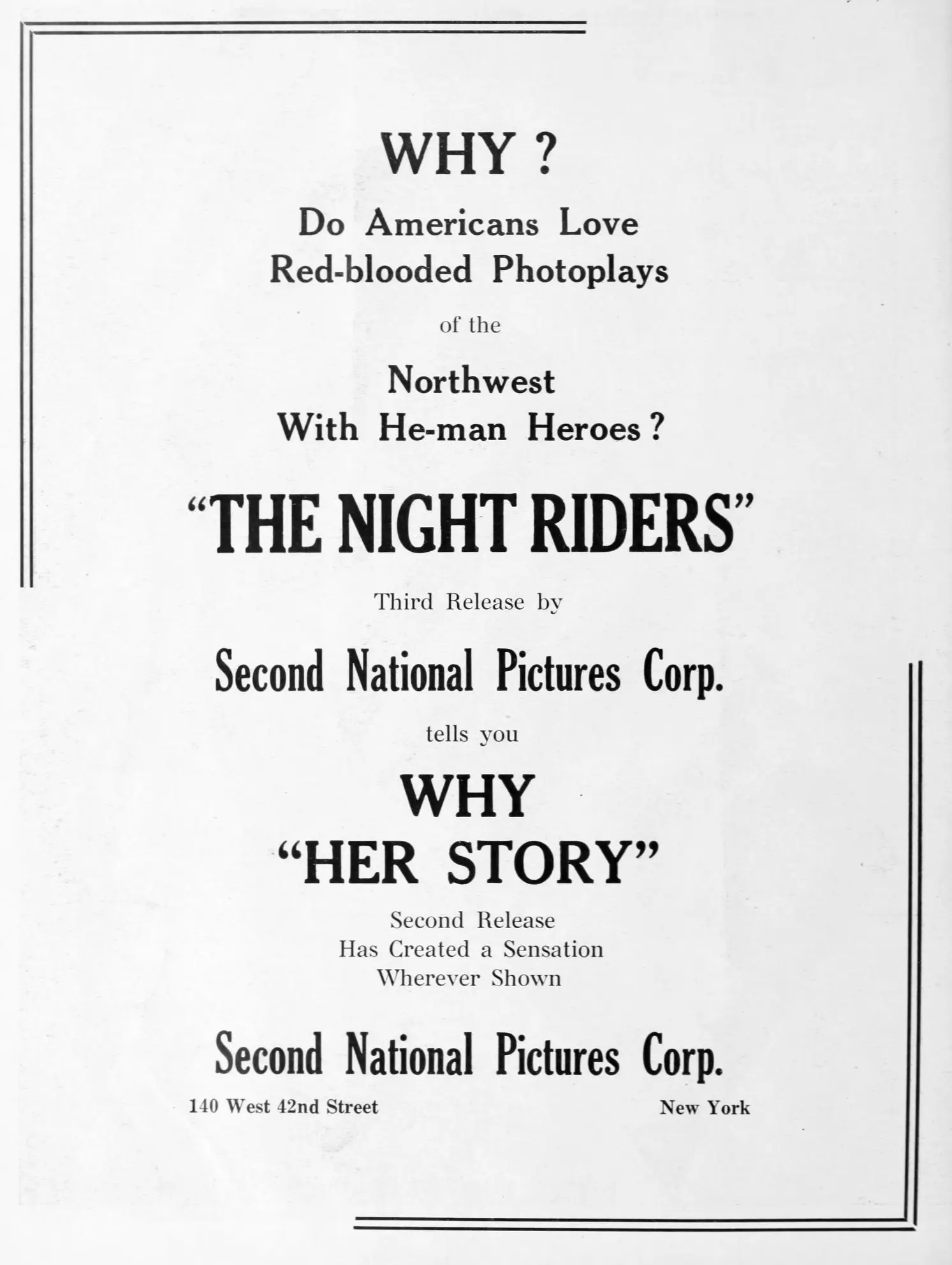
Based on the unique emotional resonance of The Four-Footed Ranger, our vault has identified these titles as the most compelling follow-up experiences for fans of Western cinema:
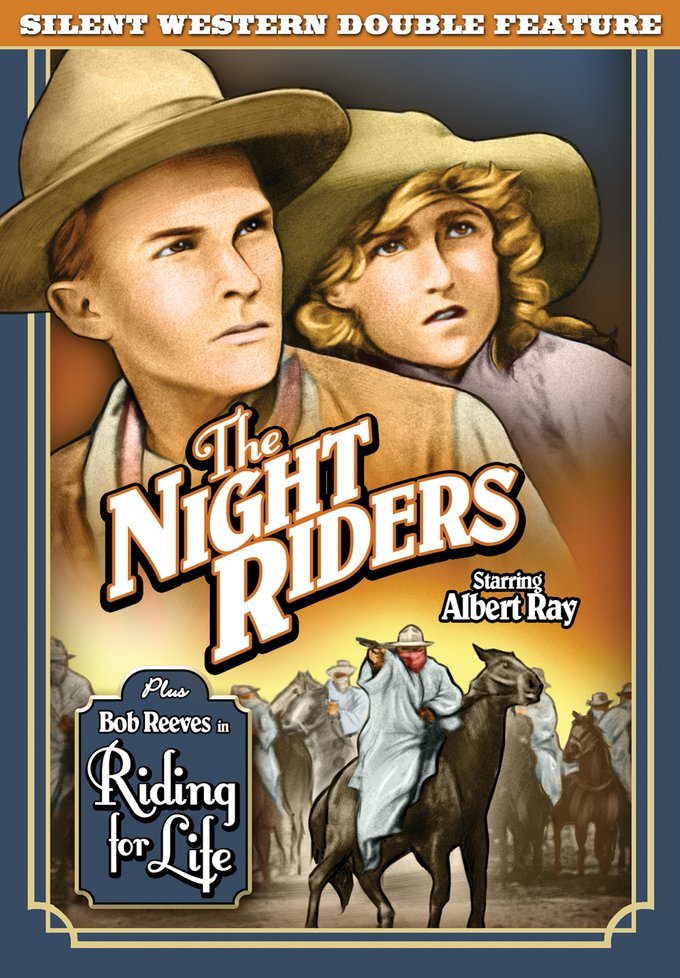
Dir: Alexander Butler
In Alberta, Canada, a Cornish emigrant unmasks a rustler posing as the girl's "blind" father.
View Details
Dir: Stuart Paton
Lois Fox, upon whose shoulder is branded a Chinese ideograph resembling the letters "A. Y.," is rescued from a gang of Chinese ruffians by Brice Ferris. His servant Ming, in attempting to steal from her finger a ring that bears a mysterious green seal, is killed, and soon afterwards a stranger named Strang arrives, also in search of the girl. Despite Brice's efforts to protect her, Lois is abducted and taken to the headquarters of Lao Wing, the leader of a secret Chinese society known as the Tong. Ferris and chief of police Struber finally infiltrate the gang's headquarters and after a furious battle, Lois and Strang are freed. Strang, actually Lois' uncle, reveals that the sacred ring had belonged to an ancient Chinese order but had been stolen by Lois' father.
View Details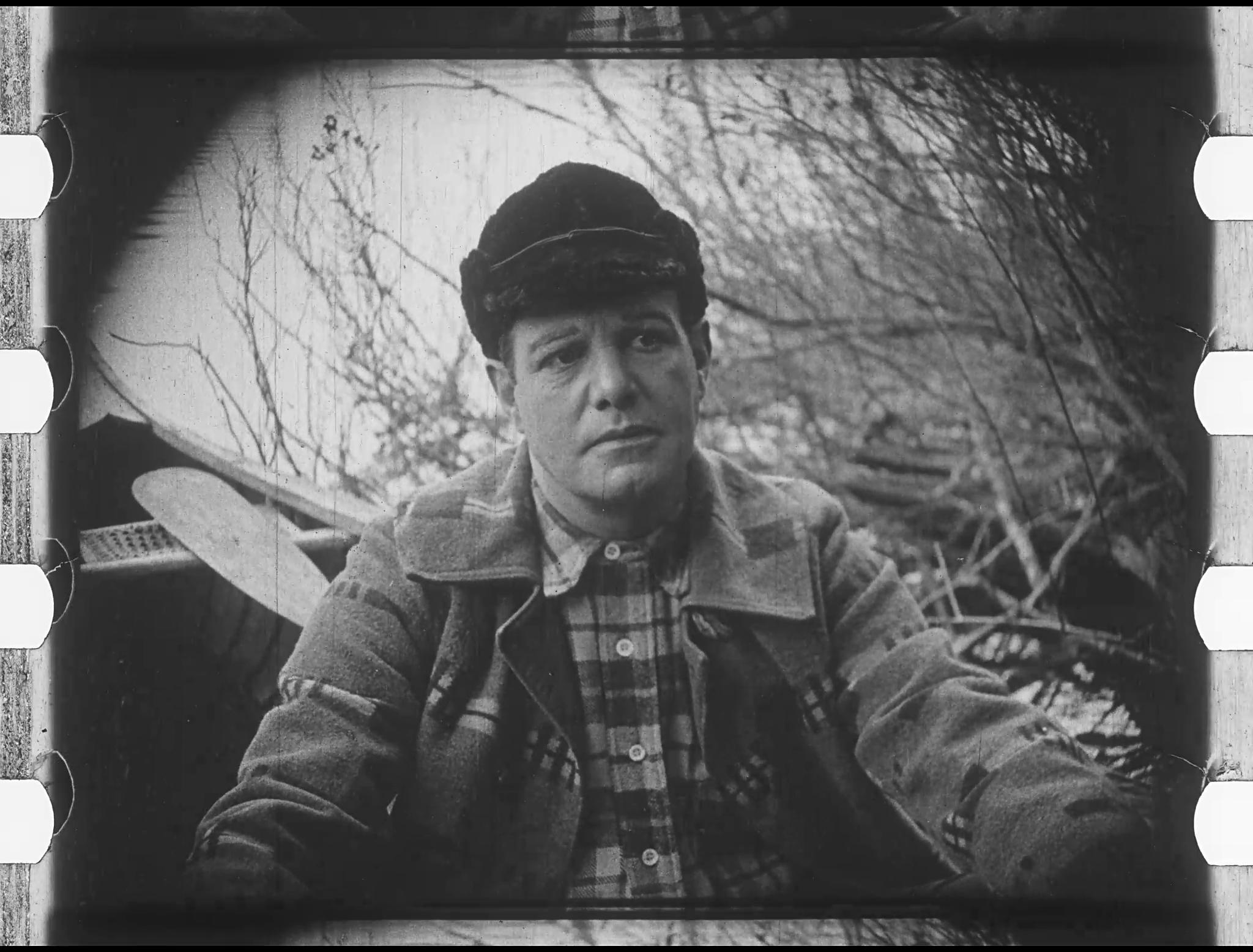
Dir: Edgar Jones
A mail-order bride arrives at a Maine lumber camp but doesn't like her prospective husband.
View Details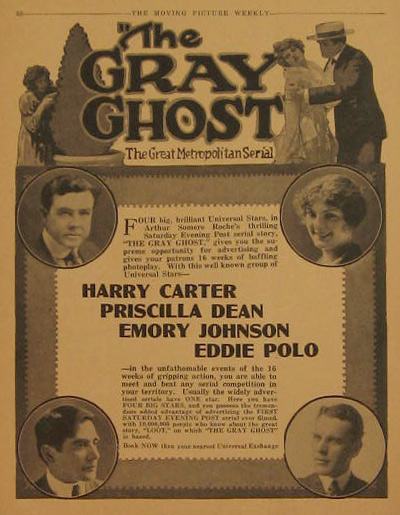
Dir: Stuart Paton
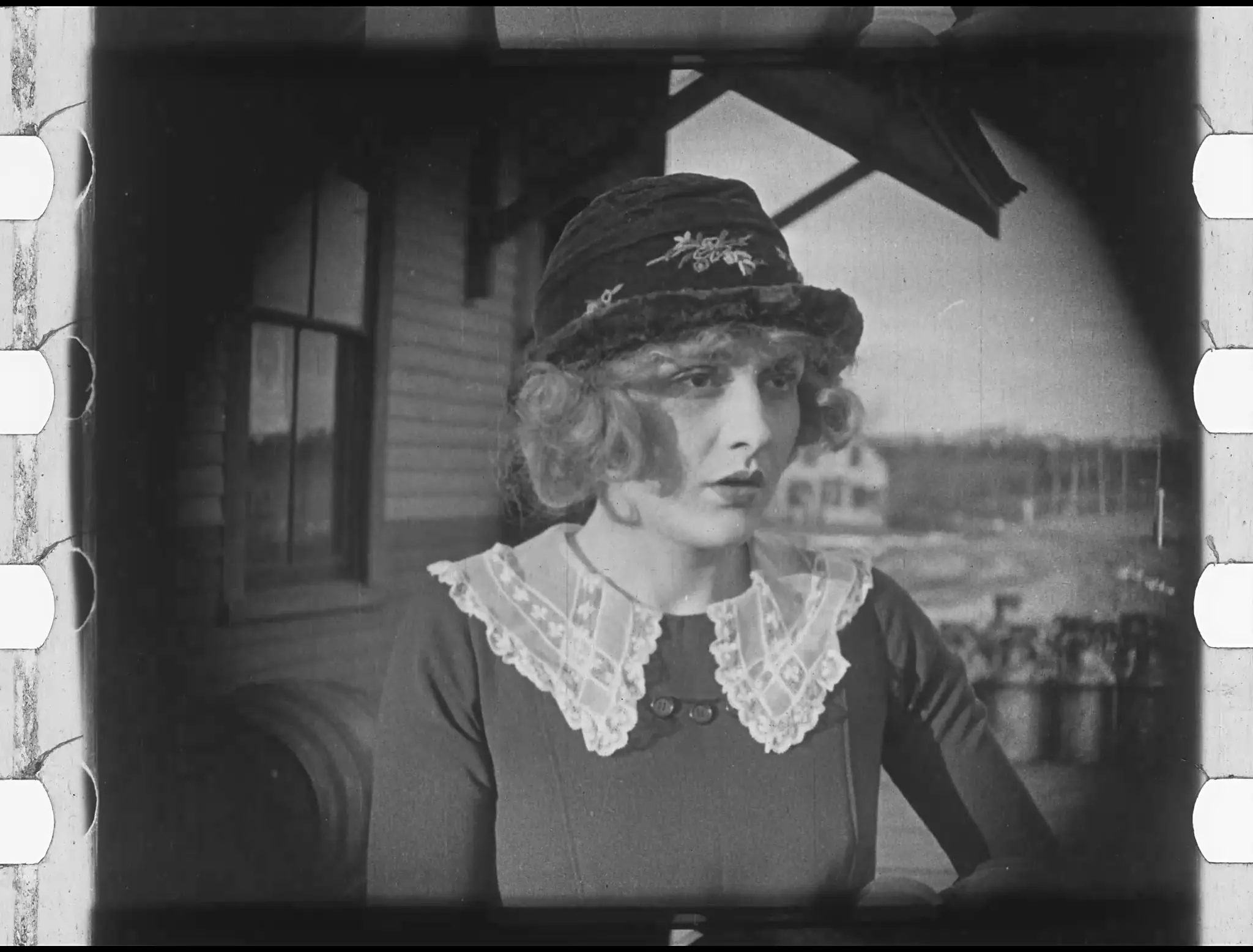
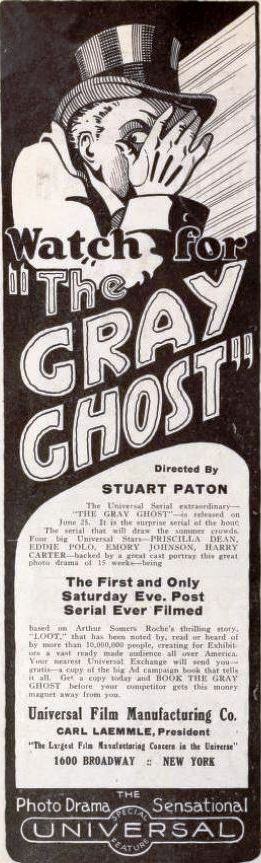
Episode 1: "The Bank Mystery" Mr. Carlow, a wealthy American living in London, is engaged to Lady Gwendolin, and has ordered from Arabin and Company, famous Fifth Avenue jewelers, a necklace worth two million dollars, to be made for her wedding present. She is anxious to see it, and he sends the junior partner of his London solicitors, Wade Hildreth, to America to get the jewel. He cables the young attorney's personal description to Arabin, and gives Wade his certified check for two million dollars. Wade makes ready to go with his secretary. Jean Marco. In New York is a master criminal known as the Gray Ghost. So perfect is his organization that he is never even suspected of the crimes and robberies which follow each other in quick succession. Only one member of the detective force really believes in his identity. This is Jerry Tyron. The Gray Ghost intercepts the message from Arabin. He prepares a reception for Hildreth, for he wishes to get the necklace and the check. Banker Olmstead is at dinner with his wife and son who is employed in the bank with him. His father is anxious that the books shall be in order, as the auditor is coming to examine them. He decides to go down to the bank. Young Olmstead is in the power of the Gray Ghost, to whom he has lost at cards. He goes to him to say that the game is up, and asks for mercy. Instead of helping him, the man plans to get him further into his power. Morn Light, a musical comedy star, whose connection with the Ghost is mysterious, arrives during their discussion. The Ghost asks her to retire, but she listens and watches. She sees the Ghost's men strike down Olmstead, and demands to know what is to be done with him. The Ghost tells her to mind her own business, and she is very angry. He sends her home. Olmstead has arrived at the bank and ordered the vault to be opened. The watchman is in the pay of the Ghost. Olmstead discovers his son's thefts from the bank. Suddenly he is shot down. It is the Ghost's men who have been introduced into the vault by the watchman. The men appear, carrying the boy. They place a revolver in his hand, and leave him lying upon his father's body. He comes to, and the watchman tells him that he has shot his father, and that the police are after him. He cannot believe it, but an officer rushes in and drags him out. In the car the officer changes his clothes to civilian attire, and when Olmstead demands to know what it means he is silenced. The Gray Ghost waits till one o'clock, and then he calls up Tyron and tells him that the bank has been robbed. Tyron sets out at once with a large force of police. They arrive at the bank, and find the unconscious watchman. The body of the banker has disappeared.
View Details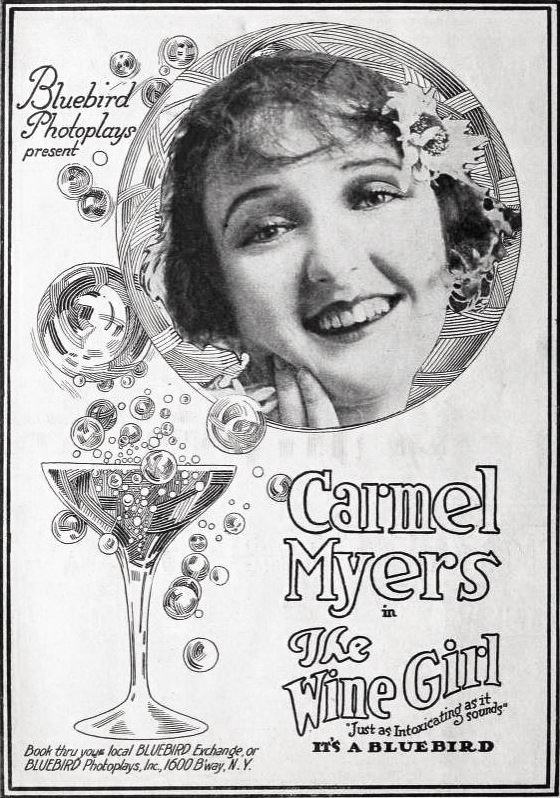
Dir: Stuart Paton
Andrea Minghetti runs a California vineyard with the help of his pretty niece Bona, who cooks for the employees. A worker named Chico Piave, who belongs to a secret crime society, tries unsuccessfully to force himself on Bona, and later, he demands that Andrea give him both the young woman and a large sum in cash. Meanwhile, the wealthy Frank Harris accepts a job at the vineyard on a dare and is so impressed with Bona's cooking that he offers her a position in his mother's kitchen. Mrs. Harris treats Bona cruelly until word comes that Bona has inherited a fortune from Andrea, who has disappeared in her absence. Mrs. Harris' sudden kindness dismays Bona, who returns home and informs the police of Chico's earlier threats. Chico is arrested, but Andrea, who merely hid to escape the criminal, returns to the vineyard, as does Frank, who declares his love for Bona.
View Details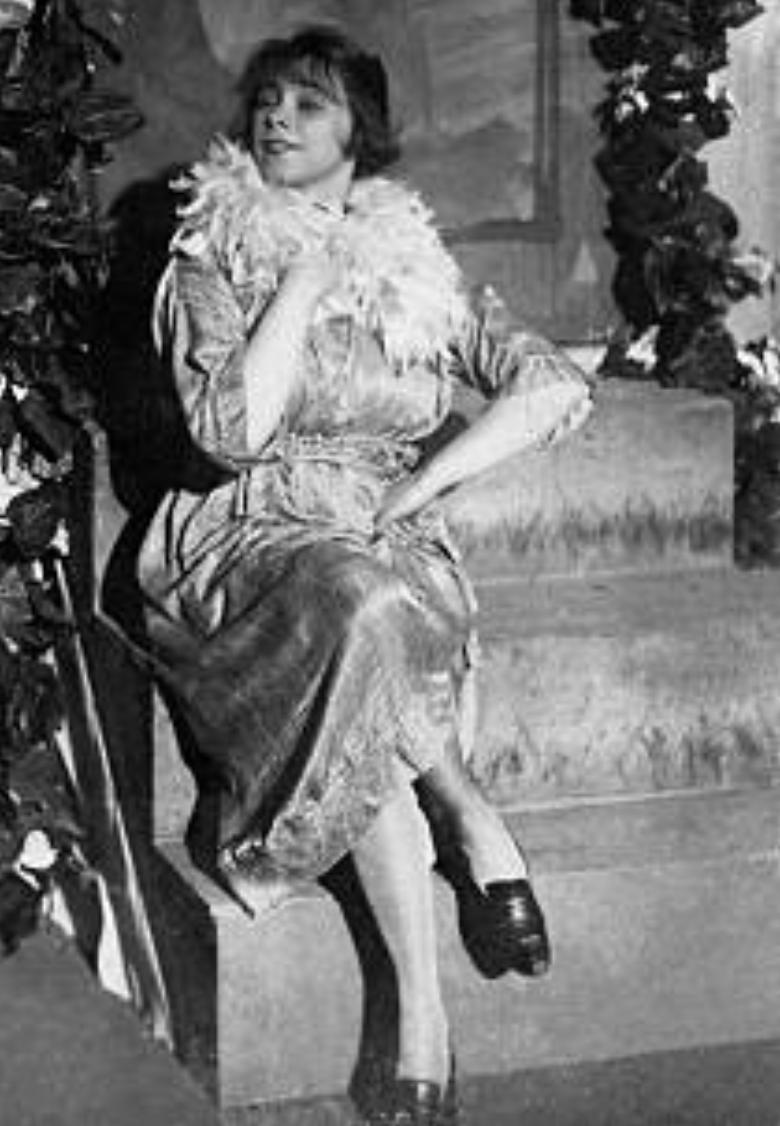
Dir: Bruno Ziener
A fascinating piece of cinema that shares thematic elements.
View Details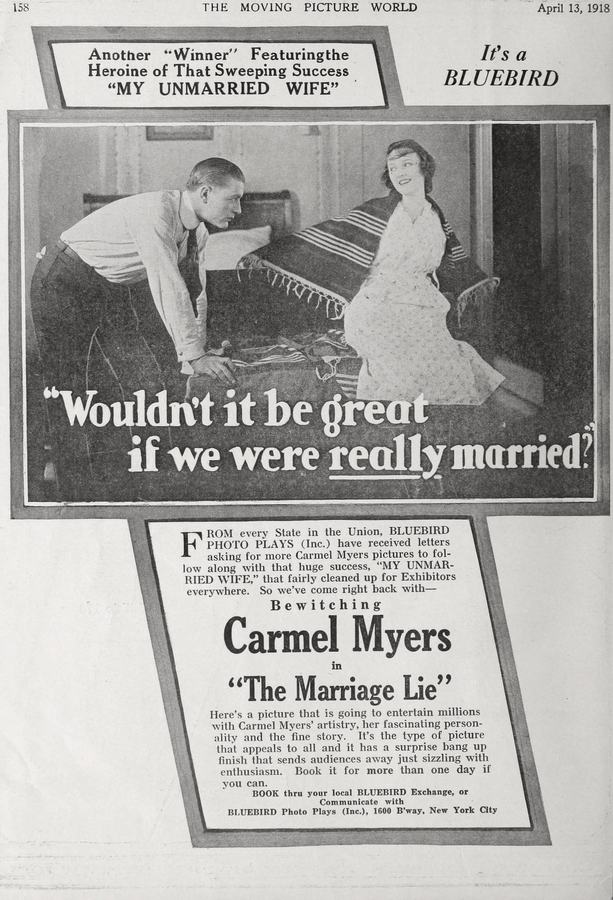
Dir: Stuart Paton
Being an unmarried man, Douglas Seward, a young engineer, is unable to secure a position with Terence Craver, a contractor. In search for a wife Seward meets Eileen Orton, who has been left destitute by the death of her father. He makes an agreement to support her if she present herself as his wife at Craver's office. She agrees and Seward secures a position and leaves for South America. The contractor, who has a mania for beautiful women, falls in love with Eileen, but she does not care for him, having become much attracted to Seward, who is sending her half his salary each week for her maintenance. Months later Seward comes to New York to see Eileen and arrives in time to protect her from Craver. The marriage lie no longer necessary, Seward proposes to Eileen, and they are forthwith made man and wife.
View Details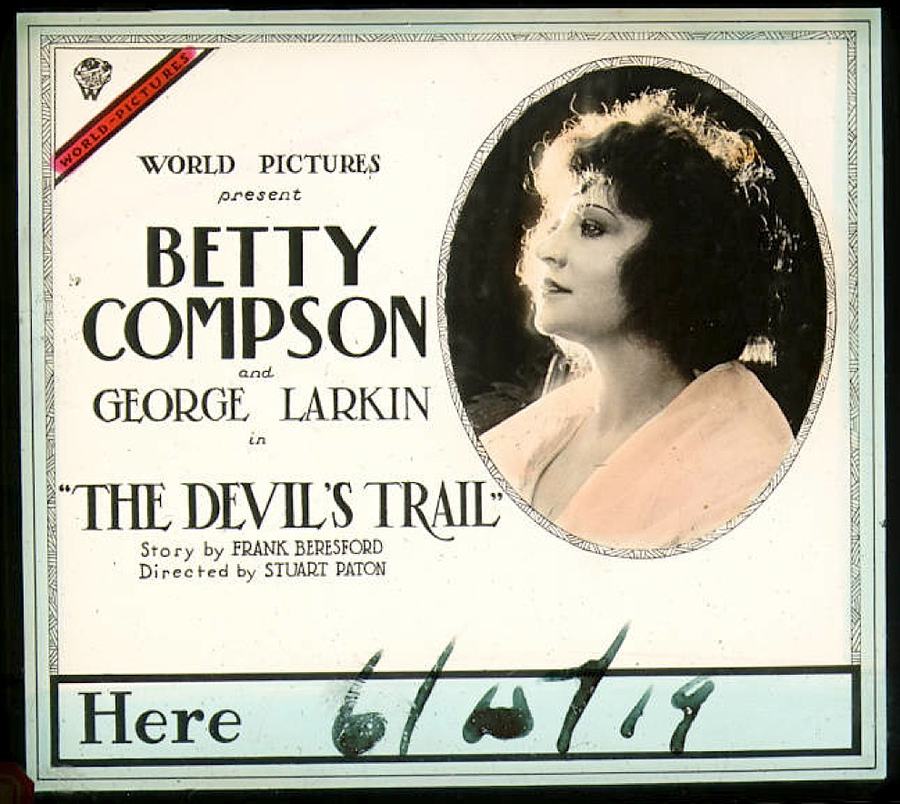
Dir: Stuart Paton
Whiskey smuggler Dubec, trades liquor to the Indians, takes revenge on the Royal North West Mounted Police pursuing him by killing the wife of post commander Sergeant Delisle and abducting his teen-aged daughter Nonette. After twelve years of futile searches, the eighteenth birthday celebration of Delisle's other daughter Julie is disrupted when Sergeant MacNair arrives to replace Delisle because Delisle cannot control the lawlessness in the camp. MacNair falls in love with Julie though she scorns him. When Dubec and Nonette, now his wife, return from the Klondike with a dance hall troupe of women, Delisle, not recognizing Dubec but resenting his flirtations with Julie, orders them to leave. Dubec captures Julie and MacNair, forcing Julie to dance, and offers her to the highest bidder. MacNair saves her just as Delisle, warned by Nonette of Dubec, arrives. Nonette is reunited with her father, and MacNair and Julie, now in love, embrace.
View Details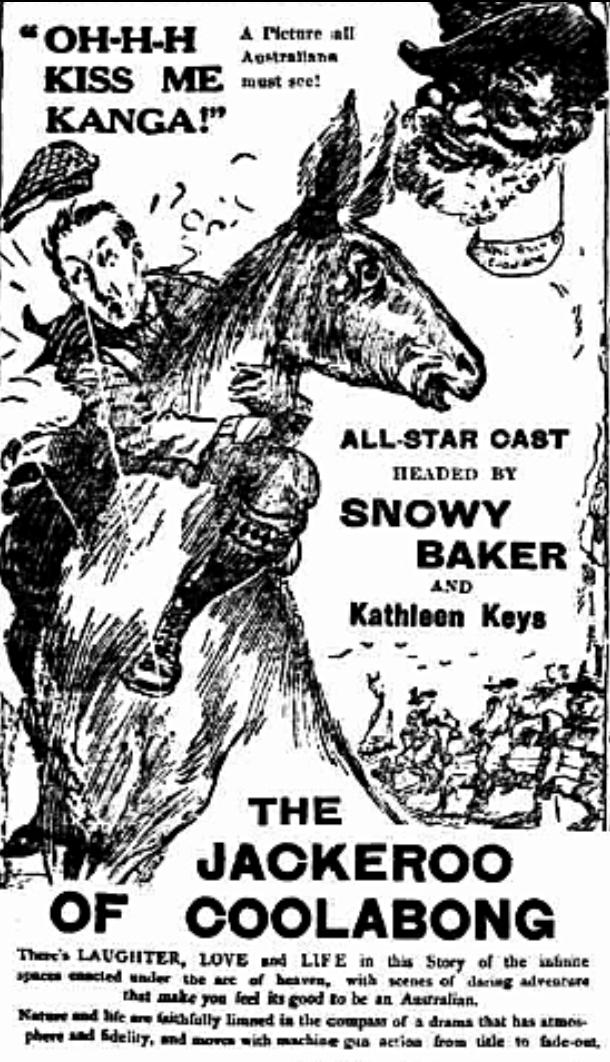
Dir: Wilfred Lucas
Brian O'Farrell (Snowy Baker), is an English 'new chum' who takes a job at an Australian cattle station. He is teased by station hands because of his appearance (including spats and a monocle) but he soon impresses them with his skills at riding and boxing. The station manager, John MacDonald (Wilfred Lucas), takes O'Farrell to Sydney to meet his daughter Edith (Kathleen Key) who is working in the slums. Edith is kidnapped by criminals after witnessing a crime but O'Farrell rescues her. It is later revealed he is the owner of the station.
View Details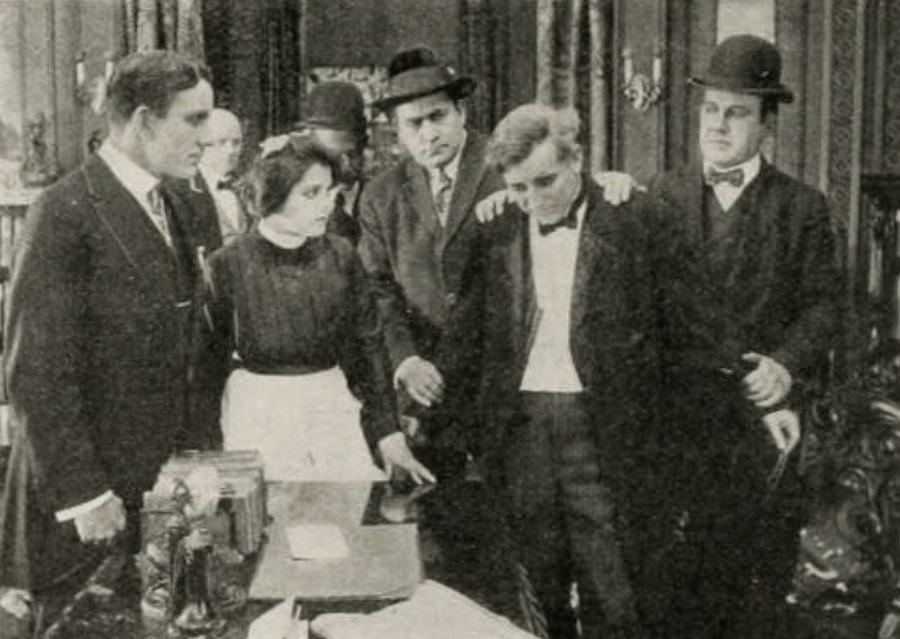
Dir: Stuart Paton
George Grant has invented a device which is being financed by his partner, John Benson, who receives an offer of $200,000 for the patent rights of the valuable invention. The offer is accepted with Grant's approval. Grant enters a barroom where an old man reprimands Dave Wilson, a young man out of employment, for wasting his time in barrooms. Dave strikes the old man, and Grant interferes, giving the young man a black eye. Benson sees the encounter and Grant returns to his home office with Benson. As Benson is leaving he meets Dave, who tells him he has been persuaded by his mother to apologize to Grant. The apology is accepted. Then Grant suddenly drops dead. Dave hears a police whistle blown outside, and runs into the next room where he crawls under the bed. Policemen and members of Grant's household arrive and discover Grant's body. One of the policemen telephones to the police station, and Detective Doyle is assigned to take charge of the case. Dave is present when Doyle arrives on the scene of the murder, and explains to Doyle how Grant dropped dead. Meanwhile a policeman finds a pistol in the yard, and hands it to Doyle. Benson telephones from his home that he wishes to speak to Grant. Doyle answers that there has been an accident and he had better come over at once. When Benson arrives Dave urges him to tell the detective that Benson knew of Dave's mission to the house, but Benson answers, "I know about the fight, and I know nothing about the apology." Dave collapses and is dragged off to the police station. The scene then shifts to the courtroom where Dave has been tried for murder and the jury have found him guilty. Shortly after Dave is electrocuted. One year later James Sprague, the criminologist, is visiting his old friend, the warden, and is shown the reforms the warden has made in prison life. The warden believes in the golden rule, and between working hours the men are allowed their freedom and are treated as human beings. The prisoners are shown playing baseball, and are given manual exercises. During the game the warden tells Sprague that he is glad capital punishment has been abolished as many an innocent man had been electrocuted. The warden then shows Sprague a photograph of Grant's home, declaring that he doesn't believe that the man who was electrocuted for killing Grant was actually guilty. Sprague is interested in the case, and departs with the photograph in his pocket. We next see Sprague at Grant's home making a close examination of the room in which Grant was killed. He looks out of the window into the yard where he sees a boy in a swing. He chases the boy out of the yard, gets on the swing, and concludes that Grant was shot by the murderer swinging himself to a height on a level with Grant's window which would account for the revolver picked up in the yard subsequent to the murder. Meanwhile Benson's guilty conscience has made him a nervous wreck. He goes to his home, where he has another vision of Grant, and shoots at the specter with his revolver. The servants rush in, and the butler revives him with a stimulating drink. Sprague consults Detective Doyle, who asserts that Grant's murder was a case of murder for revenge, and in his subsequent investigation learns of Benson's strange attack of nervousness. Under the pretense of wanting to make a business contract, Sprague makes the acquaintance of Benson. He bribes the butler and maid servant to get themselves discharged and the next day he installs servants of his own choice in Benson's household. Sprague's wife is engaged as the maid servant. The butler and Sprague's wife, abetted by a detective, act so strangely and get Benson into such an extremely nervous condition that when Sprague calls on him to close the proposed contract he begins to suspect that he is being spied on, especially on being asked whether he is interested in the abolition of capital punishment. Sprague then relates to him the peculiar case of Dave Wilson in connection with the murder of George Grant, which increases Benson's apparent nervousness. Meanwhile, Detective Doyle, who is in the yard, fires off a revolver, at a given signal from Sprague. Benson becomes hysterical and confesses that he committed the murder. At the close of the picture, Benson is seen in prison stripes in order to emphasize that while Dave Wilson had no chance of redemption. Benson, through the abolition of capital punishment, would at least be given a chance.
View DetailsAnalysis relative to The Four-Footed Ranger
| Film Title | Atmosphere | Complexity | Similarity |
|---|---|---|---|
| The Night Riders | Ethereal | High | 96% Match |
| The Girl in the Dark | Surreal | Linear | 97% Match |
| In the River | Gritty | High | 92% Match |
| The Gray Ghost | Gritty | Dense | 93% Match |
| The Wine Girl | Tense | Layered | 86% Match |
This guide was algorithmically generated using the cinematic metadata of Stuart Paton's archive. Last updated: 8/17/2026.
Back to The Four-Footed Ranger Details →