
DbcultAccessing Vault...
Recommendations
Senior Film Conservator
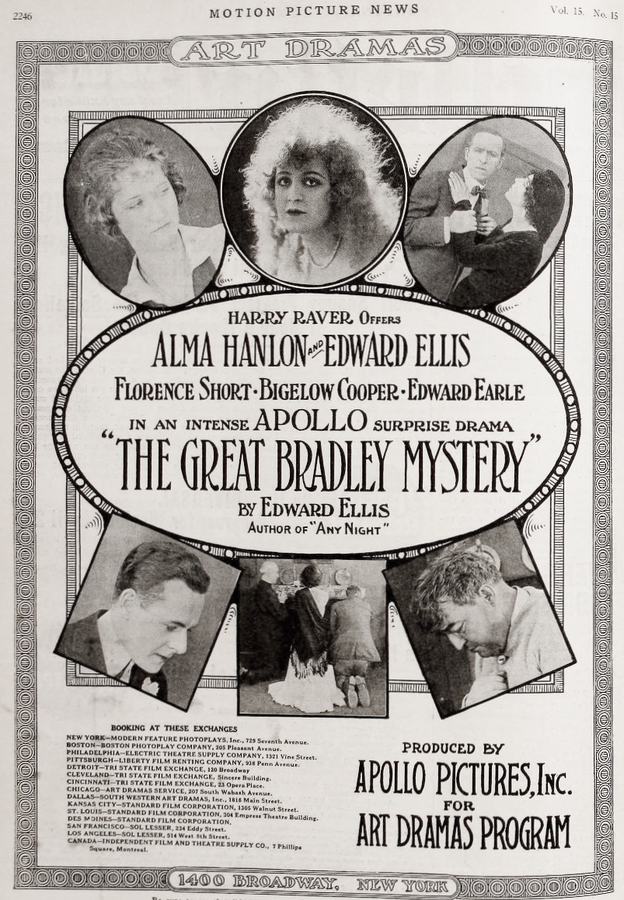
The artistic legacy of Richard Ridgely was forever changed by The Great Bradley Mystery, this cult landmark continues to dictate the rules of its category. We've assembled a sequence of films that complement the tone of The Great Bradley Mystery perfectly.
The vintage appeal of The Great Bradley Mystery to maintain its cult relevance across several decades.
Two business partners, Bradley and Collier, are in love with Mary. Bradley gives Collier to understand that he is engaged to her, and it is this only that prevents Collier declaring his love. Lola, a young Italian girl whom Bradley has betrayed, comes to the office to beg him to marry her. Mary hears the girl's plea, and comes into the office. Here she sees Collier talking to the girl. He has come, not knowing the situation, and Bradley has slipped out another door. Mary believes that Collier is the guilty man, and refuses to speak to him. Bradley encourages her in this idea and begs her to marry him. Collier, heartbroken, has left for the west, in order to recover his lost spirits. Bradley has a fake telegram sent to him announcing Collier's death, for he knows that he has no chance with Mary as long as his rival is alive. After some time Mary marries him. But almost immediately afterward she meets Lola, who is dying in a hospital. Lola begs her to care for Bradley's child, and she learns too late that her husband deceived her. She returns and denounces him. He, knowing that the scandal is sure to get out, orders her to prepare for a trip to Europe. He sells his, as well as Collier's, share in the company. Lola's father, crazed by his daughter's death, comes to Bradley's office and sneaks in through the basement window. The next day Bradley is found dead. Tony is arrested. Collier returns and meets Mary. Together they go to the police and ask for the release of Tony. Collier tells of his arrival the night before and his knowledge of the sale of the company. He went to confront Bradley, and they struggled. Bradley drew a revolver, which went off in his hand, killing him. Collier had tried to make the case look like suicide, until he learned that Tony was being held. The police assure Collier that his innocence will be easily established, and he and Mary face the future with the knowledge that a long-deferred happiness will be theirs.
Based on the unique cinematic excellence of The Great Bradley Mystery, our vault has identified these titles as the most compelling follow-up experiences for fans of cult cinema:
Dir: Richard Ridgely
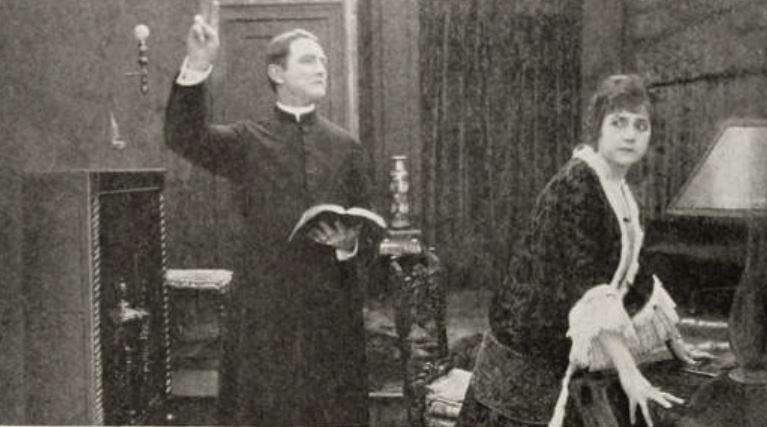
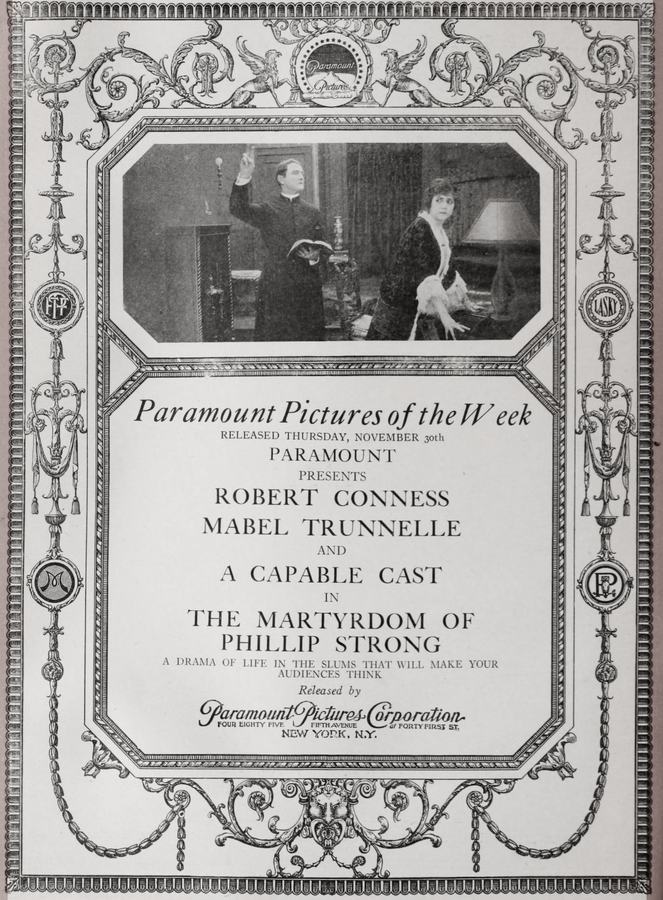
"Man, you are a living lie." Thus is Philip Strong, the rising young pastor of a fashionable Calvary Church, addressed by Brother Man (symbolizing the Spirit of Christ on earth). Surrounded by luxury, lionized by a wealthy congregation, Philip Strong suddenly realizes the force of these words. He has been preaching the doctrines of Christ, but his work has been the work of bare words only. To prove the truth of what he says. Brother Man leads Philip to the slums, and shows him the misery and squalor of a world which he has never known. The starving women and children, the kitchens of Hell where whiskey ruins the lives of men, impresses Philip deeply. He sees his real mission in life. He must help the downtrodden. Sarah, Philip's wife, wrapped in her social ambition, is horrified when Philip announces his determination. She refuses to permit her little daughter, Irma, to play with an orphaned child of the slums, whom Philip has brought home to shelter. She pleads with Philip to give up his new work. It means ruin and social ostracism. She scolds and bursts into a rage of fury, but Philip is firm. Goaded on by her mother, who pictures the disgrace of Philip's close association with the slums, Sarah leaves the home, taking Irma with her. Time finds Philip living in the slums, immersed in his work. Fighting the battle of the downtrodden, he arouses the hate of powerful forces. The rich of his congregation, owning the properties which house saloons, and the owners of these saloons, combine to bring about his downfall. Undaunted by threats of personal harm, he wages his war. Cheered by Brother Man in the moments when things seem most hopeless, he fights his battle with new energy. His friends gone, his little daughter dead, the wife whom he loves opposing him, he fights on. Scenting an opportunity to discredit him, the interests cause Sarah to believe that Loreen, a consumptive derelict, whom he has redeemed and sheltered in his home, is his mistress. The story is disproved and Sarah relents, but too late. The body bearing the spirit of Philip is not equal to the task. Wrecked by worry and ill-health, he gives up his life and his soul passes to the One Whose work he has been doing, and like Whom he has been crucified.
View Details
Dir: Richard Ridgely
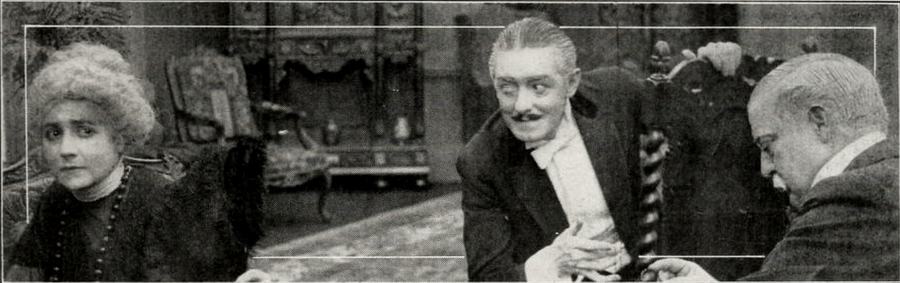
Mary Fitz Allen has three suitors, Arthur Barton, a young soldier, Robert Jardon, a barrister, and Lord Lester, already past middle age, but devoted to her. Her heart, however, is wholly Barton's, and while, being very gracious with Lord Lester, has an ill-concealed dislike for Jardon. Her mother is purse-proud and favors the suit of Lord Lester. Jardon sees Mary and Barton talking together in the garden, and from her words, gathers something of what has passed between them. Later, in the village inn, he makes a remark against Mary's character that Barton overhears and the young soldier knocks him down. Barton returns to the barracks, but is told that in falling Jardon had been struck on the head and is now dead. Advised by his companions to leave the country at once, Barton sends a note to Mary, assuring her that "he will never desert her," but will send for her as soon as he is safe in another land. Receiving the letter, Mary falls in a swoon. Mrs. Fitz Allen tells Lord Lester that she is taking Mary to the continent for a visit, and that the girl will probably be more willing to do her bidding and marry Lester on their return. Then she takes Mary to the home of an old family servant of the Fitz Allen's, and there Mary's child is born. The mother makes the old woman swear to keep from Mary the fact that her child is alive, and, later, when they return to their home, Mary has the double grief of believing her child dead, and her lover unfaithful to her, for Mrs. Fitz Allen takes possession of the three letters that Barton has written to her during her absence. It is now that Mary consents to marry Lord Lester. Meantime Barton has shipped aboard a vessel bound for America, but in a quarrel with one of the seamen, has been thrown overboard and drowned. Fifteen years later, Mary, now Lady Lester, is living happily with her husband, whom she has learned to truly love. Jardon is living in bachelor quarters, and Babette, a young French woman, who is infatuated with him, is an inmate of his house. All these years, Mrs. Fitz Allen has been paying for the care given the child by the old servant. Jardon, calling on Lord Lester, picks up and carries away with him a letter addressed to Mary's mother, written by the child's guardian, requesting more money with which to purchase clothes for her. Reading this at his home, Jardon immediately realizes the truth, and determines to compel Mary to listen to his protestations of love by threatening to expose her past life. Meantime, Jardon has turned the French woman out of his house, and she, suspecting that Lady Lester is her rival, obtains a position as maid in her house, in order to spy upon her. On the night that Jardon makes it thoroughly plain to Lady Lester that he knows her secret, he is visited, at midnight, by Lady Lester herself. He pleads with her, and finally threatens her, but she leaves him after declaring that she will tell her husband everything of her own accord. As she leaves the house, Babette enters, and goes to Jardon's bedroom. He orders her out, and in the quarrel which follows, she draws a revolver and shoots him dead. When the crime is discovered, Lady Lester's handkerchief is found in Jardon's hand, and she is suspected of being the murderess. Overhearing the detective talking with Lord Lester, she writes a note of farewell to her husband and goes away to the farm where her child is living. Almost at the moment that her note is handed to Lester, a telephone message to the effect that Babette has confessed to being the murderer, is received. Lord Lester, learning of his wife's whereabouts, sends his housekeeper after her with a message that he wants, not only his wife, but her child, to come to him.
Dir: Richard Ridgely
Young Hester is kidnapped in India by revolutionaries. As she grows up she becomes one of them, and is sent to England to recover a holy ruby taken from India by her father, Sir Christopher Radwick. However, she falls in love with the manager of her father's estate, and gives up her revolutionary activities. The revolutionaries aren't the forgiving types, however, and follow her to England. When Hester's father dies and is found to have been poisoned, Hester is accused of the crime.
View Details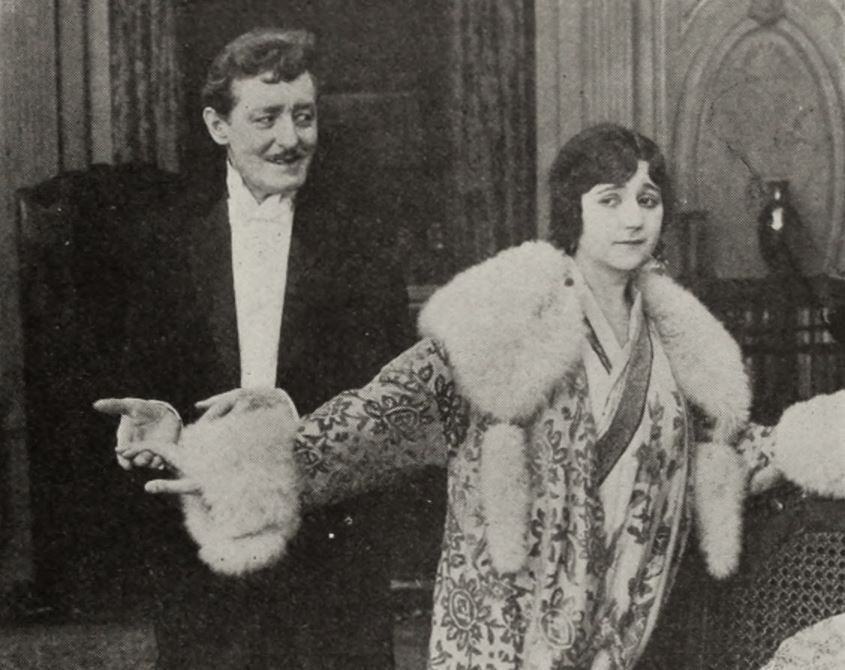
Dir: Richard Ridgely
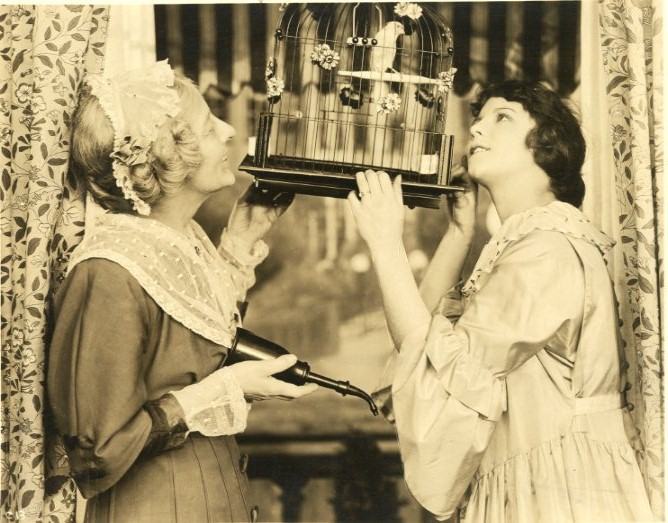
Mary Ladislas elopes with the chauffeur because of his sympathy for her ideals, and they stop at a hotel. The scornful attitude of all who meet them causes Mary to desire immediate marriage, but on the way for a license, the auto overturns and kills the chauffeur. It is too late for Mary to return home now and she is left alone, disconsolate. Hugh Whittaker, ill, given up by the doctors, leaves his affairs in the hands of Drummond, his partner, and prepares to leave for the west. He meets Mary and prevents her suicide. Pitying her and feeling his own end near, he marries her and continues on his journey, after giving her a note to his partner, Drummond, so that he may provide for her. Drummond, who is dissipating and appropriating Hugh's funds, is fascinated by Mary, but she refuses his aid. Later, news comes of Hugh's death. Mary obtains the title role in Carmen at Max's theater, who treasures her for her artistic acting. In a jealous rage he causes the death of David, another actor whom Mary is to marry. Four years pass. Thurston, a young millionaire, who is to marry Mary, is pushed off a ferry boat by Max and drowned. Drummond, meanwhile, is forcing his attentions on Mary. Hugh, contrary to reports, has not been killed. His mining operations in the west have made him a millionaire and he returns home cured. At the theater he sees Mary. She recognizes him and suffers a nervous breakdown. Her unfortunate affairs with men have earned her the title of "The Destroying Angel." She goes to the seashore to recover from her attack. Drummond, meanwhile, who has spent all the money left in his care by Hugh, has disappeared. Unconscious of Mary's whereabouts, Hugh also takes a cottage at the seashore. He foils Drummond, who has suddenly reappeared, in an attempt to kidnap Mary. Drummond is killed in the scuffle by Hugh's valet. Fearing to cast her terrible spell upon him, Mary leaves Hugh and returns to the stage. He follows, however, and Max attempts to shoot him, but Hugh has broken the deadly spell, for Max's bullets go wild. Mary, who really loves Hugh, gives herself up to her love, and returns with him. His is the charmed life which has pierced the circle of death about "The Destroying Angel."
Dir: Richard Ridgely
Escaping from "Pride," Eve Leslie next is tempted by the sin of "Passion." Eve goes to Coney Island and there sees Leonidas, a handsome strong man who is appearing in an athletic exhibition which includes a number or diving girls. In spite of Adam Moore's protests, Eve contrives to meet Leonidas, who employs her as a member of his troupe. Leonidas is a despicable person always posing, but Eve does not realize that. She does not know, either, that Leonidas is married and that he has practically deserted his wife. Eve finds herself in rough company. She thinks she loves Leonidas and she is blind to real conditions. She surmounts one difficulty after another, she passes through a series of thrilling scenes culminating with the evening at Madison Square Garden when Leonidas defeats the world's champion wrestler in a grueling battle. Through Adam's aid, Eve, who has unconsciously got herself into a terrible predicament, is saved from herself just as she was about to marry Leonidas, who had cast off his wife.
View Details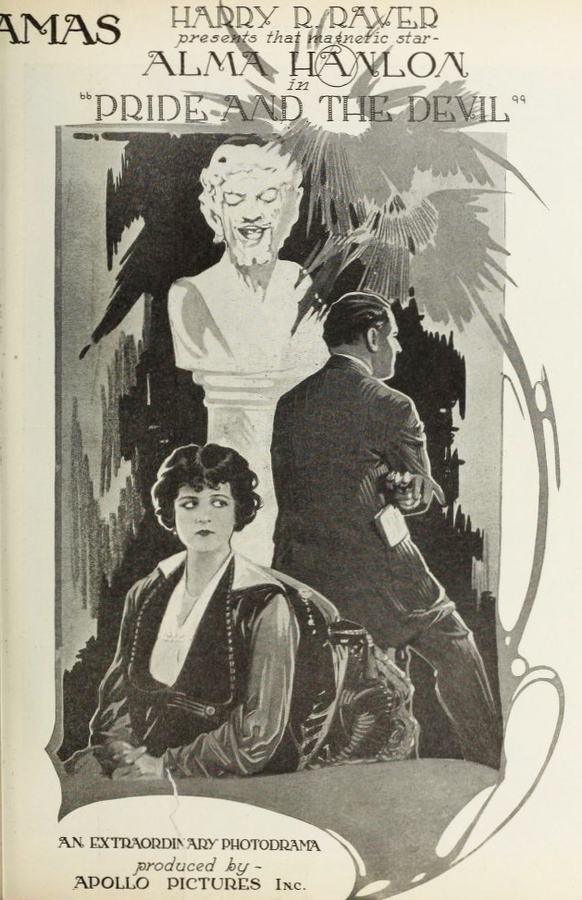
Dir: Richard Ridgely
A fascinating piece of cinema that shares thematic elements.
Dir: Richard Ridgely
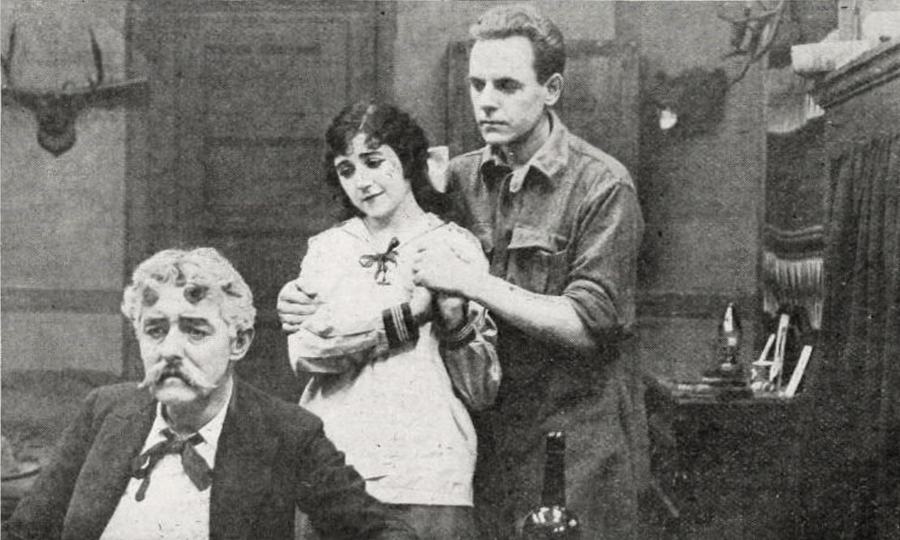
Filled with memories of the Philippine campaign, Lieutenant Ranson returns to the United States. After a month or two in Washington, he tells his father that he must have a change, and a chance to see some excitement. General Ranson writes and arranges to have him go to Fort Stanton, Texas, an Army post commanded by an old friend. Arrived at the railroad town nearest to the post, Ranson is conveyed to the post by stagecoach. A prairie fire is in progress a few miles away from Fort Stanton, and Ranson joins the soldiers and others in fighting it. Incidentally, he is successful in rescuing Mary Cahill, the daughter of the post-trader, Patrick Cahill. Ranson is received into the life of the fort and becomes a leader among the younger men. Ranson talks of the "big doings" out in the Philippines, and is "bored to death" with the dull routine of the fort. When one of the men calls his attention to a placard announcing a large reward for the capture of "The Red Rider," Ranson declares that it is nothing at all to hold up a stage; that anyone can do it and get away with it; that on a $50 bet, he himself, will hold up the stagecoach that night with a pair of shears. His brother officers ridicule the idea. Ranson insists that he can, and will, do it. Meantime, at the railway town, the coach has already started when Lieutenant Patten, the paymaster, arrives, carrying a bag containing $10.000 with which to pay off the soldiers. Finding the coach gone, he engages a man with a buckboard to drive him to the fort. Ranson successfully holds up the stagecoach. He is polite to the two lady passengers and takes nothing from anybody except a souvenir from one of the ladies, in the form of her photograph, this being sufficient proof to show his brother officers. He then rides back to the post. Meantime, Lieutenant Patten, hurrying along in the buckboard, is held up by a masked man dressed almost exactly as was Ranson. In a fight that ensues, the highwayman shoots and kills the driver of the buckboard, and wounds the lieutenant in the shoulder. The robber then gets possession of the bag of money and makes good his escape, but not before he has been himself shot in the hand by the paymaster. At the post, the news of the robbery arrives with the return of the detachment of men who have been sent out to escort the paymaster. They bring Lieutenant Patten with them, and he tells of the robbery and of having wounded the robber in the hand. As an outcome of the whole affair, Ranson is arrested, charged with having held up both stage and the pay-train. He is confined to his quarters, awaiting court martial, and there he sends for Mr. Cahill, with whom he wishes to speak in regard to Mary. He notices that Cabin's hand is bandaged, but Cahill tells him that his pony bit him while he was bridling her. Mary enters, and in the course of the conversation tells Ranson that her father has told her that he shot himself in the hand while fooling with his revolver. Ranson is at once suspicious, and when Mary goes out he accuses Cahill of being the real "Red Rider." Finally Cahill confesses that it is true. Ranson tells him that no matter what happened, he will stick by his daughter. He urges Cahill to hurry away to Fort Worth on the pretext of buying an engagement ring. Cahill says he will do so and that he will write a letter of confession exonerating Ranson, after he is safely in Canada. But hardly has he entered the other room when Ranson hears a shot. Rushing in, he finds Cahill lying across the table, a bullet through his brain. By his hand is a brief note of confession, which he has hastily scribbled. As Mary rushes in, Ranson draws her back but she has guessed the truth. Her father has paid for his long-concealed life of crime, and now she gives herself wholly into Ranson's keeping, knowing that her father's wish was to have them marry and be happy.
View Details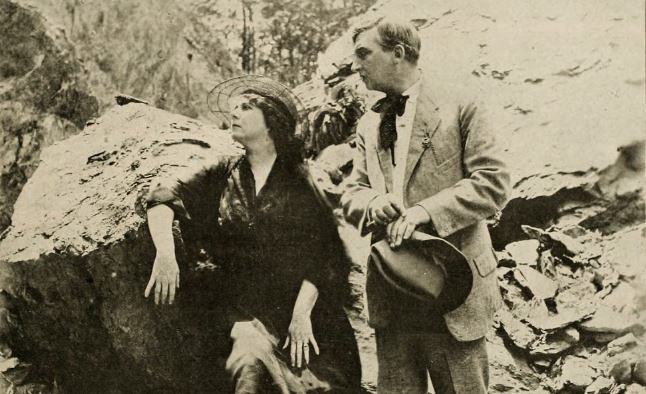
Dir: Richard Ridgely
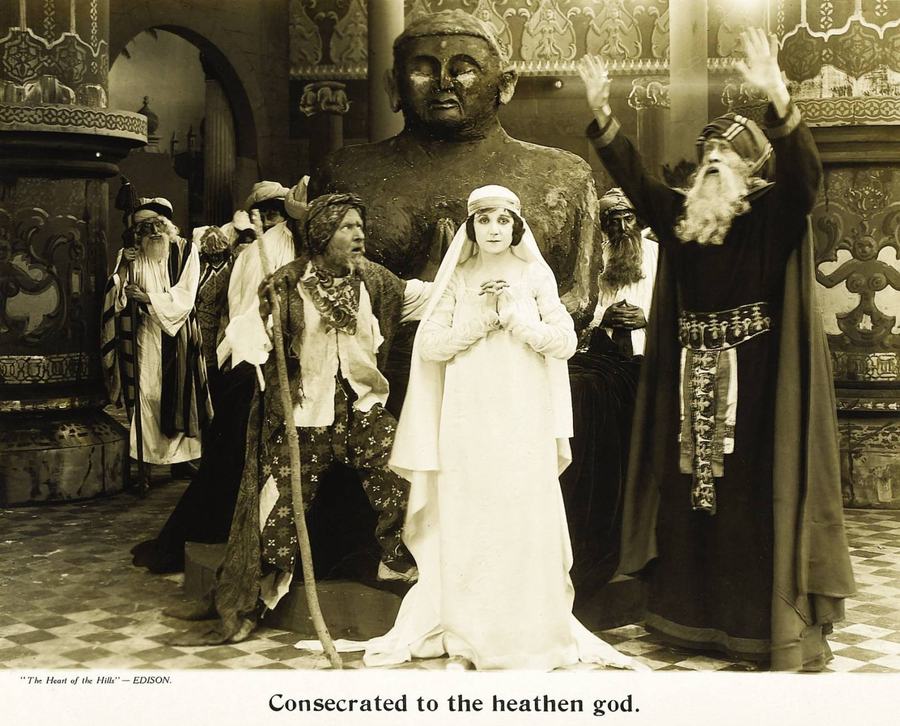
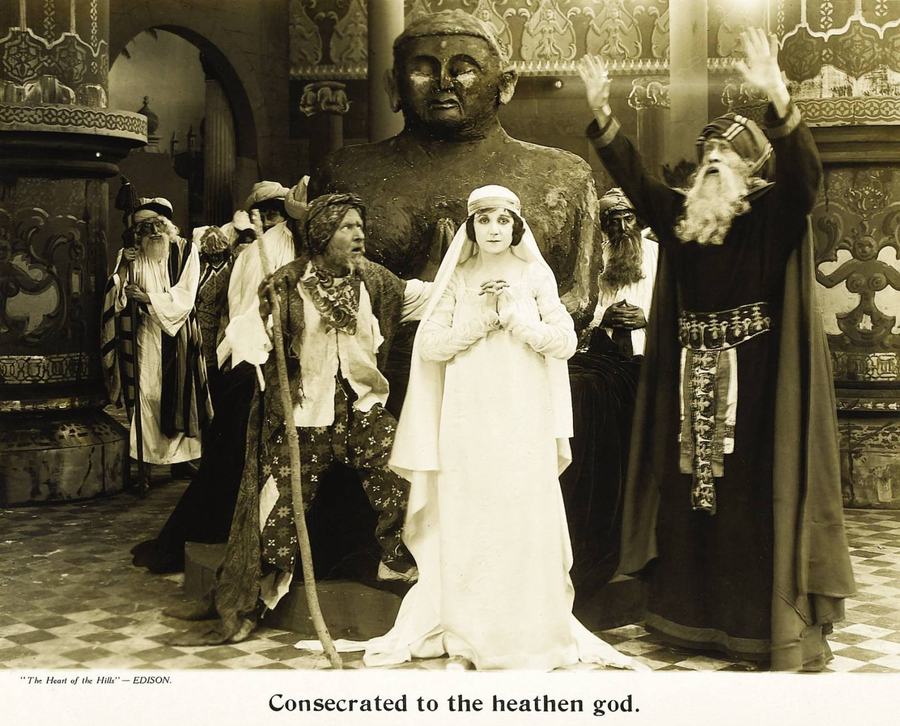
Meg lived down in Carolina in the shadow of the great Blue Ridge. When she had been a little younger she had been winsomely and strangely beautiful, a gypsy-like elf of the woods and forests. Now, she is mad. The neighbors said cruel things about Meg and turned their faces aside when she passed. And from her little son, they shrank, and turned away as from a thing accursed. When Hugh Gregory opened a store in the little mountain town and fell in love with the widowed Darthea Westerly, he incurred the bitter hatred of Simon Grant, who had long courted Darthea. When Meg's little son ran away, and Gregory found him, and gave him back to his mother, the crazed woman thought she recognized in him the father of her boy. When she returned home she told her brother that she had found her child's father. The brother, infuriated, confronted Gregory, and demanded that he marry his sister. Gregory, naturally, refused indignantly. Simon Grant met Jake, Meg's brother, while he was still half insane with rage over Gregory's refusal, and found him in a willing mood to listen to Simon's scheme. The next day, as Gregory and the colonel were riding together, Jake, egged on by Simon, fired at them from a barn. Gregory proved himself a good Samaritan by saving Jake from the infuriated mob which thirsted for his life. Meanwhile. Darthea, who had fallen in love with Gregory, learned of Meg's terrible accusation against him. The story naturally changed her feelings toward the man, particularly when Gregory, realizing the futility of argument, refused to say a word in his own defense. Then suddenly Meg came upon Simon Grant, and with a miraculous flash of understanding, remembered that he, not Gregory, was the man. But with the passing of her madness, Meg's life fluttered and went out like a candle in the wind, but not before she had told Gregory and Darthea the truth.
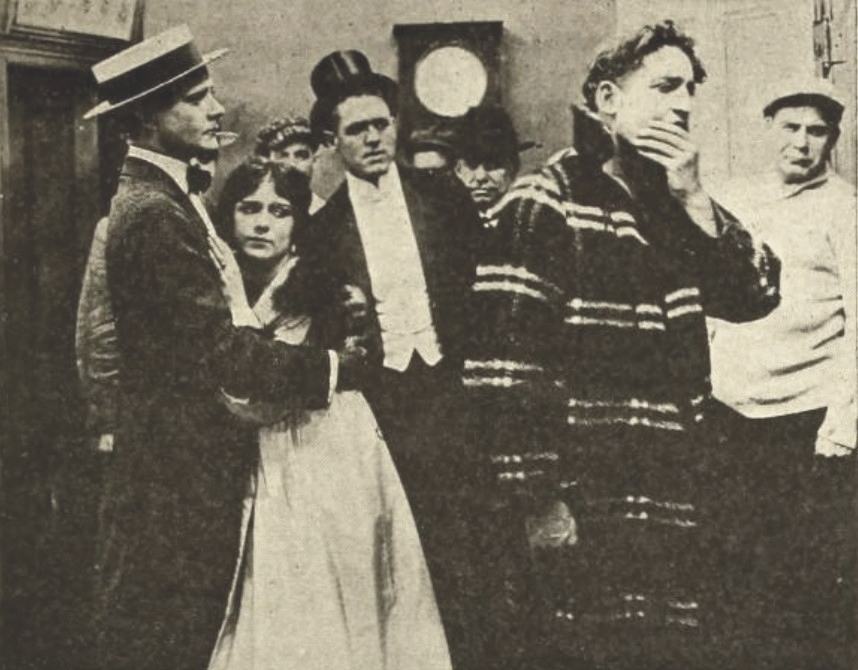
Dir: Richard Ridgely
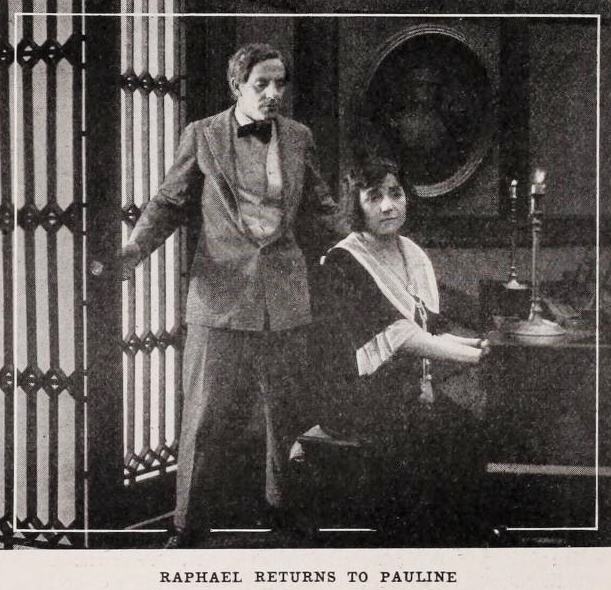
Ralph Valentine and his father are musicians of proud and aristocratic ways and are so wrapped up in their art as to be oblivious of their poverty. Their faithful servant, Joseph, has been wont to withhold the threats of debtors from them, but there comes a time, shortly after the father's death, that Ralph must be told the truth. Joseph tells everything and suggests that Ralph accept money that he has saved and go to Paris, where he may show the world his art. Ralph does so and goes to live with the Gardins. His uncle Victor Valentine, wealthy and fond of gay life, invites him to live at his home provided he will leave behind his foolish dreams and fancies. Ralph refuses, preferring to remain where he is. He wins the love of Pauline Gardin and is quite content. Through his Bohemian acquaintances he meets Mme. Flora Margot. This tired, blasé young woman makes a pet of him and enraptured by her dazzling beauty he longs to satisfy her every desire. Attempting to do so, he becomes indebted to impatient creditors, who demand immediate payment or his arrest. Pauline, ignorant of his infatuation with Flora, assists him out of his present difficulties with her own savings. Realizing Flora's fast waning affection, he resolves to regain it by buying a certain antique necklace which he knows she covets. The antique dealer demands an exorbitant price which he is unable to pay. He is further disheartened when one day he finds her in the arms of his uncle, and he rushes forth intent upon suicide. About to throw himself into the river, a vision of Flora appears before him and he resolves to secure the necklace at any cost. The dealer of the antique shop is busy when he enters and Ralph wanders into a room where there are curios upon the walls and tables. Curiously examining the various articles, his hand suddenly touches a secret panel which springs back, revealing a marvelous painting of the Christ. A spiritual influence comes over him, so profound is its impression upon his mind. While awaiting the attendance of the dealer, he becomes greatly interested in a peculiar skin which has writing upon it in Sanskrit. Sitting down he becomes drowsy and falls asleep. The writing changes into English, which reads that the possessor of the skin has only to wish and his wish will be granted, but that with each desire the skin shall grow smaller and the days of the possessor grow less until death is the penalty at the last wish. The dealer approaches and Ralph is amazed to behold him now in the form of a devil. The devil asks if he desires the skin and Ralph, fearfully undecided, suddenly thinks of Flora and agrees to take it. What are his desires and his terrible anguish as the talisman grows smaller have been woven into a story of weird and mystic situations.
View Details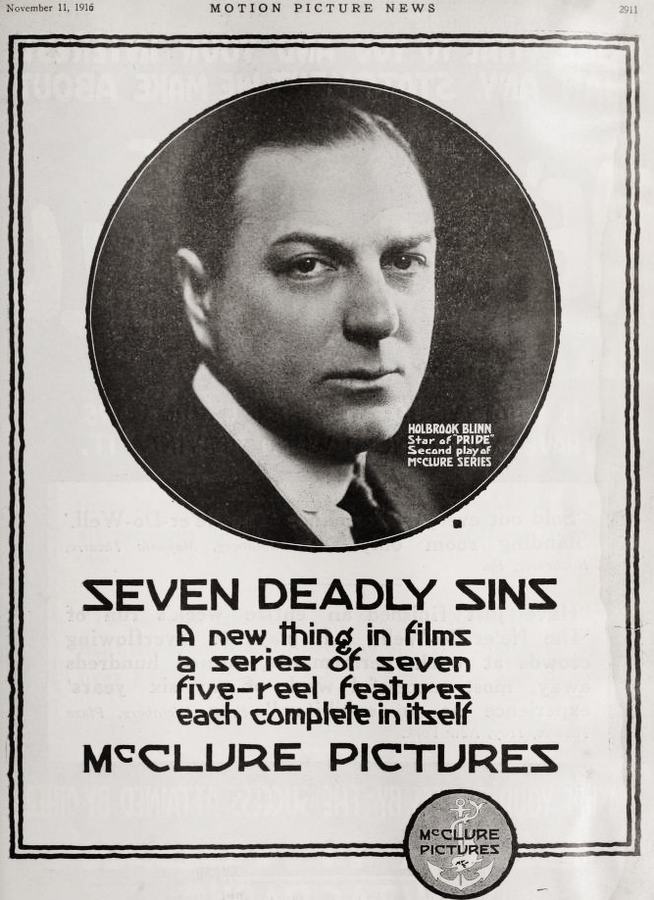
Dir: Richard Ridgely
Eve Leslie is sent to boarding school. Proud of the fortune that has come to her she feels herself above Adam Moore, who loves her. Eugene D'Arcy, a powerful banker, who also suffers from pride and arrogance, meets Eve and wants her. In order that her pride may be further satisfied, she decides to marry a count. They elope, after eluding D'Arcy in an exciting chase, and board an ocean liner, bound for Europe. D'Arcy manages to catch the liner, as does Adam Moore, who stows away, hoping to protect her. Aboard the liner Adam manages to expose the bogus count and frustrate D'Arcy. Adam wins back his sweetheart after she has learned from bitter experience that a fall always follows pride. A fitting end comes to D'Arcy, who pays for his evil machinations that resulted from his false pride.
View DetailsAnalysis relative to The Great Bradley Mystery
| Film Title | Atmosphere | Complexity | Similarity |
|---|---|---|---|
| The Martyrdom of Philip Strong | Ethereal | High | 90% Match |
| Shadows from the Past | Gothic | High | 93% Match |
| The Heart of the Hills | Gothic | High | 85% Match |
| The Destroying Angel | Gritty | Abstract | 98% Match |
| Passion | Gritty | Dense | 97% Match |
This guide was algorithmically generated using the cinematic metadata of Richard Ridgely's archive. Last updated: 8/16/2026.
Back to The Great Bradley Mystery Details →