
DbcultAccessing Vault...
Recommendations
Senior Film Conservator
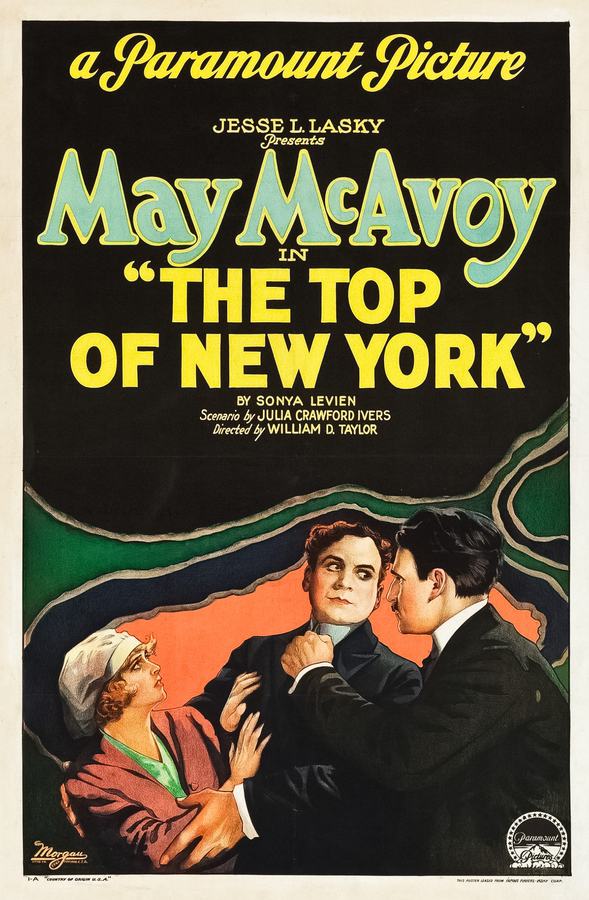
Navigating the complex narrative architecture of The Top of New York is a character-driven intensity experience, the emotional payoff of the 1922 classic is what fans crave in similar titles. The following gems are essential viewing for anyone captivated by The Top of New York.
The artistic audacity of The Top of New York ensures it to define the very concept of character-driven intensity in modern film.
Hilda O'Shaunnessey lives in a New York City tenement with her younger, invalid brother, Mickey, and relatives Mr. and Mrs. Brady. Because of Mickey's frail health, the boy spends most of his time on the roof, and Hilda works as a clerk in a department store toy department to raise enough money to send him to a sanitarium. Mickey befriends a little girl, Susan Gray, who lives with her single, artist father, Emery Gray, in a bungalow on the adjoining roof; when Emery meets Hilda, he is impressed by her devotion to her brother. As Christmas season approaches, Hilda takes an extra job in the toy department dressing up as animated dolls. Soon she catches the attention of the store's leering proprietor, Gregory Stearns, who makes several advances toward the young beauty, and asks what gift she would like for Christmas. Knowing what the older, wealthy man has in store for her, and seeing a way out of her troubles, Hilda asks for an expensive fur coat. When Stearns delivers the gift, Hilda pawns it to pay for Mickey's treatment at the sanitarium, then hurries to the roof to commit suicide before yielding to her employer's desires. However, Emery Gray prevents her from jumping, and exposes Stearns as the man who stole his wife. Emery asks for Hilda's hand in marriage, and Mickey is cured in the hospital.
The influence of William Desmond Taylor in The Top of New York can be felt in the way modern Drama films handle character-driven intensity. From the specific lighting choices to the pacing, this 1922 release set a high bar for atmospheric immersion.
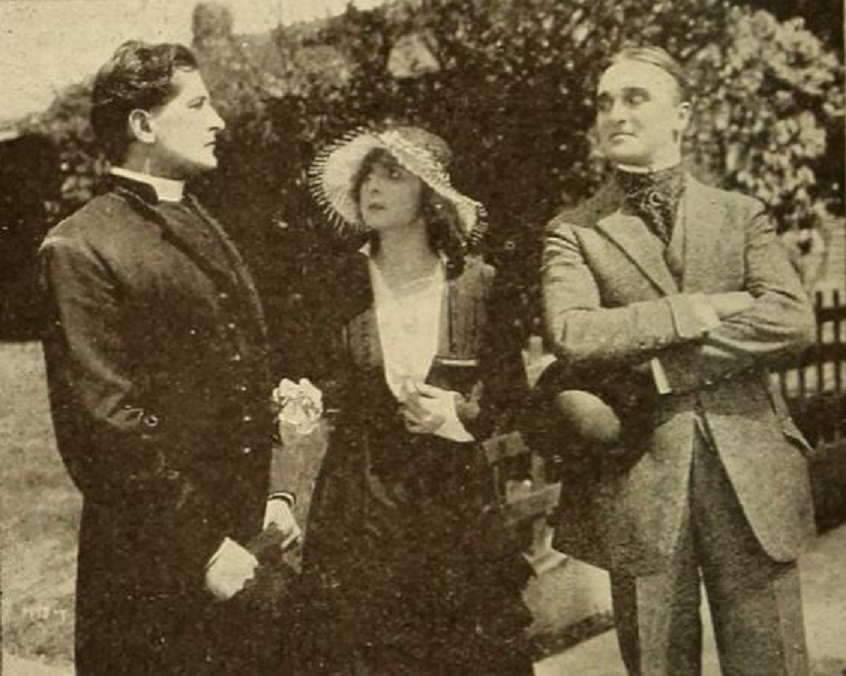
Based on the unique character-driven intensity of The Top of New York, our vault has identified these titles as the most compelling follow-up experiences for fans of Drama cinema:
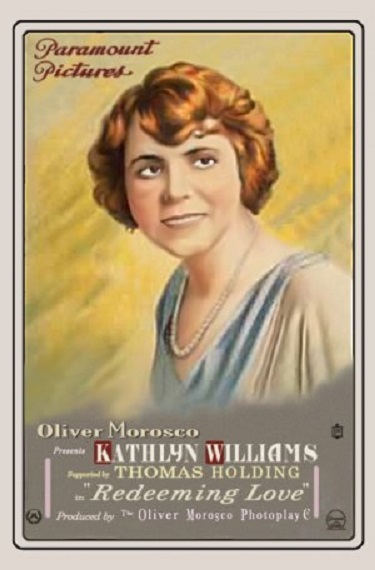
Dir: William Desmond Taylor
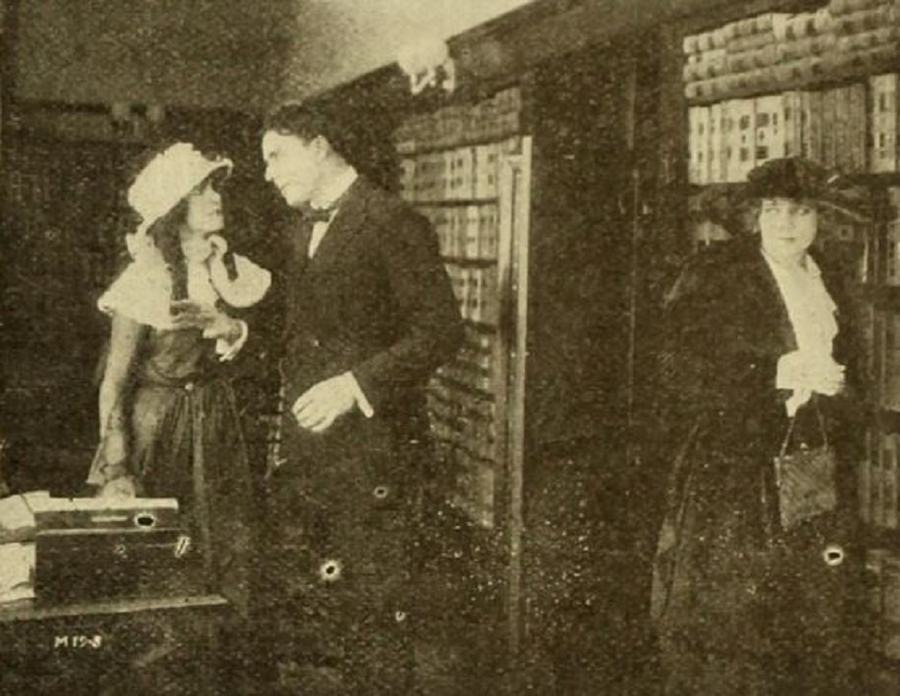
Naomi Sterling and John Bancroft are lovers. The girl loves frivolous things and Bancroft, a divinity student, finally estranges himself from her by his continual efforts to preach to her. Attracted by Hugh Wiley, a gambler, from a nearby city, Naomi finally elopes with him and eventually becomes known as the gambling queen. The girl's one ambition in life is to hoard up her wealth against the day when she shall lose her beauty and her popularity. Bancroft has plunged into religious work. He has become famous as an evangelist and has been trusted with the combination to the vault of the great tabernacle over which he presides. Learning this fact, Wiley inflames the mind of Naomi against Bancroft on the false ground that he has spurned her because of her life. He plans to have Naomi lure Bancroft to her gambling palace on a pretense, to overpower the minister while he is in there, steal the combination and loot the tabernacle. Furthermore, Wiley arranges to have the executive board of the tabernacle informed when the minister is in the gambling den, and to have the place raided by the police while he and his pal, McCarthy, rob the tabernacle. But the minister is too strong to succumb to the temptations of Naomi when he reaches her apartment, and his spiritual power wins the repentance of his temptress. Wiley, realizing that he is losing, springs upon Bancroft from behind and gets the combination away from him while his confederate alarms the police and the executive board according to the plan. But Naomi spirits the minister away through a secret passage, rushes to the tabernacle too late to prevent the robbery, and makes the great sacrifice of replacing the stolen money by her own ill-gotten hoard before the bewildered police and board officials arrive at the vault. In the final great moment of spiritual exaltation, Naomi has realized the greatness of Bancroft's love and of his power. Meanwhile Wiley, in an attempt to steal the loot from McCarthy, has wrecked the automobile in which they are fleeing and is killed.
View Details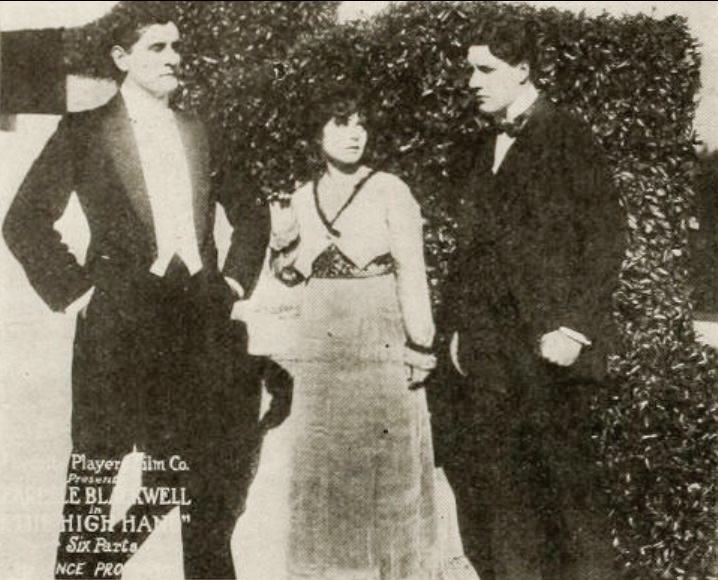
Dir: William Desmond Taylor
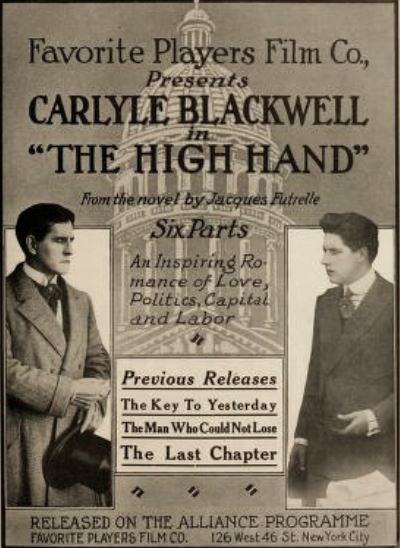
Up through the din and murk of the steel works, up by brawn and brain until he took his place behind the superintendent's desk came Jim Warren, but his heart was still with the strugglers in the glare of the furnaces. Here he had time to think and here he conceived the "big idea." The "big idea" required an established political position and he started out to get it. Francques, the henchman of Lewis, the political boss, saw in the young reformer a tool through which he could treacherously ruin his superior. Warren was running for the legislature as well as Lewis, and fortified with incriminating evidence against his opponent supplied by Francques, Warren entered the field as an independent candidate and was elected. Lewis took his defeat calmly and made friendly overtures to the newly elected member. Through the influence of Lewis, Warren was invited to visit the speaker of the House, Mr. Tillinghast. Here he was introduced to the girl of his life; the girl he had first seen, as a curious child visitor at the steel works. Several other times fate brought them together. It had been a secret love and he was astounded when he learned from her own lips that she was engaged to marry Lewis. Lewis's wedding to Edna was to occur as soon as Tillinghast was elected governor of the state. Edna admired Lewis and thought she loved him until one day after a talk with Jim Warren she realized the sordid contrast to which she, her father, and Lewis were parties. She told her father that she would not marry Lewis and remained firm in her decision against every argument that her ambitious parent offered. From that moment Warren battled for two loves, the love of a woman and the love of truth. Lewis, behind a smiling face, plotted Warren's undoing. Bribes came from every source. Marked bills, stocks and bonds were lavished by the clique upon the supposed unsuspecting assemblyman. At last they thought the trap ready to spring. He was arrested. He trembled not but unafraid played the last card of his high hand. He calmly led his captors to the vaults of the National Bank and there neatly docketed each in its separate envelope under seal of the bank were the bribes untouched together with the names of the givers and evidence that sent many of them to prison cells. The newspapers went wild. Jim Warren played the game and he was the man of the hour. Weeks later when the state convention had just gone wild over the nomination of Warren for governor, he and Edna were talking. "I think," said Edna, "that as long as I can't be the daughter of the governor, that I will be far happier as the governor's wife."
View Details
Dir: William Desmond Taylor
The infant daughter of a wealthy couple is thought to be lost at sea, but she survives and is raised by a poor family.
View Details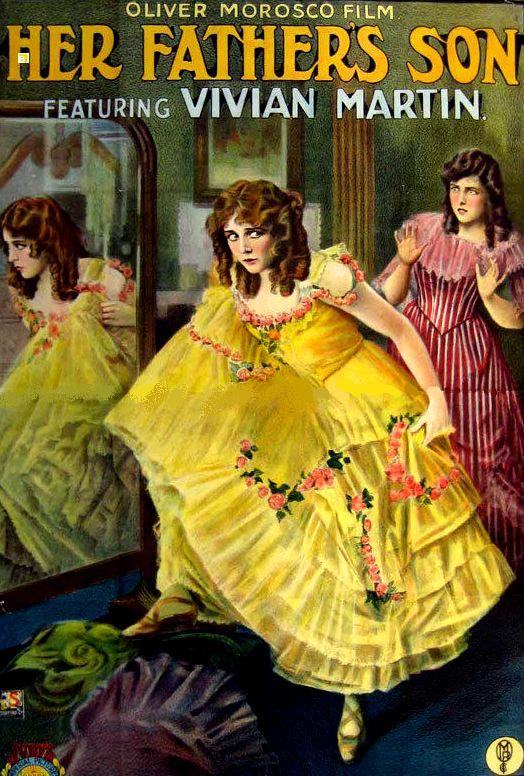
Dir: William Desmond Taylor
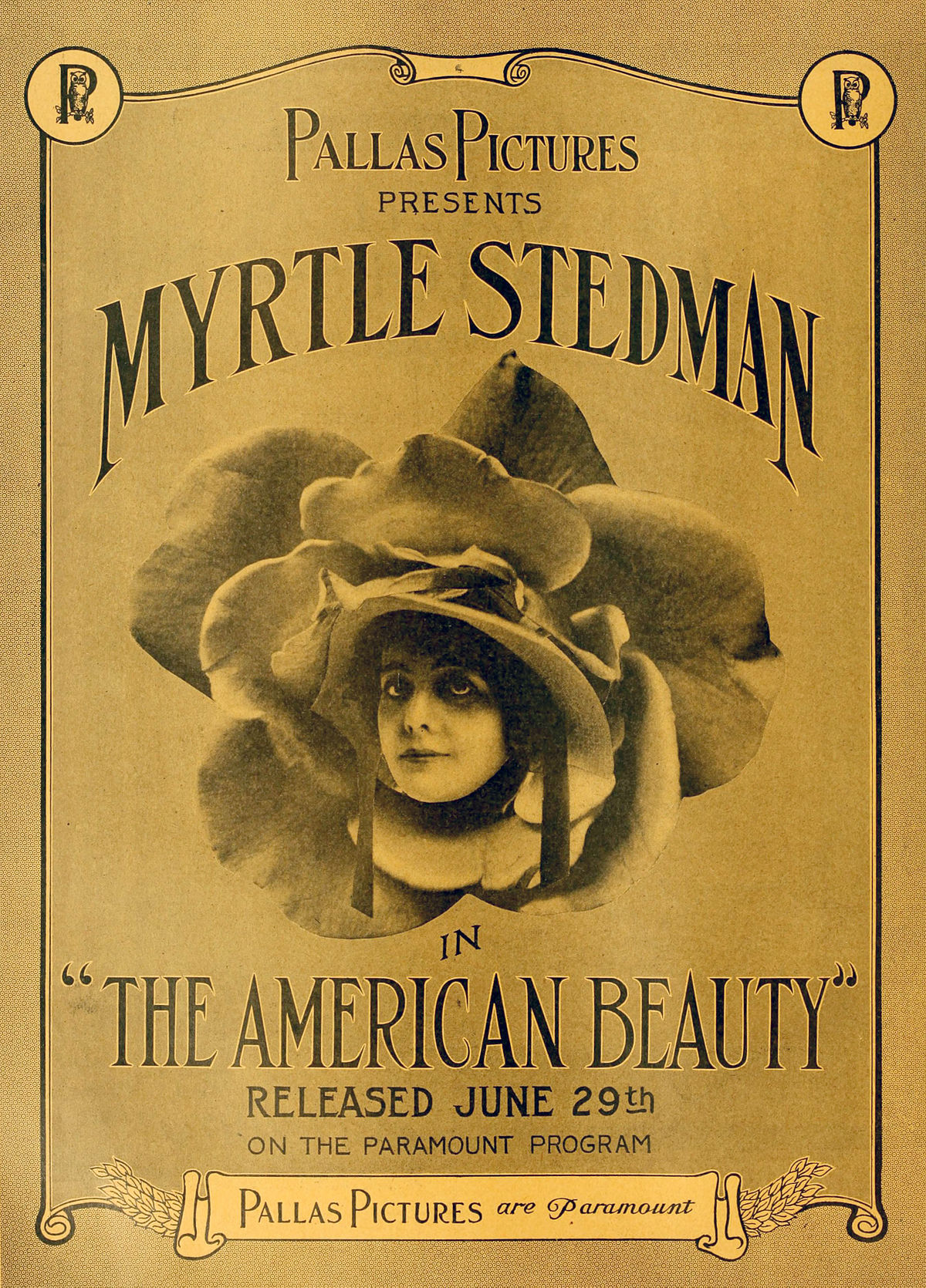
A Union officer exposes the several deceptions his sweetheart has been engaging in, which include spying for the Confederacy and posing as a boy to comfort her aging, wealthy, heirless uncle.
View Details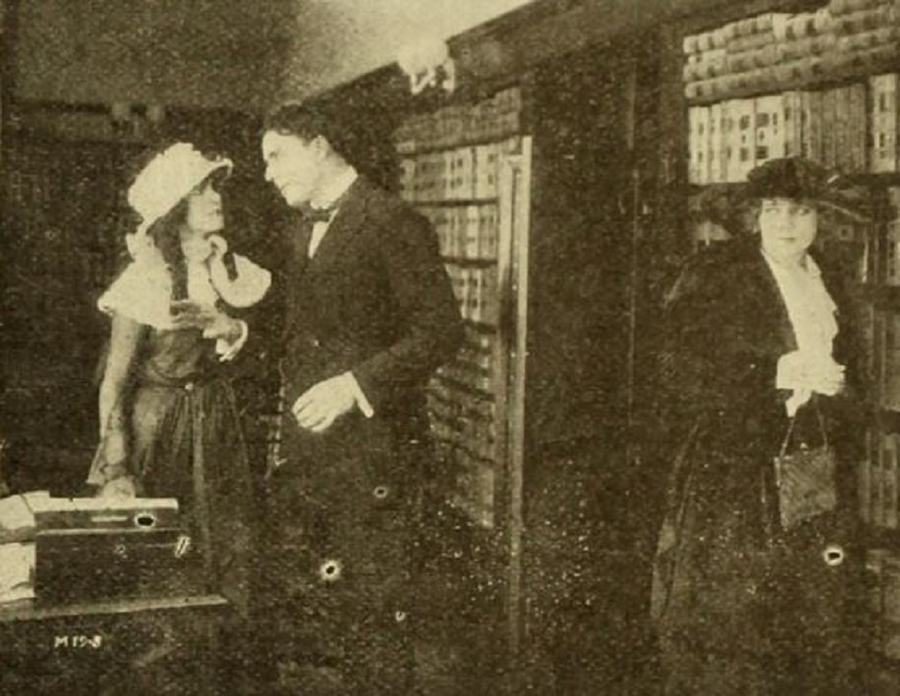
Dir: William Desmond Taylor
Constance, the beautiful wife of Mark Barr, is in fear of her husband's jealousy. Among the guests at their reception are Myrtle Gale and her fiancé, Billy Craig, to whom Constance was at one time engaged. Mark misinterprets a friendly chat between the two and forbids Billy to visit his house. Myrtle goes to the city, and is to return on an early evening train, on which Constance also expects her husband. Both are delayed and Constance persuades Billy, who has come to meet Myrtle, to take her for a ride in his new car. They lose their way and are out nearly all night. Constance is beset with fear at her husband's anger. Billy takes Constance to an inn for a bite to eat and they discover it is a notorious roadhouse. On their way out of the grounds, lightning strikes a tree which falls in the road as another automobile, driven by Fletcher, cashier of the bank, approaches. Monck, watchman at the bank, learning that Fletcher has gone out, breaks open the safe and takes a large sum of money. As an alibi he takes a watch charm which belongs to Fletcher, to the police, and tells them Fletcher overpowered him and robbed the bank. Fletcher is placed in jail and sends for Billy. Mrs. Fletcher also seeks his aid. Constance goes to Billy's office and hides behind a screen as her husband enters. She sneezes but Billy will not allow Mark to look behind the screen. Constance pictures the difference in size between the watchman and the cashier. Billy places his stenographer behind the screen, sends for Monck and secures his confession. Mark comes in and finds the stenographer behind the screen and Constance's happiness is assured. Fletcher is released and Mrs. Fletcher is made happy, while Billy goes to his sweetheart who is doubly happy in the knowledge that Billy has caused justice to be done.
View Details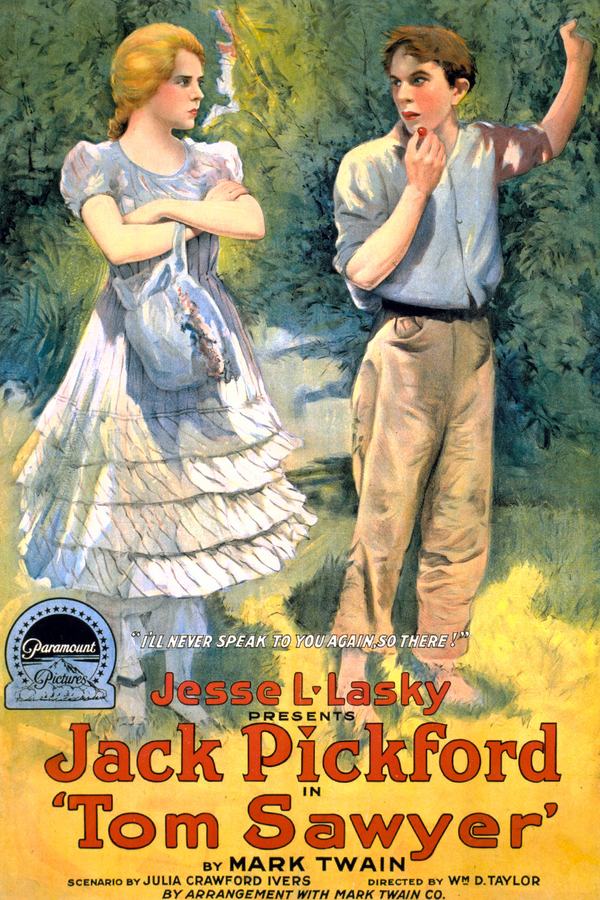
Dir: William Desmond Taylor
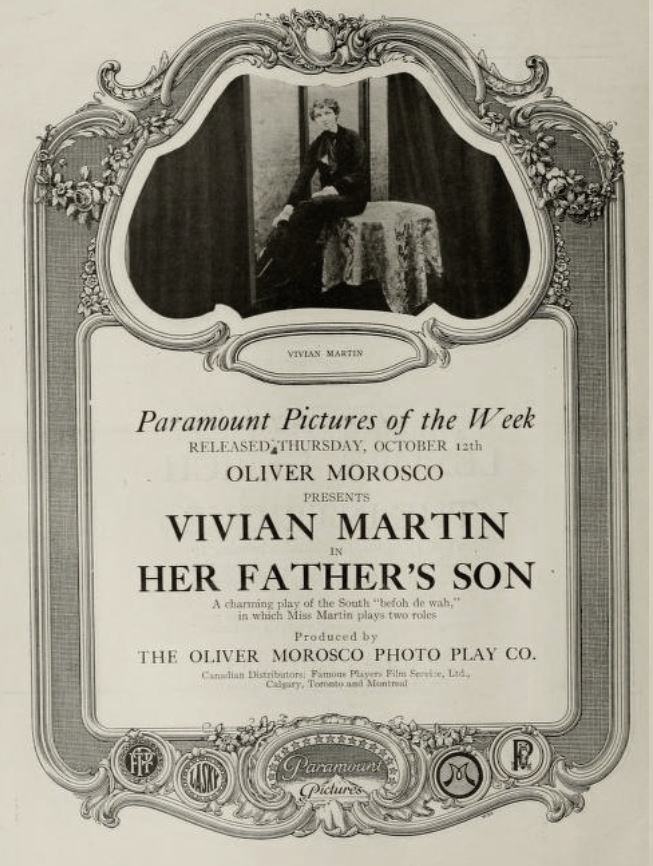
Tom, the rambunctious member of the Sawyer clan, takes it upon himself to teach the goody-goody boy of Hannibal, Missouri a lesson and, as Huckleberry Finn, his free-spirited best friend watches, pummels his foe to defeat. At school clever Tom makes mischief a regular practice, but as long as the punishment lands him next to his beloved Becky Thatcher, he remains carefree. After he is unfairly accused of his brother Sid's misdeed, Tom runs away with Huck and Joe Harper. Disguised as pirates, the trio builds a raft and sails down the Mississippi to a deserted island. Back at home, Tom's frantic Aunt Polly calls for a search, and cannons are fired into the river. When the search yields nothing, the boys are declared dead and a funeral is planned. At first tempted to reveal himself, Tom decides later to partake in his own memorial service, and as the townspeople mourn, he and his friends appear in the back of the church. Overcome with relief, Becky and Aunt Polly embrace Tom, forgetting to scold him for his mischief.
View Details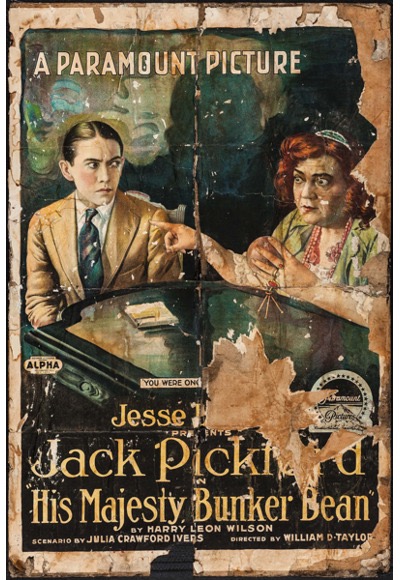
Dir: William Desmond Taylor
Bashful stenographer Bunker Bean ( Jack Pickford ), works for wealthy businessman Jim Breede by day and by night theosophist Prof. Balthasar, who convinces Bean that he is the reincarnation of Napoleon and, more remotely, of the great Egyptian king Ramses. His courage much bolstered by this revelation, Bean begins to deport himself with unaccustomed dignity and becomes a regular visitor to old Breede's estate, where he successfully courts the boss's daughter ( Louise Huff ), "The Flapper." With his $10,000 inheritance, Bean invests in a financial venture that nets him millions and purchases the alleged mummy of Ramses from the professor. After his marriage to The Flapper, Bean learns that the professor is a charlatan, and realizes that it is the belief in one's own strength of character that leads to success.
View Details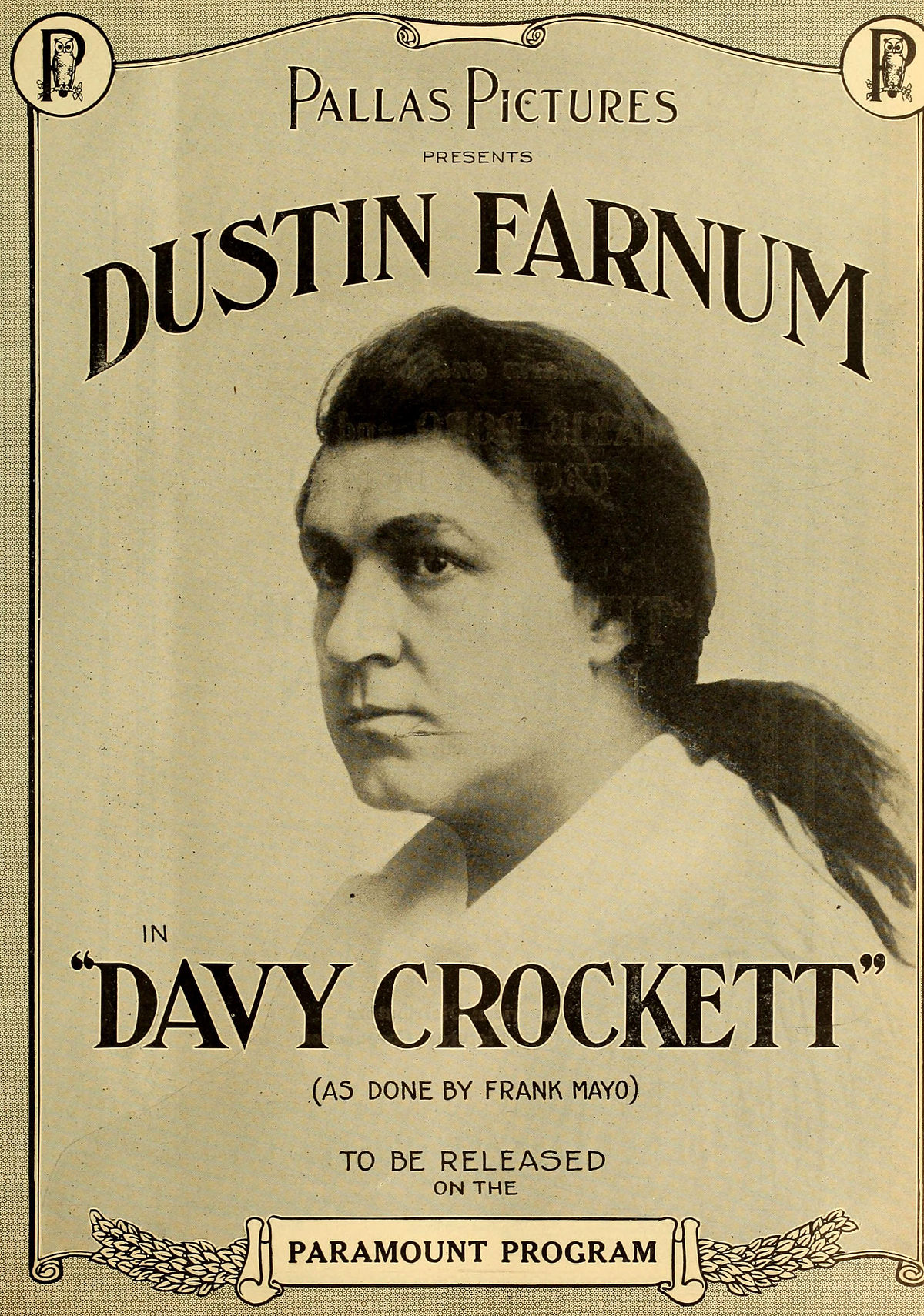
Dir: William Desmond Taylor
The story of the famous Tennessee frontiersman, soldier, scout, and Congressman who fought and died at the Alamo.
View Details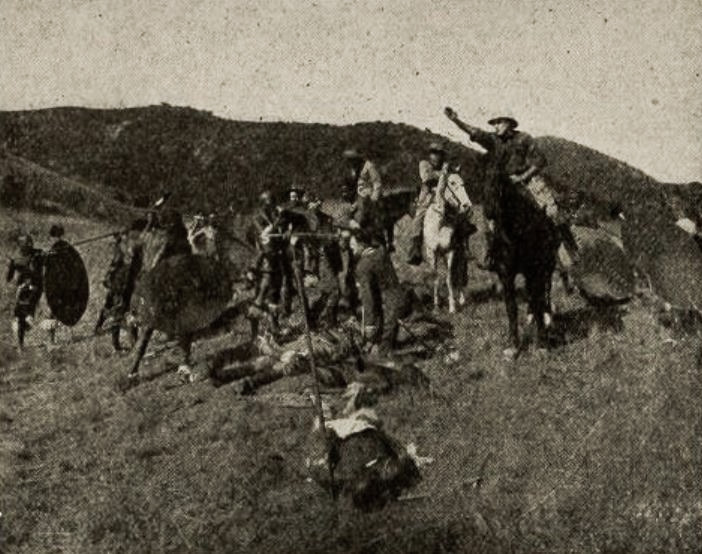
Dir: William Desmond Taylor
Gordon, a young war correspondent, after being wounded in the jungles of Africa, is picked up and taken back to England by James Egerton, a wealthy rubber magnate, who has been investigating conditions on his plantation, where there has been a great shortage in the year's yield. On the voyage homeward the correspondent and Egerton's daughter Alice fall in love. In England Gordon, finds in Lord Arbuthton a formidable rival for the hand of the girl he loves. At this time an exploring expedition leaves England to find the Lost River, a stream supposed to exist in the interior of Africa. Gordon views with concern his titled rival's attention to Alice, and at the first opportunity asks her father's consent to their marriage. Egerton answers that he will never allow his daughter to marry a penniless man, but offers his daughter's hand and an interest in the business if he will go to Africa and successfully solve the mystery of the rubber shortage. Gordon leaves, and the farewell between himself and Alice is a promise that, come what may, she will wait for him, and this promise she seals by taking off a locket and chain, which she gives him as a pledge of her love. He arrives in Africa, and after a series of thrilling adventures discovers that the overseer of the plantation has been selling rubber to coast traders and covering his dishonesty by manufacturing false statements about raids by outlaw bands. A fight follows in which the overseer is killed and the plantation settlement destroyed by fire. Gordon is wounded and barely escapes from a burning hut alive. Outside he discovers a weather-stained map upon the body of a dead native showing that the Lost River has been discovered, but not by the exploring party. Gordon struggles through the jungle, is found unconscious by the returning explorers, who have given up the search. When they see the map they hail him as Tracy, the discoverer of the Lost River. Here he learns that his rival has circulated reports that he died in the jungle and that Alice is to become the nobleman's bride. Gordon returns to London in disguise and is applauded by the public as a great explorer, and is about to give up Alice forever when Fate steps in. Lord Arbuthton is killed in an accident. The returned lover hurries to the girl, divulges his identity and reminds her of her pledge. Egerton, true to his promise, makes Gordon a member of the firm, and shortly afterward the bells are ringing for the young people's wedding.
View Details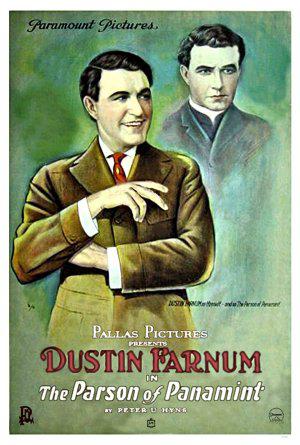
Dir: William Desmond Taylor
A tough preacher comes to the rip-roaring gold town of Panamint in hopes of reforming it. But disaster awaits.
View DetailsAnalysis relative to The Top of New York
| Film Title | Atmosphere | Complexity | Similarity |
|---|---|---|---|
| Redeeming Love | Gritty | Layered | 89% Match |
| The High Hand | Ethereal | Abstract | 96% Match |
| The American Beauty | Gothic | Layered | 87% Match |
| Her Father's Son | Gritty | Linear | 96% Match |
| Happiness of Three Women | Gritty | Linear | 95% Match |
This guide was algorithmically generated using the cinematic metadata of William Desmond Taylor's archive. Last updated: 6/25/2026.
Back to The Top of New York Details →