
DbcultAccessing Vault...
Recommendations
Senior Film Conservator
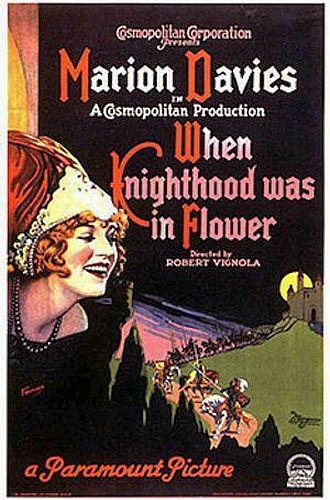
Navigating the complex narrative architecture of When Knighthood Was in Flower is a poignant storytelling experience, the emotional payoff of the 1922 classic is what fans crave in similar titles. The following gems are essential viewing for anyone captivated by When Knighthood Was in Flower.
The artistic audacity of When Knighthood Was in Flower ensures it to define the very concept of poignant storytelling in modern film.
Mary Tudor, sister of England's Henry VIII, causes a stir by falling in love with a guardsman below her class.
The influence of Robert G. Vignola in When Knighthood Was in Flower can be felt in the way modern Drama films handle poignant storytelling. From the specific lighting choices to the pacing, this 1922 release set a high bar for atmospheric immersion.
Based on the unique poignant storytelling of When Knighthood Was in Flower, our vault has identified these titles as the most compelling follow-up experiences for fans of Drama cinema:
Dir: Robert G. Vignola
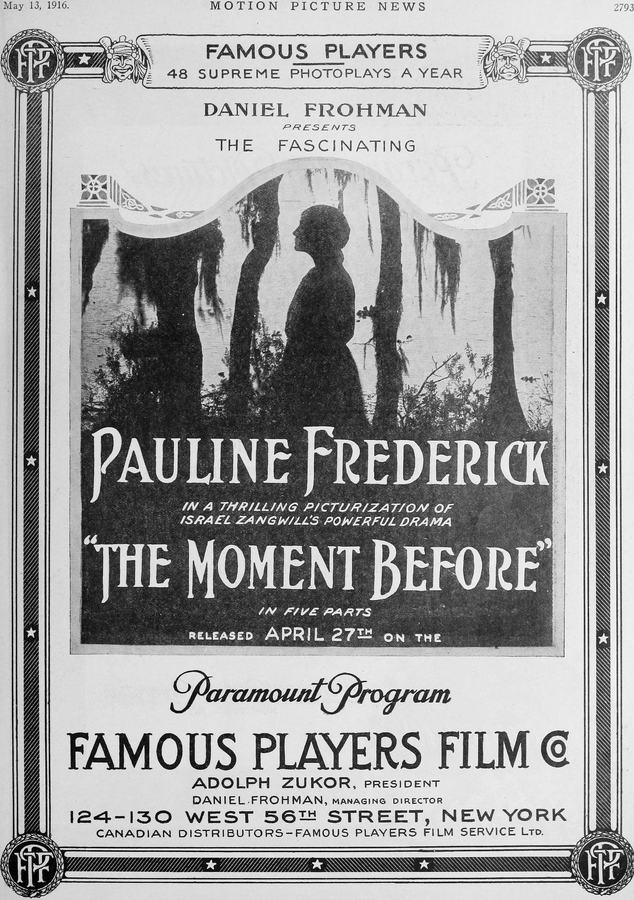
One moment before she dies, the aged, philanthropic, and universally respected Duchess of Maldon sees her life flash before her. As Madge, a young gypsy woman, two men fight for her, after which the winner, John, forces her to marry him. Then Madge deserts John and begins a romance in England with Harold, the youngest son of the Duke of Maldon. Soon, however, Harold fights with his older brother, who has criticized the affair with a married woman, and, believing that he has killed his brother, Harold leaves Madge behind and smuggles himself out of the country. Years later, Harold, who has found out that his brother did not die, meets Madge once again, and, determined not to let him leave her a second time, Madge kills John so that she and Harold can marry. Successfully covering up past scandals, Madge and Harold begin a life so sedate and distinguished that they quickly become England's model couple.
View Details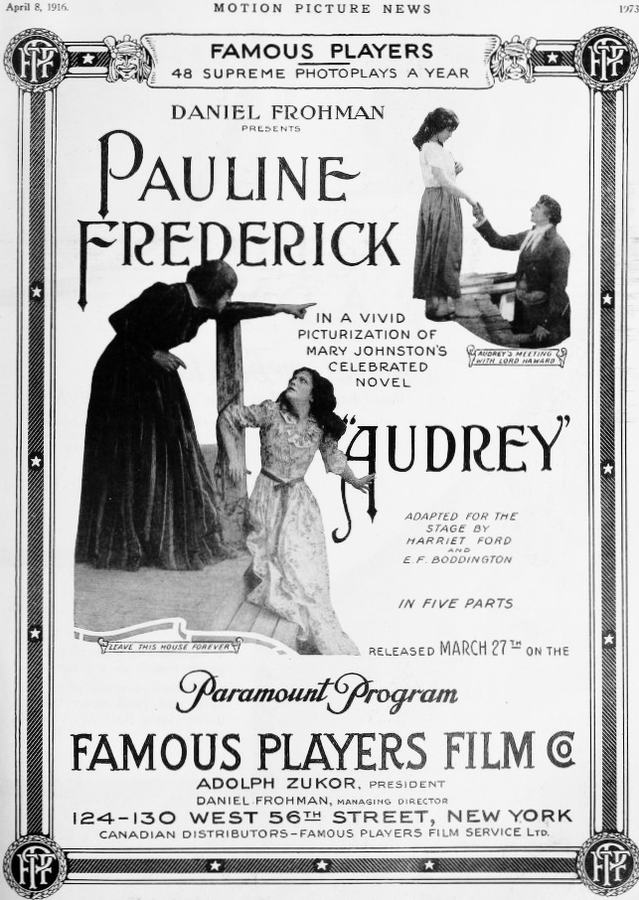
Dir: Robert G. Vignola
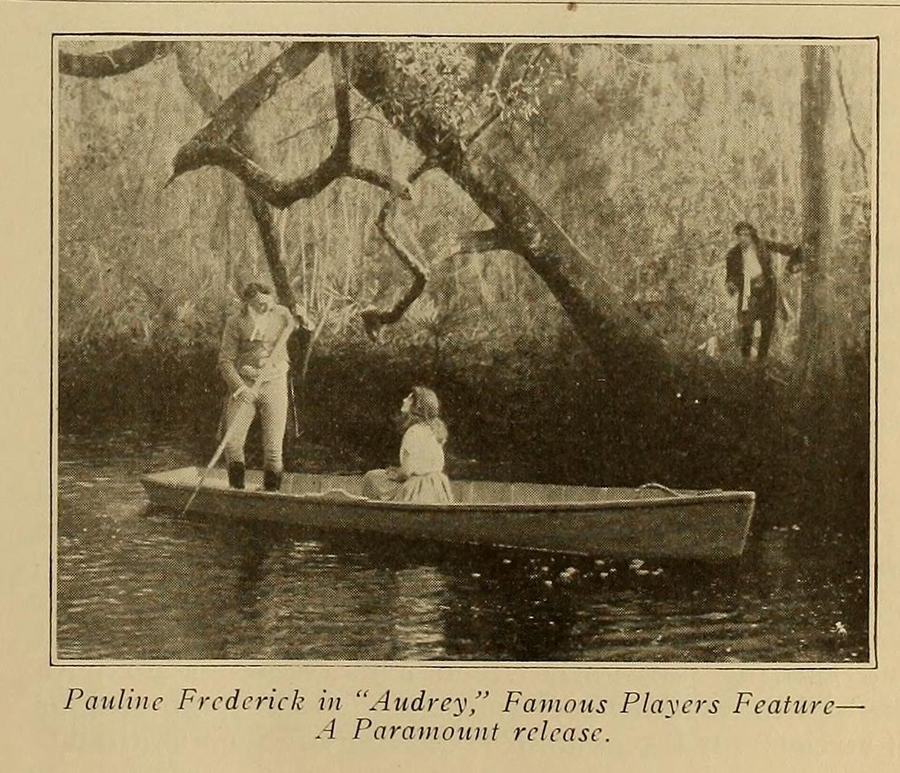
Audrey, an orphan, becomes the ward of a wealthy man, but when he travels to England, she is turned over to an unscrupulous couple who usurp her money and turn her into a slavey.
View Details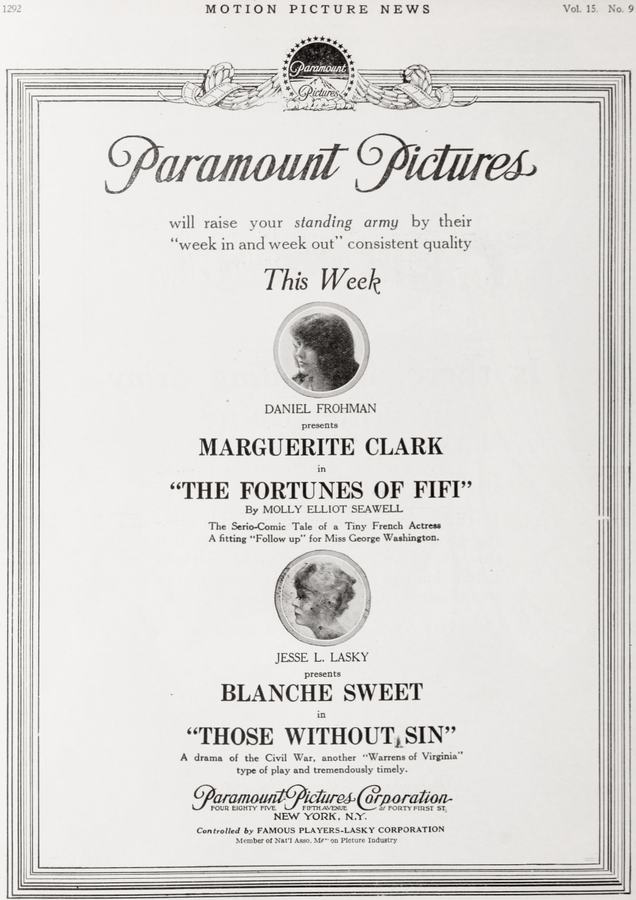
Dir: Robert G. Vignola
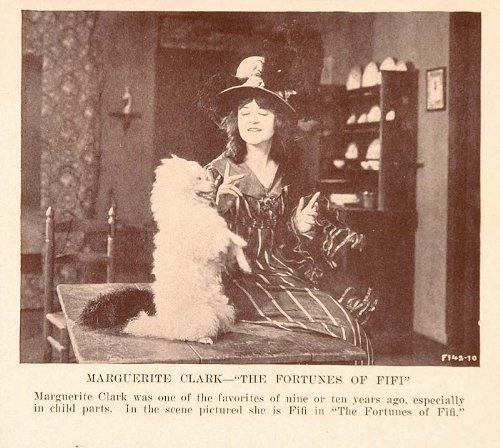
Fifi is seen as Pierrot in a French play that is a failure despite her effort to put ginger into the rest of the cast. Among the few in the last audience was Cartouche, a veteran, who had become an actor when his wounds no longer allowed him to follow Napoleon. Through Cartouche's efforts Fifi is employed at the Imperial theater in Parts. He takes her to his lodging, determined to protect her. Fifi fails to understand how much Cartouche is doing for her, and when he gives her money to buy clothes she purchases a toy dog sailed Toto. The veteran buys a lottery ticket and gives it to Fifi. The ticket bears the winning number and Fifi finds herself in possession of a fortune. Cartouche decides Fifi must be educated. He applies to his old general, who suggests that Fifi be sent to the home of Louis Bourcet, an attorney who lives alone with his mother. Instead of putting her money in the bank Fifi hides it and startles the Bourcet family by her extravagance. They decide she has even more money than they thought and Louis begins to see in the wealthy Fifi a very acceptable wife. He makes love to the girl, and she accepts his proffer. Then she sets about to make him break the engagement by squandering her money, realizing she is in love with Cartouche. Accordingly she buys the most impossible things, scandalizing the Bourcet family into a complete renunciation by giving the remainder of her wealth to a charitable benefit for old soldiers. Ejected from the house by the angry Mme. Bourcet, Fifi returns to the Imperial, where she demands more money for her services because she has been publicly thanked by the General for her donation to charity. She tells Cartouche she loves him, but the old soldier refuses. to permit her to "throw herself away" upon him until Fifi gets an inspiration of her own.
View Details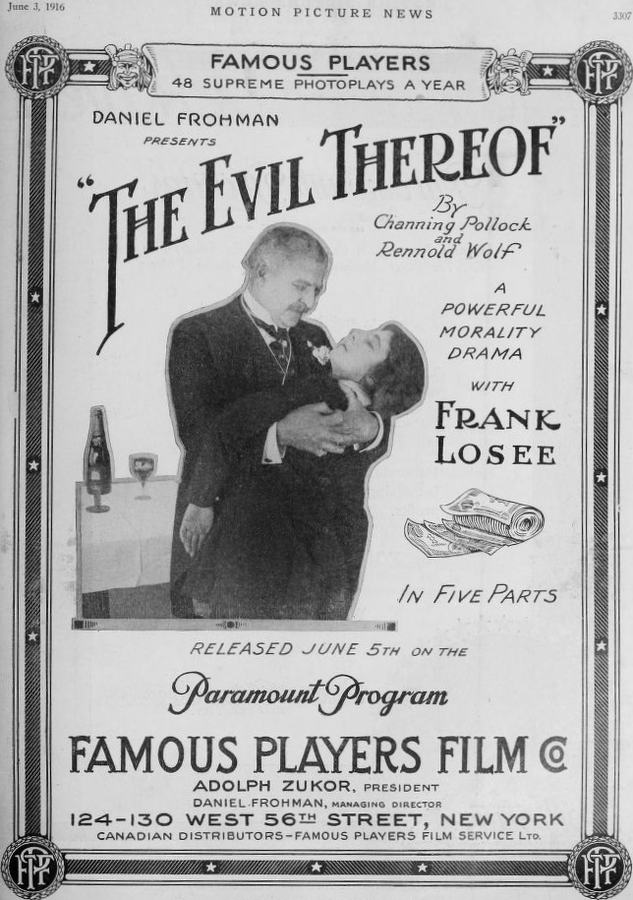
Dir: Robert G. Vignola
A fascinating piece of cinema that shares thematic elements.
View Details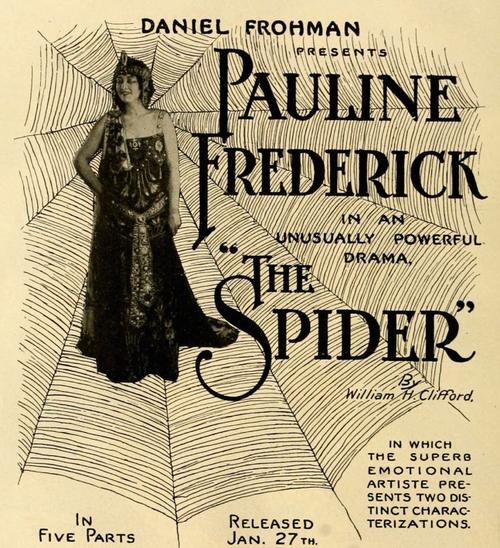
Dir: Robert G. Vignola
Valerie St. Cyr, seizes a chance for excitement and money, deserts her infant daughter Joan and her impoverished husband and runs away to Paris with the Count Du Poissy. Years later, without knowing that they are mother and daughter, both Valerie and Joan fall in love with artist Julian St. Saens, who rejects the former but becomes engaged to the latter. Enraged, Valerie convinces the count to kidnap Joan, but after she is captured, Joan stabs the count to death. When Valerie learns that Joan is her daughter, she takes the blame for the murder and goes to the guillotine while Joan, still unaware that Valerie is her mother, makes plans with Julian for their marriage.
View Details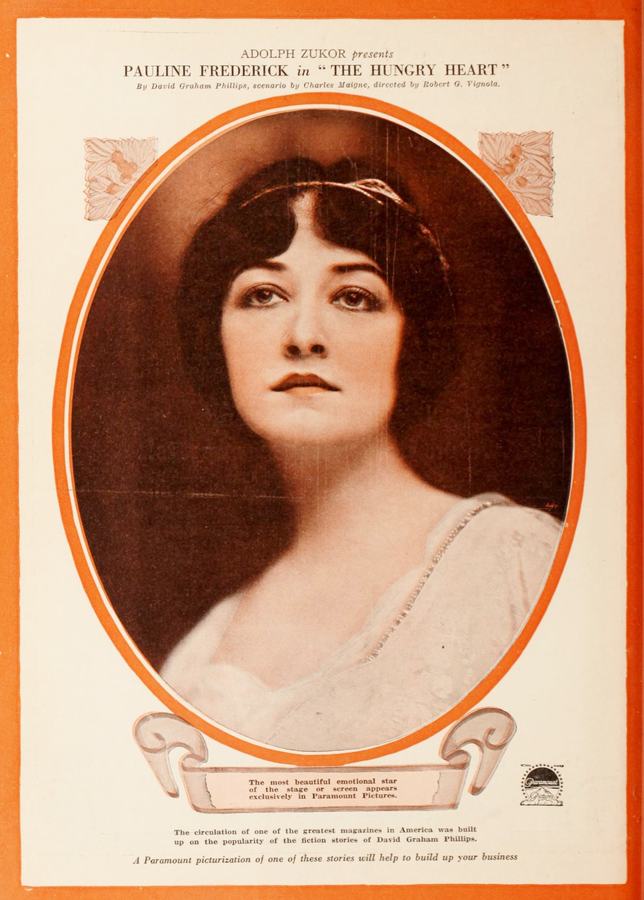
Dir: Robert G. Vignola
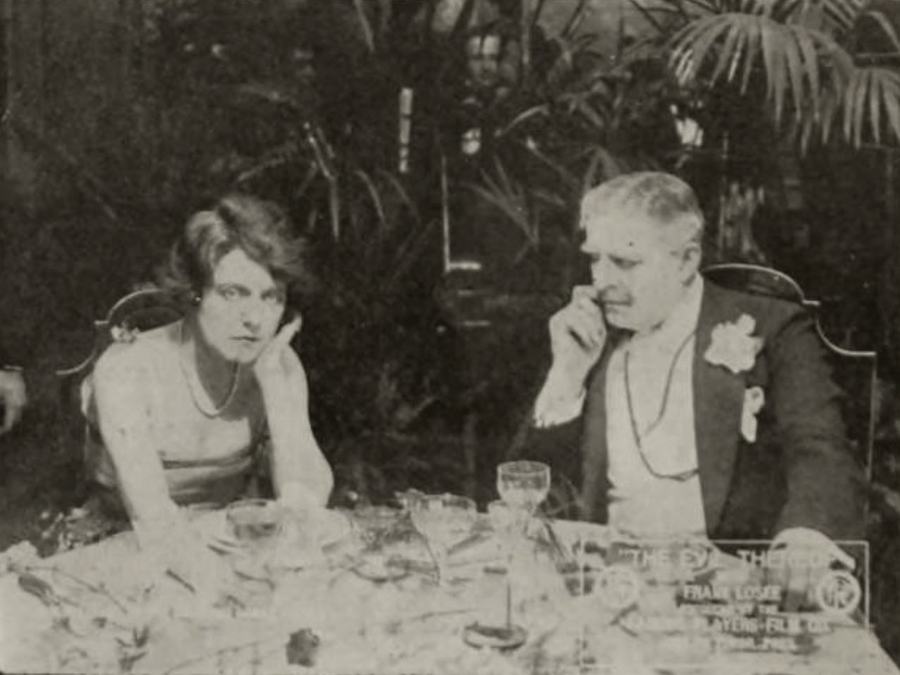
After their wedding, Richard Vaughan and his wife Courtney take up residence in Richard's ancestral home. Courtney, despised by Nanny, the old housekeeper, and neglected by her husband, who buries himself in his chemical experiments, leads a lonely life. Consequently, when experimental chemist Basil Gallatin pays a lengthy visit to the Vaughan home, Courtney finds herself attracted to him. One day, during Richard's absence, a burglar alarm places Courtney and Gallatin in a compromising situation. Witnessing their embrace, Nanny is struck speechless, but when Richard returns she recovers her speech and gives damning evidence against Courtney. Gallatin flees, and Richard, realizing his culpability, gives his wife a divorce. Having read of the divorce, Gallatin returns and Courtney admonishes Richard to kill them both. Richard frightens Gallatin away with the threat of exploding one of his compounds, but Courtney defies death and remains. A reconciliation between husband and wife then follows.
View Details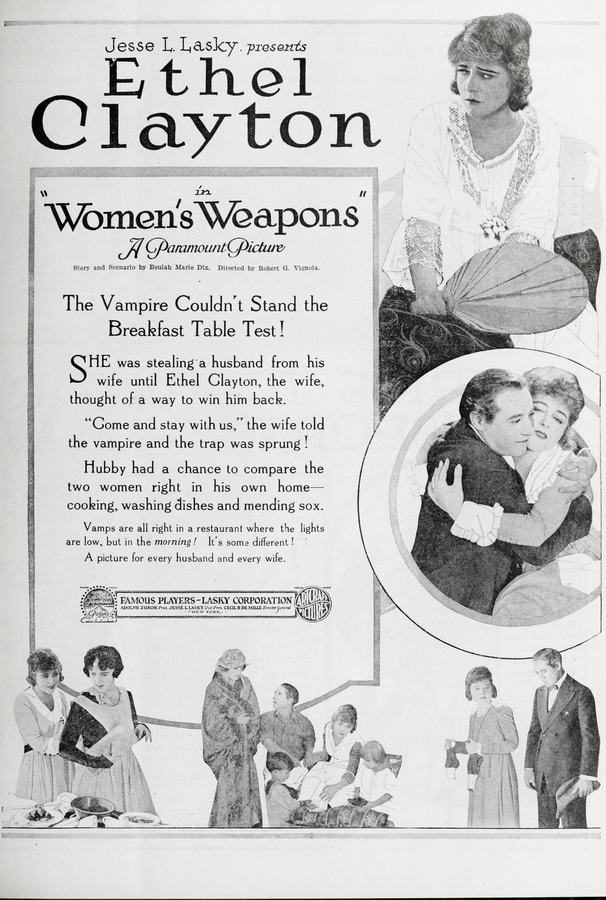
Dir: Robert G. Vignola
The children of a a novelist, Nicholas, contract scarlet fever. His wife Anne stays in the house to take care of them, but the house is quarantined by the authorities and Nicholas, not being allowed in the house, takes a room in town until the quarantine is lifted. Lonely, he begins to feel attracted to his illustrator, Esmee. They begin an affair, but soon Nicholas finds that Esmee's expensive tastes are driving him to bankruptcy. His wife finds out about the affair, and devises a plan to teach her husband a lesson and get his mistress out of the picture at the same time.
View Details
Dir: Robert G. Vignola
Society debutante Vivian Tyler is engaged to marry Count Belloto, then meets Dr. Robert Keith, whose work in uplifting the poor has attracted wide attention, she is strongly attracted to him and asks permission to work in his sanitarium, where the poor of the city receive treatment free of charge. There she meets Aggie May, a woman arrested as a streetwalker, and because she wears a locket bearing Dr. Keith's picture, Vivian assumes that the doctor has been responsible for the woman's downfall. Later, Aggie kills herself, and although Vivian witnesses the act, to avoid a scandal she hurries away before the police come. Dr. Keith is arrested for Aggie's death, the locket providing evidence of guilt. Just as he is to be convicted, Vivian rushes into the courtroom and gives the testimony that clears the doctor.
View Details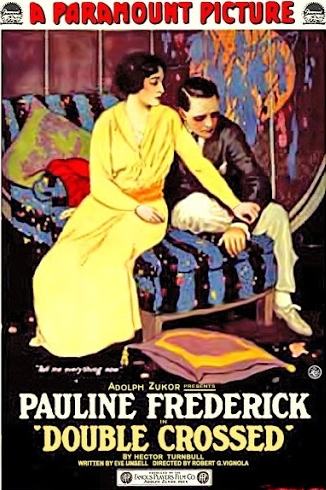
Dir: Robert G. Vignola
Young Frank Stratton, the scion of a wealthy family who is temporarily short of funds, has borrowed a valuable bracelet and hasn't returned it to its owner. A crooked detective, Jim Foley, finds the bracelet in Stratton's possession and promises not to arrest him for it in return for Stratton signing a confession that he stole it, which Foley intends to use at a future date. Years pass and a political boss in danger of losing an election asks Foley's help in getting valuable papers from his opponent, Worthington Lawrence. Foley knows that Lawrence is a friend of Stratton and tells Stratton that unless he steals those papers Foley will make his signed confession public. Complications ensue.
View Details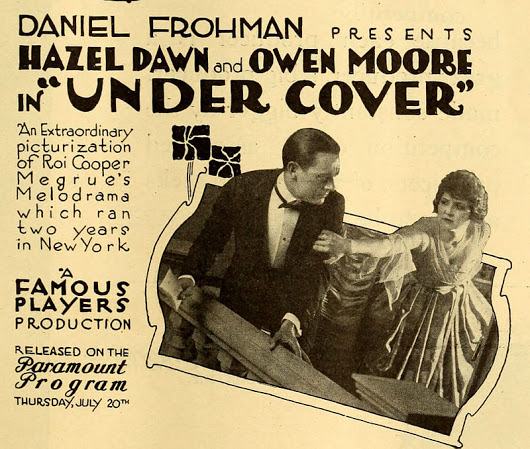
Dir: Robert G. Vignola
At her godmother's place in Paris, Ethel Cartwright meets dashing Stephen Denby but is reluctant to reciprocate her interest in her because he seems to be idle. Denby is actually a jewel smuggler and sells a $200,000 pearl necklace. Upon her arrival in New York, Ethel notices that her necklace is gone and claims her insurance money. The insurance company inspector finds Ethel's sister's behavior very peculiar and has her investigated by customs inspector Taylor; she soon reveals that she is the thief. Taylor tells Ethel he can forget the whole story if she helps him frame Denby. Ethel agrees and does it. As he is about to be taken to jail, Denby offers Taylor $30,000 to release him. Taylor accepts. Denby reveals himself a secret service agent in charge of catching a customs inspector who has been dealing illegally with smugglers for three years: Taylor. Ethel eventually marries Denby.
View DetailsAnalysis relative to When Knighthood Was in Flower
| Film Title | Atmosphere | Complexity | Similarity |
|---|---|---|---|
| The Moment Before | Surreal | Abstract | 98% Match |
| Audrey | Tense | Abstract | 92% Match |
| The Fortunes of Fifi | Surreal | High | 85% Match |
| The Evil Thereof | Tense | Linear | 90% Match |
| The Spider | Gritty | Linear | 97% Match |
This guide was algorithmically generated using the cinematic metadata of Robert G. Vignola's archive. Last updated: 6/25/2026.
Back to When Knighthood Was in Flower Details →