
DbcultAccessing Vault...
Director's Spotlight
Senior Film Conservator
Director's Spotlight: United States
A Deep Dive into the 1924 Vision of Bryan Foy
The evocative power of Omar Khayham stems from the unique collaboration between the subversive storytelling techniques employed by Bryan Foy in 1924. Synthesizing the best elements of United States and international cinema, it reminds us of the fragility and beauty of the 1924s.
In Omar Khayham, Bryan Foy pushes the boundaries of conventional narrative. The film's unique approach to its subject matter has sparked endless debates and interpretations among cinephiles and critics alike.
To fully appreciate Omar Khayham, one must consider the cinematic climate of 1924. During this period, United States was undergoing significant artistic shifts, and Bryan Foy was at the forefront of this Short movement, often challenging established norms.
| Cinematography | Noir-Inspired |
| Soundtrack | Synth-Heavy |
| Editing | Disjunctive |
| Art Direction | Baroque |
Visualizing the convergence of Bryan Foy's style and the core Short narrative.
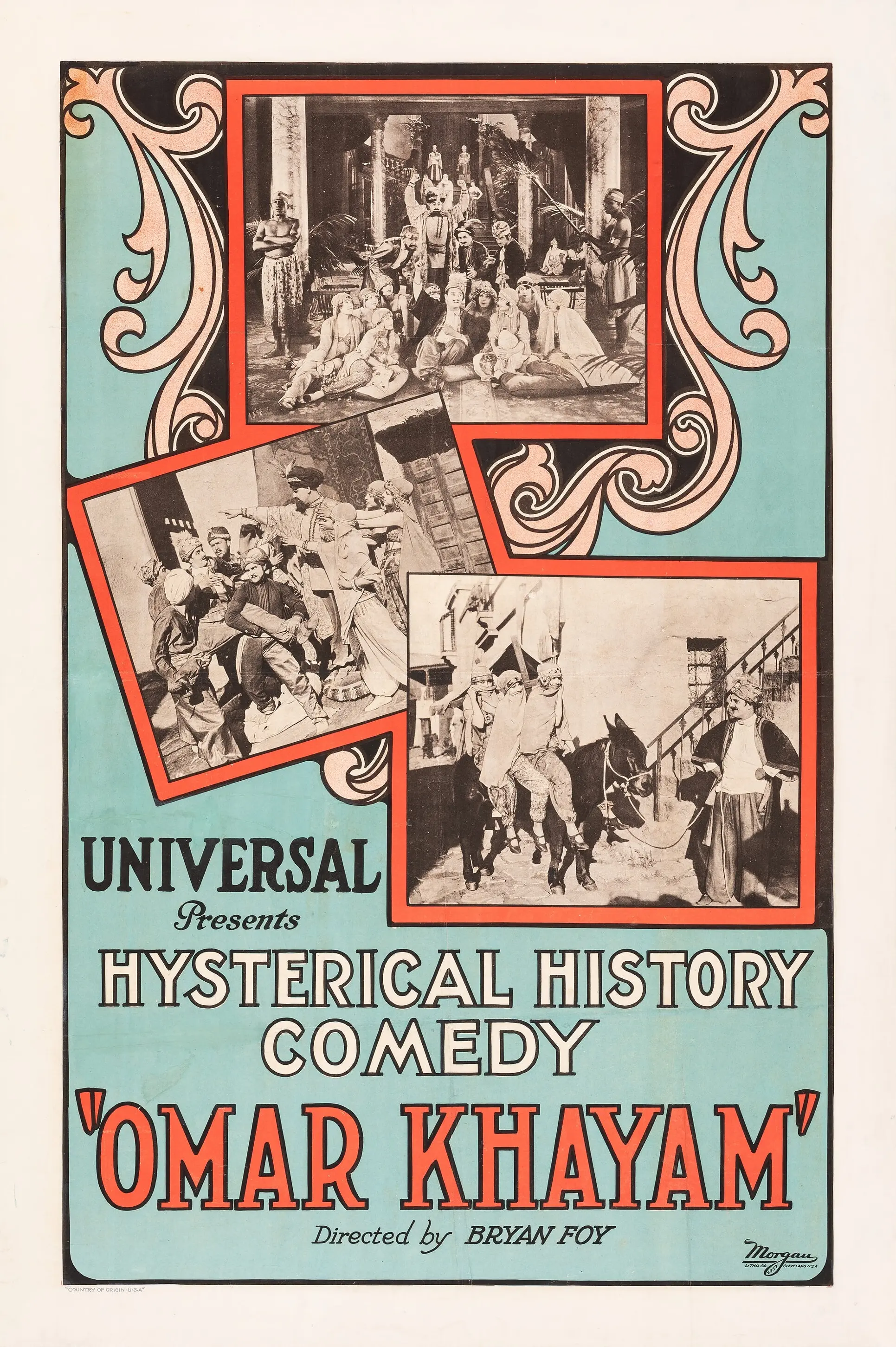
Omar, poetry piece-worker, falls for Atta Bey-Bee, favorite in the harem of Sultan Hassan Feifeh, and invades the latter's seraglio in order to glimpse his new-found love. Omar overpowers the eunuch guards of the harem, but is detected by the sultan and chased all over the establishment. Disguised as a dancer, Omar returns and vamps the sultan. Rescuing Atta, he discovers she already has a hubby waiting for her, so he swears off further harem-scarem adventure. Moral: When a man decides to take a wife he should be careful whose wife he takes.
Decades after its release, Omar Khayham remains a vital piece of the cinematic puzzle. Its influence can be seen in countless modern works, solidifying Bryan Foy's status as a master of the craft in United States and beyond.