
DbcultAccessing Vault...
Director's Spotlight
Senior Film Conservator
Director's Spotlight: United States
A Deep Dive into the 1931 Vision of Bryan Foy
The artistic breakthrough represented by Stout Hearts and Willing Hands in 1931 highlights the uncompromising vision of Bryan Foy that defines this Comedy masterpiece. In the context of United States's rich cinematic history, it captures a specific kind of cinematic magic that is rarely replicated.
In Stout Hearts and Willing Hands, Bryan Foy pushes the boundaries of conventional narrative. The film's unique approach to its subject matter has sparked endless debates and interpretations among cinephiles and critics alike.
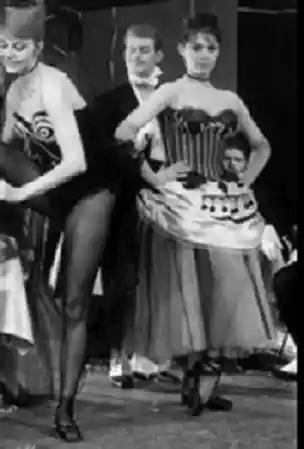
To fully appreciate Stout Hearts and Willing Hands, one must consider the cinematic climate of 1931. During this period, United States was undergoing significant artistic shifts, and Bryan Foy was at the forefront of this Comedy movement, often challenging established norms.
| Cinematography | High-Contrast |
| Soundtrack | Synth-Heavy |
| Editing | Disjunctive |
| Art Direction | Baroque |
Visualizing the convergence of Bryan Foy's style and the core Comedy narrative.
This Masquers short (the first of the series) is a parody of every old-time melodrama that trod the stages or graced the silver screen...Our Nell...the Old Folks at Home...the Old Homestead...the Villain holding the Mortgage...the pure-as-snow Hero with IDEALs...and the Old Saw Mill with the Heroine tied to a log rapidly approaching the the Old (but sharp) Buzz Saw. All with the Keystone Kops thrown in.
Decades after its release, Stout Hearts and Willing Hands remains a vital piece of the cinematic puzzle. Its influence can be seen in countless modern works, solidifying Bryan Foy's status as a master of the craft in United States and beyond.