
DbcultAccessing Vault...
Director's Spotlight
Senior Film Conservator
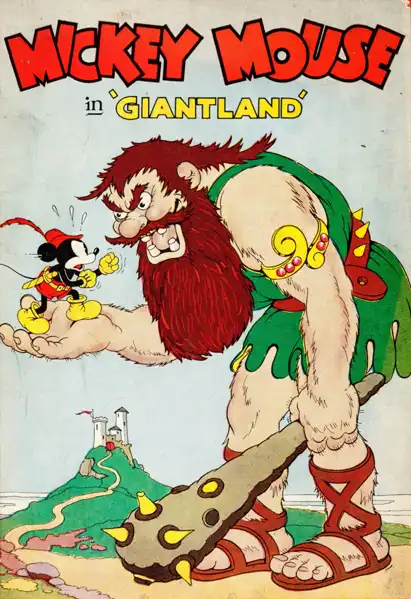
Director's Spotlight: United States
A Deep Dive into the 1933 Vision of Burt Gillett
Peeling back the layers of Burt Gillett's Giantland exposes the technical innovation that Burt Gillett introduced to the Family format. Driven by an uncompromising commitment to Family excellence, it stands as the definitive 1933 statement on Family identity.
In Giantland, Burt Gillett pushes the boundaries of conventional narrative. The film's unique approach to its subject matter has sparked endless debates and interpretations among cinephiles and critics alike.
The visual language of Giantland is defined by its use of shadows and framing, a hallmark of Burt Gillett's style. By utilizing a 1933-era palette, the film creates an immersive experience that perfectly complements its Family themes.
| Cinematography | High-Contrast |
| Soundtrack | Orchestral |
| Editing | Slow-Burn |
| Art Direction | Brutalist |
Visualizing the convergence of Burt Gillett's style and the core Family narrative.
Mickey's orphans ask for a story; Mickey casts himself as Jack in Jack and the Beanstalk. He starts with the climbing of the beanstalk; after evading the giant a few times, he ends up inside a cheese sandwich, and then in the giant's mouth, where he ultimately grabs onto a pipe and gets pulled out by the giant. In the ensuing chase, Mickey launches a pepper bomb to slow the giant down, then outruns him coming down the beanstalk and sets the stalk on fire.
Decades after its release, Giantland remains a vital piece of the cinematic puzzle. Its influence can be seen in countless modern works, solidifying Burt Gillett's status as a master of the craft in United States and beyond.