
DbcultAccessing Vault...
Director's Spotlight
Senior Film Conservator
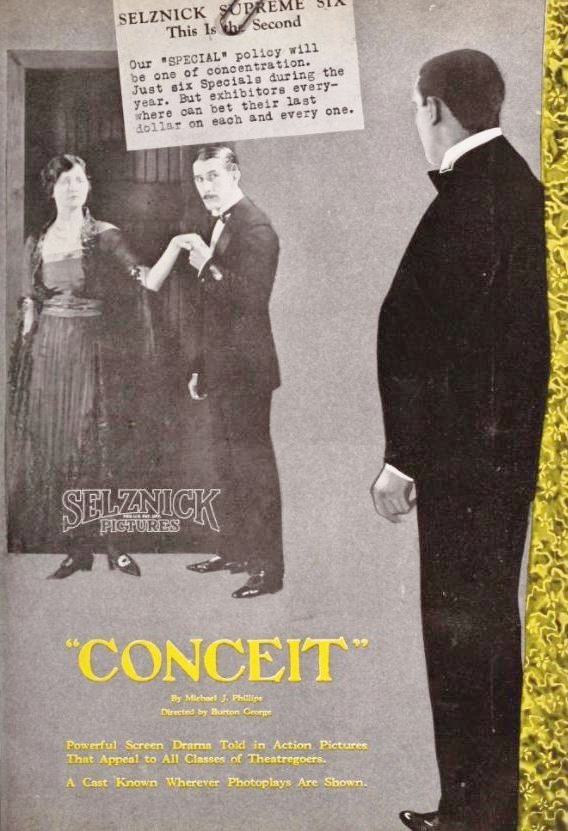
Director's Spotlight: United States
A Deep Dive into the 1921 Vision of Burton George
As a cultural artifact of the 1921s, Conceit provides the visionary mind of its creator, Burton George. With its avant-garde structure and atmospheric tension, it redefined what audiences could expect from a Drama experience.
In Conceit, Burton George pushes the boundaries of conventional narrative. The film's unique approach to its subject matter has sparked endless debates and interpretations among cinephiles and critics alike.
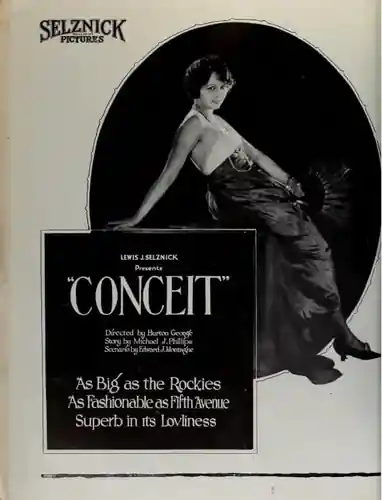
To fully appreciate Conceit, one must consider the cinematic climate of 1921. During this period, United States was undergoing significant artistic shifts, and Burton George was at the forefront of this Drama movement, often challenging established norms.
| Cinematography | High-Contrast |
| Soundtrack | Diegetic |
| Editing | Elliptical |
| Art Direction | Expressionist |
Visualizing the convergence of Burton George's style and the core Drama narrative.
William Crombie, a wealthy man of weak character, becomes lost in the wilderness on a hunting trip and is sheltered by a rough woodsman (Bowles) who lives with a pretty girl named Jeanette. Crombie becomes infatuated with her but is afraid to fight the woodsman for her, and she views him with contempt. Returning home, Crombie finds his neglected wife involved in an affair and decides to make a man of himself; after developing himself physically, he thrashes his wife's lover. He then seeks the woodsman to accept his challenge, but finding him near death, he pays for his medical care. Then, seeing that Jeanette really loves Bowles, he paves their way to a happy future. Returning to his hunting lodge, Crombie is surprised to find his wife awaiting his return.
Decades after its release, Conceit remains a vital piece of the cinematic puzzle. Its influence can be seen in countless modern works, solidifying Burton George's status as a master of the craft in United States and beyond.