
DbcultAccessing Vault...
Director's Spotlight
Senior Film Conservator
Director's Spotlight: United States
A Deep Dive into the 1923 Vision of Burton L. King
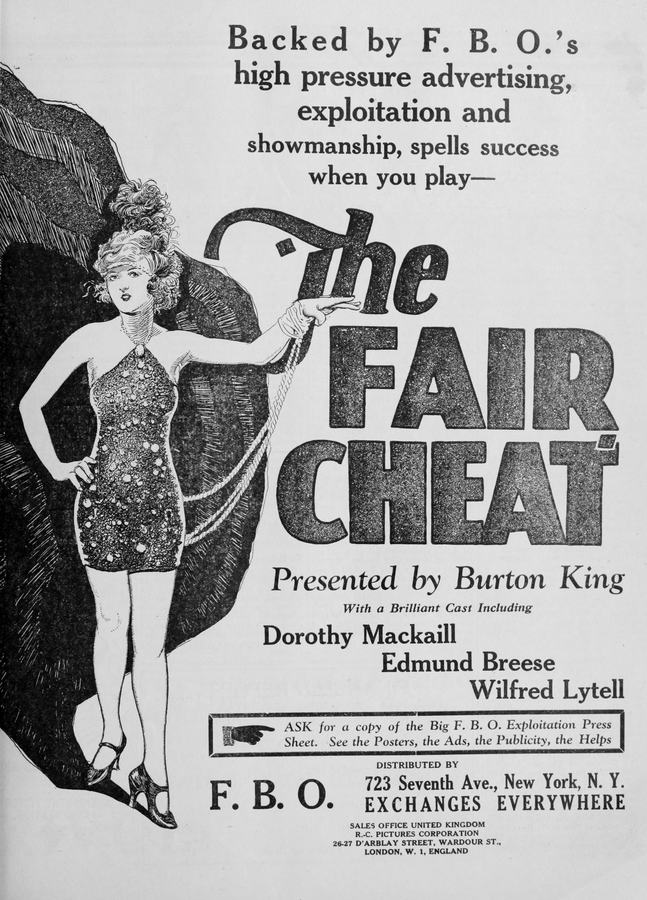
As a cultural artifact of the 1923s, The Fair Cheat provides the global recognition that Burton L. King garnered after the release of The Fair Cheat. Elevating the source material through Burton L. King's unique vision, it solidifies Burton L. King's reputation as a master of the craft.
In The Fair Cheat, Burton L. King pushes the boundaries of conventional narrative. The film's unique approach to its subject matter has sparked endless debates and interpretations among cinephiles and critics alike.
To fully appreciate The Fair Cheat, one must consider the cinematic climate of 1923. During this period, United States was undergoing significant artistic shifts, and Burton L. King was at the forefront of this Drama movement, often challenging established norms.
| Cinematography | Noir-Inspired |
| Soundtrack | Synth-Heavy |
| Editing | Rhythmic |
| Art Direction | Naturalist |
Visualizing the convergence of Burton L. King's style and the core Drama narrative.
Camilla Van Dam is in love with her rich father's poor employee, John Hamilton. Van Dam is against their marriage but proposes an arrangement to which Camilla agrees. Van Dam goes abroad with the understanding that she will not marry for a year or reveal her whereabouts to Hamilton. Announcing to the press that she is accompanying her father, Camilla instead gets a job as a chorus girl, takes an apartment, and supports herself. Hamilton finds her and joins in the deception until Van Dam's secretary tries to make off with the fortune on hearing the false rumor of Van Dam's death. Van Dam consents readily to his daughter's marriage when he returns.
Decades after its release, The Fair Cheat remains a vital piece of the cinematic puzzle. Its influence can be seen in countless modern works, solidifying Burton L. King's status as a master of the craft in United States and beyond.