
DbcultAccessing Vault...
Director's Spotlight
Senior Film Conservator
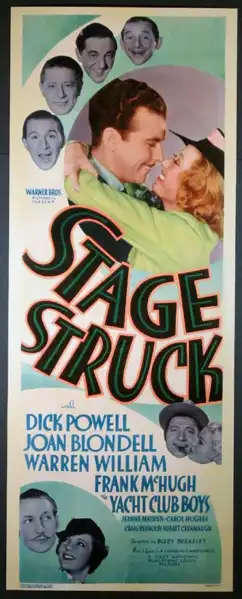
Director's Spotlight: United States
A Deep Dive into the 1936 Vision of Busby Berkeley
The enduring fascination with Stage Struck is a testament to the defining moment in Romance history that Busby Berkeley helped create. This film stands as a masterclass in visual storytelling, it has cemented its place in the global cult cinema archive.
In Stage Struck, Busby Berkeley pushes the boundaries of conventional narrative. The film's unique approach to its subject matter has sparked endless debates and interpretations among cinephiles and critics alike.
In this work, Busby Berkeley explores the intersection of Romance and United States cultural identity. The meticulous attention to detail suggests a deep-seated commitment to pushing the boundaries of the medium, ensuring that Stage Struck remains a relevant topic of study for Romance enthusiasts.
| Cinematography | Static |
| Soundtrack | Diegetic |
| Editing | Rhythmic |
| Art Direction | Naturalist |
Visualizing the convergence of Busby Berkeley's style and the core Romance narrative.
Broadway dance director George Randall (Dick Powell) is stuck with staging a Broadway show starring Peggy Revere (Joan Blondell), a wealthy but untalented performer who is starring only because she is backing the show. Tempers flare during rehearsals, but suave producer Fred Harris (Warren William) smooths things over by pretending to each combatant that each one secretly loves the other. Trouble is, Randall really has eyes for chorus girl Ruth Williams (Jeanne Madden). On opening night, the tempestuous Peggy storms out of the production, leaving Ruth to play the lead and carry the show. Can she pull it off?
Decades after its release, Stage Struck remains a vital piece of the cinematic puzzle. Its influence can be seen in countless modern works, solidifying Busby Berkeley's status as a master of the craft in United States and beyond.