
DbcultAccessing Vault...
Director's Spotlight
Senior Film Conservator
Director's Spotlight: United States
A Deep Dive into the 1914 Vision of Caryl S. Fleming
The 1914 release of Beating Back marked a significant moment for the stylistic boundaries pushed by Caryl S. Fleming during the production. In the context of United States's rich cinematic history, it invites us to question our own perceptions of cult narratives.
In Beating Back, Caryl S. Fleming pushes the boundaries of conventional narrative. The film's unique approach to its subject matter has sparked endless debates and interpretations among cinephiles and critics alike.
To fully appreciate Beating Back, one must consider the cinematic climate of 1914. During this period, United States was undergoing significant artistic shifts, and Caryl S. Fleming was at the forefront of this cult movement, often challenging established norms.
| Cinematography | High-Contrast |
| Soundtrack | Minimalist |
| Editing | Slow-Burn |
| Art Direction | Brutalist |
Visualizing the convergence of Caryl S. Fleming's style and the core cult narrative.
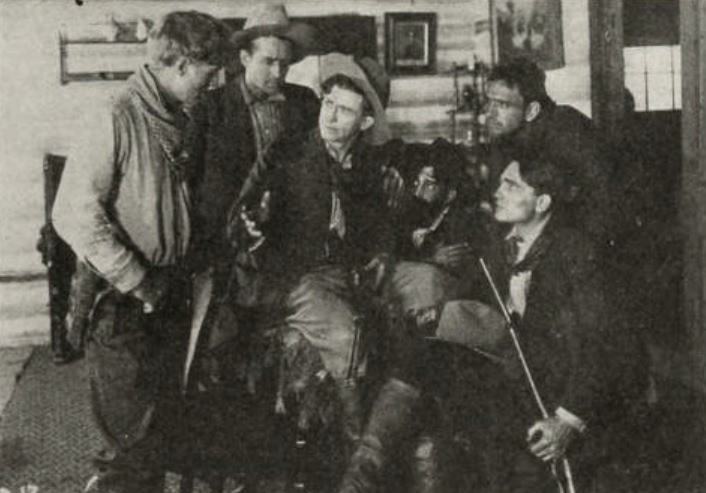
Oklahoma lawyer Al Jennings, whose father was a famous and respected judge, is enraged at the murder of his brother Ed, shot in the back by two killers. As if that wasn't enough, he finds himself falsely accused of robbery, and while escaping those phony charges he is chased and shot by a posse. Although wounded, he manages to elude the posse but takes his revenge by robbing a country store. It's not long before he has his own outlaw gang, with headquarters at the Spike S Ranch. A local sheriff is determined to capture him, so Al and his brother Frank make plans for one last, big robbery before leaving Oklahoma forever.
Decades after its release, Beating Back remains a vital piece of the cinematic puzzle. Its influence can be seen in countless modern works, solidifying Caryl S. Fleming's status as a master of the craft in United States and beyond.