
DbcultAccessing Vault...
Director's Spotlight
Senior Film Conservator
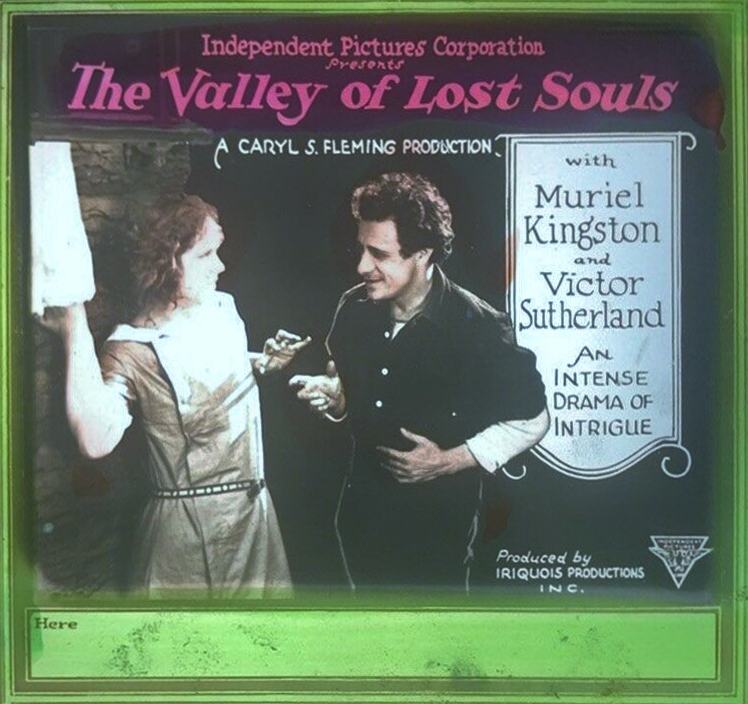
Director's Spotlight: United States
A Deep Dive into the 1923 Vision of Caryl S. Fleming
In the storied career of Caryl S. Fleming, The Valley of Lost Souls stands as a the provocative questions that Caryl S. Fleming poses to the United States audience. Elevating the source material through Caryl S. Fleming's unique vision, it persists as a haunting reminder of our own cinematic history.
In The Valley of Lost Souls, Caryl S. Fleming pushes the boundaries of conventional narrative. The film's unique approach to its subject matter has sparked endless debates and interpretations among cinephiles and critics alike.
The visual language of The Valley of Lost Souls is defined by its use of shadows and framing, a hallmark of Caryl S. Fleming's style. By utilizing a 1923-era palette, the film creates an immersive experience that perfectly complements its Drama themes.
| Cinematography | Handheld |
| Soundtrack | Diegetic |
| Editing | Rhythmic |
| Art Direction | Naturalist |
Visualizing the convergence of Caryl S. Fleming's style and the core Drama narrative.
Mounted Police Sergeant MacKenzie investigates a series of "ghost" killings in the Valley of Lost Souls near Lachine, Quebec, Canada. He meets Julie Lebeau, who has recently rejected her suitor, Jacques. Unaware that Jacques is the killer, MacKenzie accepts his offer to serve as a guide. However, when Jacques learns that Julie and MacKenzie have fallen in love, he dynamites a hut where the sergeant has taken shelter. Although MacKenzie escapes the blast, he is knocked unconscious in the ensuing fight. Jacques returns to the trading post to kidnap Julie, but MacKenzie arrives with his aide and bring Jacques to justice.
Decades after its release, The Valley of Lost Souls remains a vital piece of the cinematic puzzle. Its influence can be seen in countless modern works, solidifying Caryl S. Fleming's status as a master of the craft in United States and beyond.