
DbcultAccessing Vault...
Director's Spotlight
Senior Film Conservator
Director's Spotlight: United Kingdom
A Deep Dive into the 1913 Vision of Cecil M. Hepworth
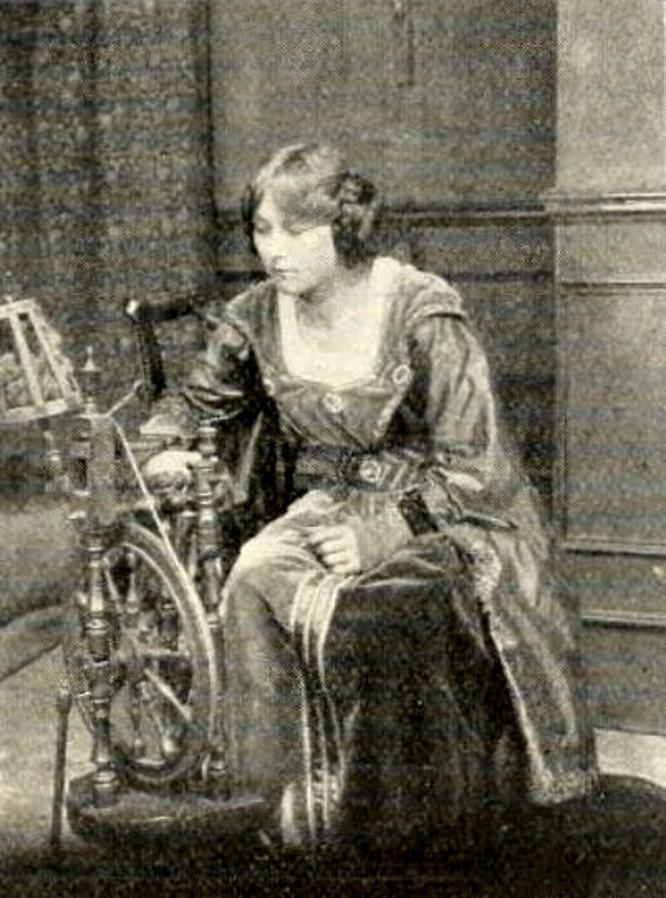
The artistic breakthrough represented by The Cloister and the Hearth in 1913 highlights the uncompromising vision of Cecil M. Hepworth that defines this cult masterpiece. In the context of United Kingdom's rich cinematic history, it captures a specific kind of cinematic magic that is rarely replicated.
In The Cloister and the Hearth, Cecil M. Hepworth pushes the boundaries of conventional narrative. The film's unique approach to its subject matter has sparked endless debates and interpretations among cinephiles and critics alike.
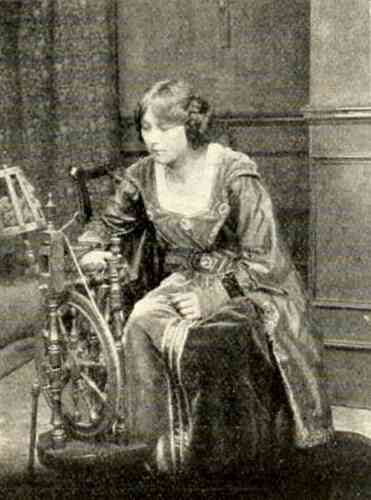
In this work, Cecil M. Hepworth explores the intersection of cult and United Kingdom cultural identity. The meticulous attention to detail suggests a deep-seated commitment to pushing the boundaries of the medium, ensuring that The Cloister and the Hearth remains a relevant topic of study for cult enthusiasts.
| Cinematography | High-Contrast |
| Soundtrack | Synth-Heavy |
| Editing | Rhythmic |
| Art Direction | Naturalist |
Visualizing the convergence of Cecil M. Hepworth's style and the core cult narrative.
Gerard, the eldest son of a wealthy family, is destined by his father for the church, although his own inclinations lie elsewhere. The young fellow is a born artist. His first success comes when he reads of the announcement of a public competition in which a big prize is to be paid for the best picture. It is at this period that he meets Margaret and her aged father. He falls in love with Margaret, and their fast-growing affection is viewed with great concern by the burgomaster of Rotterdam who is keeping in his possession some valuable parchments which relate to Margaret's fortune. Gerard's affection is discovered by his father, who sternly reprimands him, bidding him to think of the vocation in life that he has to fill. Gerard defies his father and family, and goes to his patroness, who, on hearing his story, tells him to put aside all ideas of priesthood for the present, and that she will pay for him to go to Rome and study art. Gerard gratefully accepts the offer, but at the same time he determines that before he leaves, he will wed Margaret secretly. In the meantime his father has been to the burgomaster, attempting to put the law in force against his disobedient son. The burgomaster, fearing for himself if the union between Gerard and Margaret should come to pass, promises his aid. Accordingly Gerard is torn from the arms of his newly-made bride at the very foot of the altar. He is imprisoned in the burgomaster's house. But thanks to the efforts of Margaret and his sister and crippled brother, he makes his escape. While escaping he accidentally discloses a trapdoor which conceals the secret hiding-place of the burgomaster's papers, and thinking that some of them will be useful to him in his work as an artist, he fills his pockets full. He finds on examination that one of them is the actual document relating to Margaret's fortune, and he keeps this, giving the others to Margaret to bury in the garden. He then sets out for Rome and on his way falls in with Denys of Burgundy, a Burgundian soldier of fortune. A friendship springs up between the gentle artist and the rough soldier. Then follows the attempted murder of the two men in the inn by the rascally landlord and his two accomplices, from which Gerard and his companion emerge victorious. Gerard arrives at Rome, and continues his studies. In the meantime his brothers, who have always been jealous of him, discover his whereabouts, and with the connivance of the burgomaster, send a letter to him to the effect that Margaret is dead. This information drives Gerard to such a state of despair that when his life is attempted by an assassin who is bribed to kill him by Princess Cloelia, whose overtures he has rejected. He offers no resistance, but the assassin overcome with remorse drops his dagger and flees from the scene. A year elapses, and Gerard, now a priest, returns to his own country. He is summoned to the death-bed of an old hermit and when he dies. Gerard takes up his life in the old man's cave. His wife comes to the spot to pray, and recognizes Gerard by a birthmark on his hand. The unfortunate man then learns for the first time that he has been deceived, that his wife is alive and that he has a son five years old. When he realizes the extent of the treacherous trick that has been played upon him, he bursts in upon his family and denounces his brothers. The rage of his father knows no bounds, and he is with difficulty restrained from slaying the son who has wrecked his elder brother's life. He next visits the burgomaster, and by the aid of the incriminating parchment, which he has kept all these years, forces him to restore Margaret's fortune. This, however, is the most he can do, and, after taking an agonizing farewell of his wife and child, he is forced to go out in the world alone, for there is no power that can absolve him from the duties of his holy calling, nor is it possible for a man to mix again with the world over whose head the sacred words have been spoken, "Thou art a priest forever, after the order of Melchisedech."
Decades after its release, The Cloister and the Hearth remains a vital piece of the cinematic puzzle. Its influence can be seen in countless modern works, solidifying Cecil M. Hepworth's status as a master of the craft in United Kingdom and beyond.