
DbcultAccessing Vault...
Director's Spotlight
Senior Film Conservator
Director's Spotlight: India
A Deep Dive into the 1935 Vision of Chandulal Shah
As we revisit the 1935 masterpiece Desh Dasi, we are struck by the meticulous attention to detail that Chandulal Shah applied to every frame. Anchored by a narrative that is both personal and universal, it bridges the gap between traditional cult and contemporary vision.
In Desh Dasi, Chandulal Shah pushes the boundaries of conventional narrative. The film's unique approach to its subject matter has sparked endless debates and interpretations among cinephiles and critics alike.
To fully appreciate Desh Dasi, one must consider the cinematic climate of 1935. During this period, India was undergoing significant artistic shifts, and Chandulal Shah was at the forefront of this cult movement, often challenging established norms.
| Cinematography | Handheld |
| Soundtrack | Synth-Heavy |
| Editing | Rhythmic |
| Art Direction | Naturalist |
Visualizing the convergence of Chandulal Shah's style and the core cult narrative.
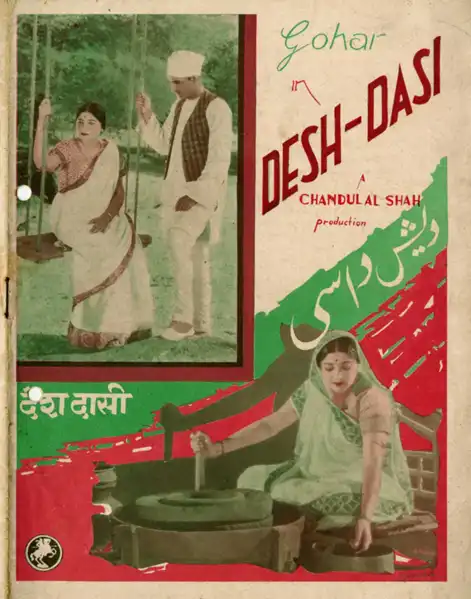
This melodrama has a love triangle between Gohar/Dr. Rasik/Dilp Kumar along with a national twist. Leading a life of boredom typical of the colonized leisure class, Vinakumari (Gohar) an her lover Dr. Rasik (Bilimoria) suddenly come across a Gandhian ashram run by Dilip Kumar (Sandow) and other social workers. Vinakumari dedicates herself to the cause of the poor while the ashram faces problems: an entertainment carnival set up by urban businessmen leads the villagers into temptation, a famine breaks out and rapacious landlords, including Bakshiji (Bawa), Vinakumari's guardian, demand money. Eventually Dr. Rasik too joins the group, providing much-needed medical assistance to the workers in the disease-stricken countryside.
Decades after its release, Desh Dasi remains a vital piece of the cinematic puzzle. Its influence can be seen in countless modern works, solidifying Chandulal Shah's status as a master of the craft in India and beyond.