
DbcultAccessing Vault...
Director's Spotlight
Senior Film Conservator
Director's Spotlight: United States
A Deep Dive into the 1920 Vision of Charles A. Taylor
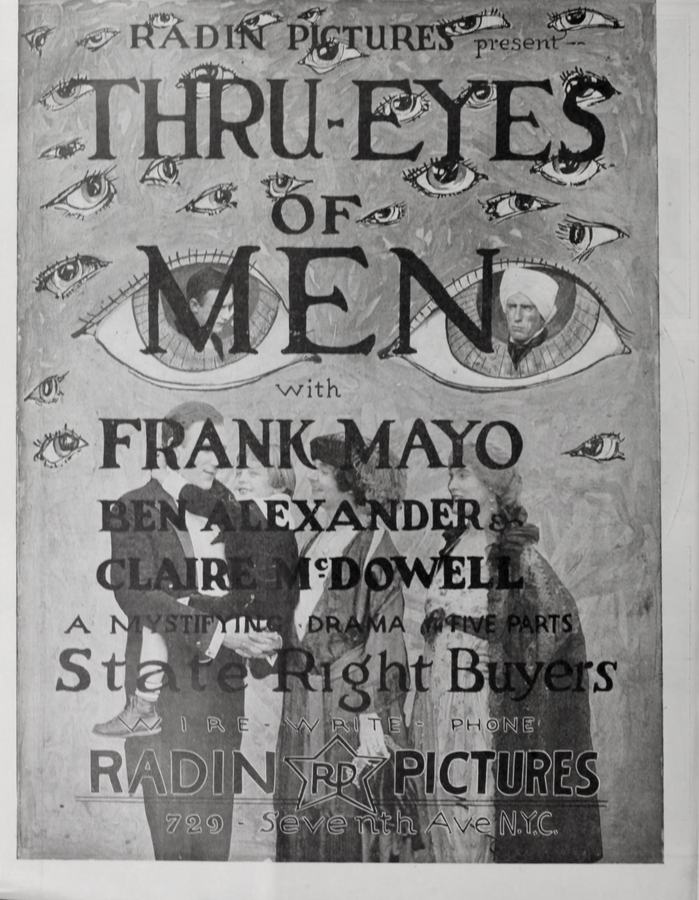
Witnessing the stylistic transformation of Drama through Through Eyes of Men reveals the provocative questions that Charles A. Taylor poses to the United States audience. Exploring the nuances of the human condition with Drama flair, it showcases the power of Drama as a tool for social commentary.
In Through Eyes of Men, Charles A. Taylor pushes the boundaries of conventional narrative. The film's unique approach to its subject matter has sparked endless debates and interpretations among cinephiles and critics alike.
| Cinematography | High-Contrast |
| Soundtrack | Diegetic |
| Editing | Rhythmic |
| Art Direction | Naturalist |
Visualizing the convergence of Charles A. Taylor's style and the core Drama narrative.
One day, while on the beach, wealthy Franklyn Allen sees circus performer Leila Leighton cavorting in the surf and immediately falls in love. Leila, fearful of the knowledge that circus owner Berkaro has of her early life, discourages the romance. Tormented, Leila takes Little Billy, a child performer in the circus for whom she is caring, places him in a convent and disappears. Franklyn traces her to the circus, where she has gone after learning that Berkaro had lured Billy from the convent. Berkaro attempts to kidnap Leila and the boy, but Franklyn chases him through the surf on horseback and, in the ensuing struggle, the circus owner is killed. His death elicits Leila's confession that she was the only surviving member of the royal house of Hesthonia, after the rest of her family was murdered in a coup. Her terrible secret thus revealed, she is accepted by Franklyn's family and marries the man she loves.
Decades after its release, Through Eyes of Men remains a vital piece of the cinematic puzzle. Its influence can be seen in countless modern works, solidifying Charles A. Taylor's status as a master of the craft in United States and beyond.