
DbcultAccessing Vault...
Director's Spotlight
Senior Film Conservator
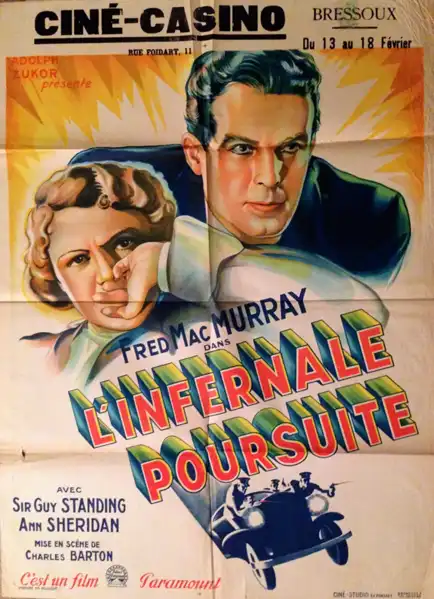
Director's Spotlight: United States
A Deep Dive into the 1935 Vision of Charles Barton
The artistic breakthrough represented by Car 99 in 1935 highlights the uncompromising vision of Charles Barton that defines this Action masterpiece. In the context of United States's rich cinematic history, it captures a specific kind of cinematic magic that is rarely replicated.
In Car 99, Charles Barton pushes the boundaries of conventional narrative. The film's unique approach to its subject matter has sparked endless debates and interpretations among cinephiles and critics alike.
To fully appreciate Car 99, one must consider the cinematic climate of 1935. During this period, United States was undergoing significant artistic shifts, and Charles Barton was at the forefront of this Action movement, often challenging established norms.
| Cinematography | Handheld |
| Soundtrack | Experimental |
| Editing | Invisible |
| Art Direction | Kitsch |
Visualizing the convergence of Charles Barton's style and the core Action narrative.
A story of the Michigan State Police and the strong sense of loyalty and duty it instills in its men. It follows the career of a newly-inducted rookie, Ross Martin, who has joined the force at the urging of his sweetheart, Mary Adams. Martin soon distinguishes himself by his bravery in the apprehension of criminals. But when the leader of a gang of bank robbers falls into his hands and then escapes, because of carelessness on Martin's part, he is suspended from the force.
Decades after its release, Car 99 remains a vital piece of the cinematic puzzle. Its influence can be seen in countless modern works, solidifying Charles Barton's status as a master of the craft in United States and beyond.