
DbcultAccessing Vault...
Director's Spotlight
Senior Film Conservator
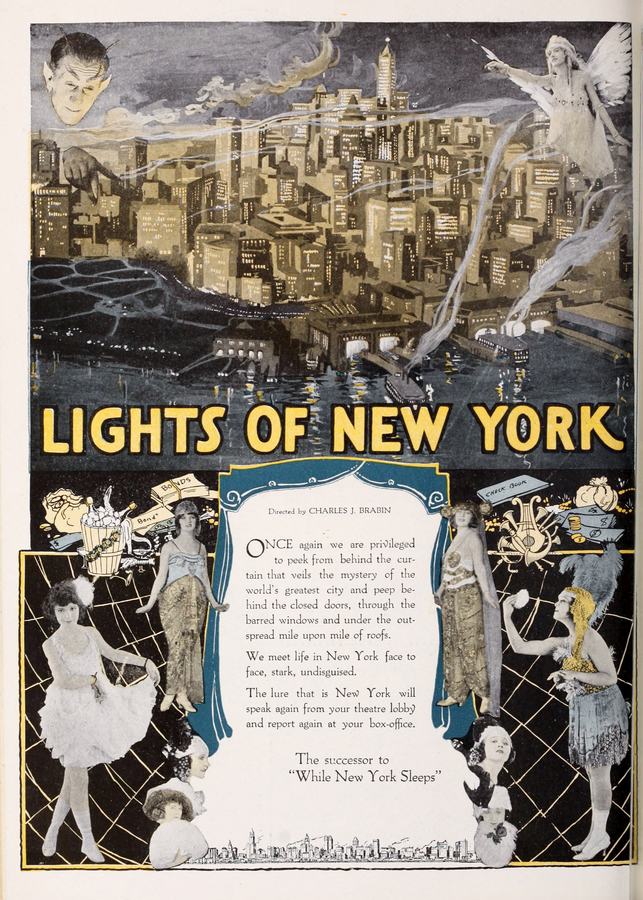
Director's Spotlight: United States
A Deep Dive into the 1922 Vision of Charles Brabin
As we revisit the 1922 masterpiece The Lights of New York, we are struck by the meticulous attention to detail that Charles Brabin applied to every frame. Anchored by a narrative that is both personal and universal, it bridges the gap between traditional Drama and contemporary vision.
In The Lights of New York, Charles Brabin pushes the boundaries of conventional narrative. The film's unique approach to its subject matter has sparked endless debates and interpretations among cinephiles and critics alike.
| Cinematography | High-Contrast |
| Soundtrack | Synth-Heavy |
| Editing | Disjunctive |
| Art Direction | Baroque |
Visualizing the convergence of Charles Brabin's style and the core Drama narrative.
Two distinct stories of New York life are told in this film. In the first, Daniel, a foundling, is given a home by Robert Reid, an East Side pawnbroker. He is a good boy but is led astray by evil companions until a dream shocks him into the realization of what his life may become; Daniel then resolves to "go straight." In the second episode, wealthy Wall Street financier Charles Redding plunges into despair and dereliction after he learns of his fiancée's elopement with another man. Sometime later, a bachelor party of 13 brings him in from the street to alter their number. When the guests urge Redding to tell his life story, it is revealed that the host is the son of Redding's former fiancée. She and Redding are then reunited.
Decades after its release, The Lights of New York remains a vital piece of the cinematic puzzle. Its influence can be seen in countless modern works, solidifying Charles Brabin's status as a master of the craft in United States and beyond.