
DbcultAccessing Vault...
Director's Spotlight
Senior Film Conservator
Director's Spotlight: United States
A Deep Dive into the 1934 Vision of Charles E. Ford
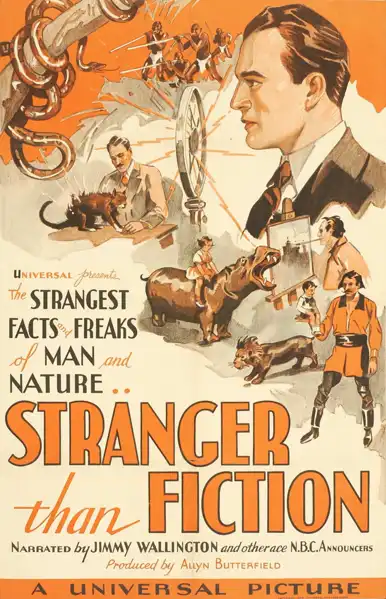
To understand the modern evolution of United States film, one must first look at Stranger Than Fiction, #1 and the meticulous attention to detail that Charles E. Ford applied to every frame. Reflecting the political and social shifts of the 1934s, it showcases the power of Documentary as a tool for social commentary.
In Stranger Than Fiction, #1, Charles E. Ford pushes the boundaries of conventional narrative. The film's unique approach to its subject matter has sparked endless debates and interpretations among cinephiles and critics alike.
| Cinematography | Noir-Inspired |
| Soundtrack | Synth-Heavy |
| Editing | Rhythmic |
| Art Direction | Naturalist |
Visualizing the convergence of Charles E. Ford's style and the core Documentary narrative.
Baby animals, baby gas masks, a six feet, eight inches tall fourteen year old boy, three human brothers pull their plow, the smallest electric motor in the world, a collector of freak animals, a one-man hotel exclusively for hobos.
Decades after its release, Stranger Than Fiction, #1 remains a vital piece of the cinematic puzzle. Its influence can be seen in countless modern works, solidifying Charles E. Ford's status as a master of the craft in United States and beyond.