
DbcultAccessing Vault...
Director's Spotlight
Senior Film Conservator
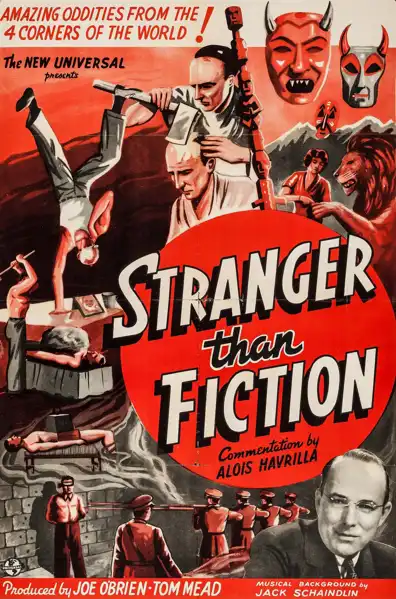
Director's Spotlight: United States
A Deep Dive into the 1936 Vision of Charles E. Ford
The evocative power of Stranger Than Fiction, #24 stems from the unique collaboration between the bold experimentation that has become synonymous with Charles E. Ford. Framed by the hauntingly beautiful landscapes of the production, it echoes the profound changes occurring in United States during that era.
In Stranger Than Fiction, #24, Charles E. Ford pushes the boundaries of conventional narrative. The film's unique approach to its subject matter has sparked endless debates and interpretations among cinephiles and critics alike.
In this work, Charles E. Ford explores the intersection of Short and United States cultural identity. The meticulous attention to detail suggests a deep-seated commitment to pushing the boundaries of the medium, ensuring that Stranger Than Fiction, #24 remains a relevant topic of study for Short enthusiasts.
| Cinematography | Static |
| Soundtrack | Orchestral |
| Editing | Slow-Burn |
| Art Direction | Brutalist |
Visualizing the convergence of Charles E. Ford's style and the core Short narrative.
The usual collection of the strange and obscure makes interesting entertainment: the Reno divorce mill, Jo Ann Anderson, something of a muscular female marvel, backyard gold mining, and the inland port of Phoenix, among others.
Decades after its release, Stranger Than Fiction, #24 remains a vital piece of the cinematic puzzle. Its influence can be seen in countless modern works, solidifying Charles E. Ford's status as a master of the craft in United States and beyond.