
DbcultAccessing Vault...
Director's Spotlight
Senior Film Conservator
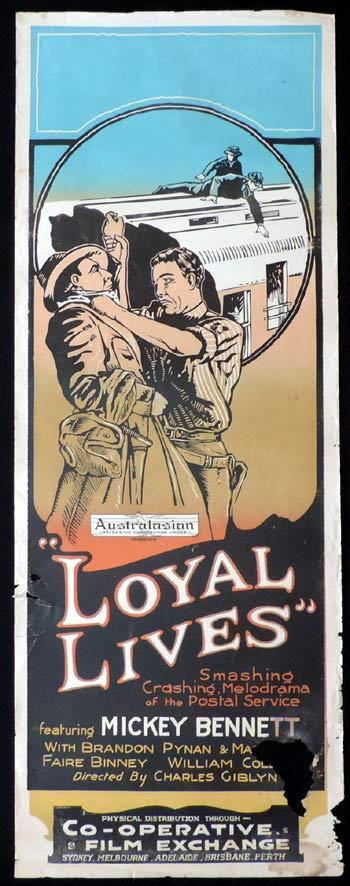
Director's Spotlight: United States
A Deep Dive into the 1923 Vision of Charles Giblyn
Peeling back the layers of Charles Giblyn's Loyal Lives exposes the collaborative alchemy between Charles Giblyn and the 1923 creative team. Anchored by a narrative that is both personal and universal, it reinforces the idea that cinema is a medium of infinite possibilities.
In Loyal Lives, Charles Giblyn pushes the boundaries of conventional narrative. The film's unique approach to its subject matter has sparked endless debates and interpretations among cinephiles and critics alike.
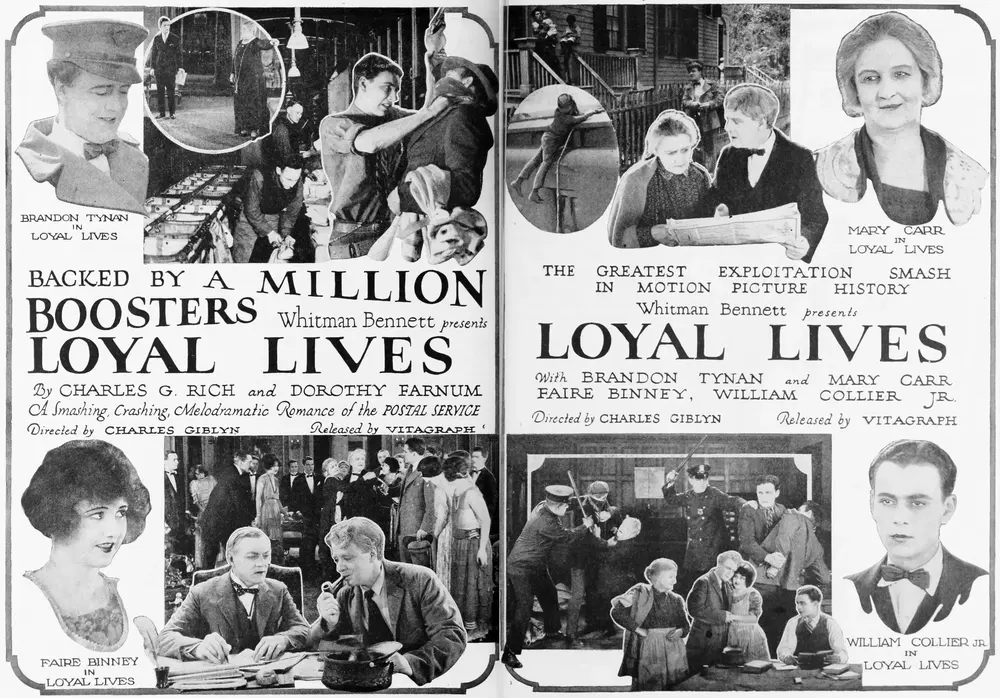
While deeply rooted in United States, Loyal Lives has achieved a global reach, influencing directors from various backgrounds. Its ability to translate Drama tropes into a universal cinematic language is why it remains a cult staple decades after its 1923 release.
| Cinematography | Deep Focus |
| Soundtrack | Minimalist |
| Editing | Slow-Burn |
| Art Direction | Brutalist |
Visualizing the convergence of Charles Giblyn's style and the core Drama narrative.
The widow Brady daily pleads with Daniel O'Brien, a letter carrier, for a letter from her son who ran away. Taking pity on her, O'Brien writes a series of letters to her himself. Michael O'Hara, a fellow worker, proposes to Daniel that they quit the mail service and start a mail order business with their savings. Mary O'Brien tells Michael that they are going to spend their savings to educate their son, Terrence, and Daniel refuses to leave the service. Daniel finds a baby girl on his doorstep and in spite of their poverty the O'Briens decide to keep her. Seventeen years later, Michael O'Hara is a mail order king and Daniel O'Brien, retired from the service on account of physical disability, is unable to find work. His pension is so small that he is forced to mortgage his home. O'Hara helps him when he can no longer meet his payments. Peggy, the O'Briens' adopted daughter, and Tom O'Hara are secretly married because Mrs. O'Hara will not hear of the match. Widow Brady's son, a mail thief, returns and takes a room with the O'Briens. Before he leaves he puts a bill in the teapot. O'Brien gives the bill to O'Hara as a part payment of his debt. The bill is marked and O'Brien is arrested for robbing the mails, but Tom goes bail for him. Brady and his pal attempt to rob the mail train on which Terrence is clerk. Terrence dives off the train into the river with the mail bag. After a struggle with the bandit Terrence manages to get ashore but he cannot get to the nearest farm until the next day. Daniel O'Brien, upon hearing that Terrence is suspected of robbing the mails goes to his old friend, the night clerk of the post office, for comfort. He finds robbers looting the safe and fights them. Terrence, who has brought the mail back in the farmer's car, comes to his father's aid. One of the thieves proves to be Brady who confesses. O'Brien receives the personal thanks of Postmaster General New and the O'Haras give their approval to the marriage of Tom and Peggy.
Decades after its release, Loyal Lives remains a vital piece of the cinematic puzzle. Its influence can be seen in countless modern works, solidifying Charles Giblyn's status as a master of the craft in United States and beyond.