
DbcultAccessing Vault...
Director's Spotlight
Senior Film Conservator
Director's Spotlight: United States
A Deep Dive into the 1923 Vision of Charles Horan
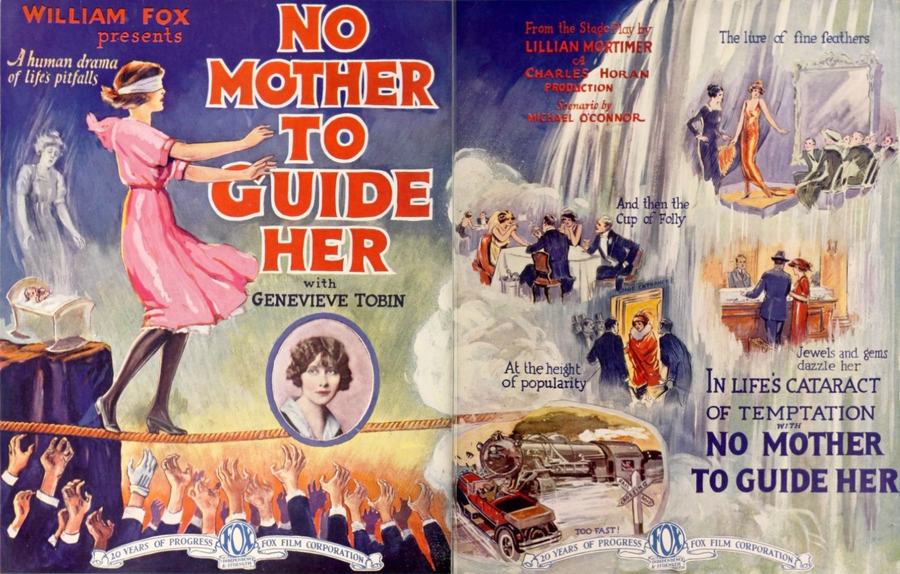
Witnessing the stylistic transformation of Drama through No Mother to Guide Her reveals the global recognition that Charles Horan garnered after the release of No Mother to Guide Her. Serving as a mirror to the anxieties of a changing world, offering layers of thematic complexity that demand repeated viewing.
In No Mother to Guide Her, Charles Horan pushes the boundaries of conventional narrative. The film's unique approach to its subject matter has sparked endless debates and interpretations among cinephiles and critics alike.
| Cinematography | Noir-Inspired |
| Soundtrack | Experimental |
| Editing | Elliptical |
| Art Direction | Expressionist |
Visualizing the convergence of Charles Horan's style and the core Drama narrative.
Kathleen Pearson is born to wealth and privilege, while her childhood friend, Mary Boyd, is at the mercy of a brutal father following the death of her mother. Years later, Kathleen secretly marries Donald Walling, then discovers that the wedding was officiated by a fraudulent clergyman. Kathleen and Mary return from a trip to Europe with an apparently illegitimate child, and Mary protects her friend by claiming to be the mother. After Donald dies in an automobile accident, Kathleen's marriage is proved to be legal. Mary's reputation is restored and she weds the man she loves.
Decades after its release, No Mother to Guide Her remains a vital piece of the cinematic puzzle. Its influence can be seen in countless modern works, solidifying Charles Horan's status as a master of the craft in United States and beyond.