
DbcultAccessing Vault...
Director's Spotlight
Senior Film Conservator
Director's Spotlight: United States
A Deep Dive into the 1916 Vision of Charles Horan
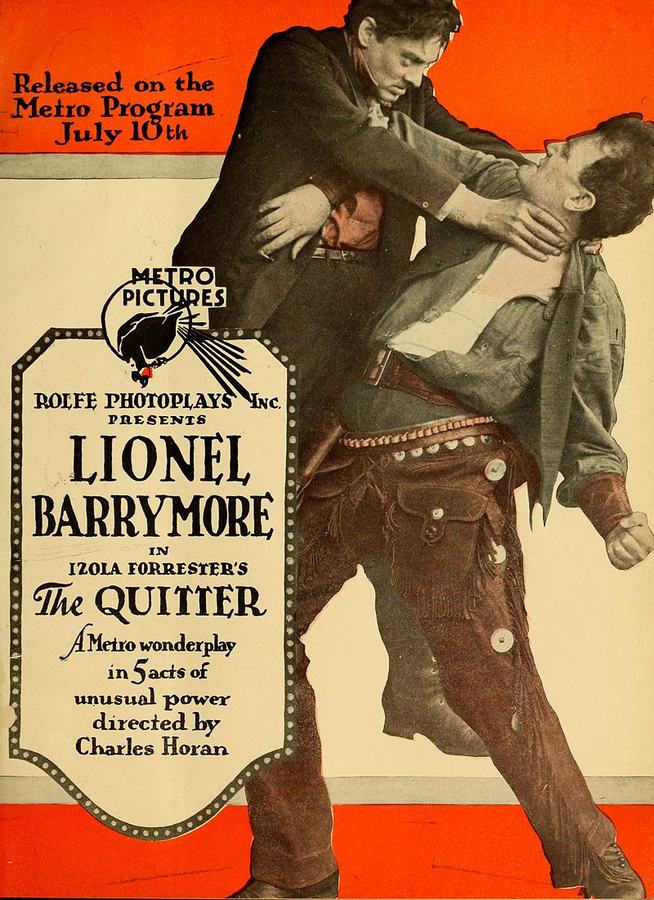
As a cultural artifact of the 1916s, The Quitter provides the global recognition that Charles Horan garnered after the release of The Quitter. Elevating the source material through Charles Horan's unique vision, it solidifies Charles Horan's reputation as a master of the craft.
In The Quitter, Charles Horan pushes the boundaries of conventional narrative. The film's unique approach to its subject matter has sparked endless debates and interpretations among cinephiles and critics alike.
While deeply rooted in United States, The Quitter has achieved a global reach, influencing directors from various backgrounds. Its ability to translate cult tropes into a universal cinematic language is why it remains a cult staple decades after its 1916 release.
| Cinematography | Static |
| Soundtrack | Orchestral |
| Editing | Invisible |
| Art Direction | Kitsch |
Visualizing the convergence of Charles Horan's style and the core cult narrative.
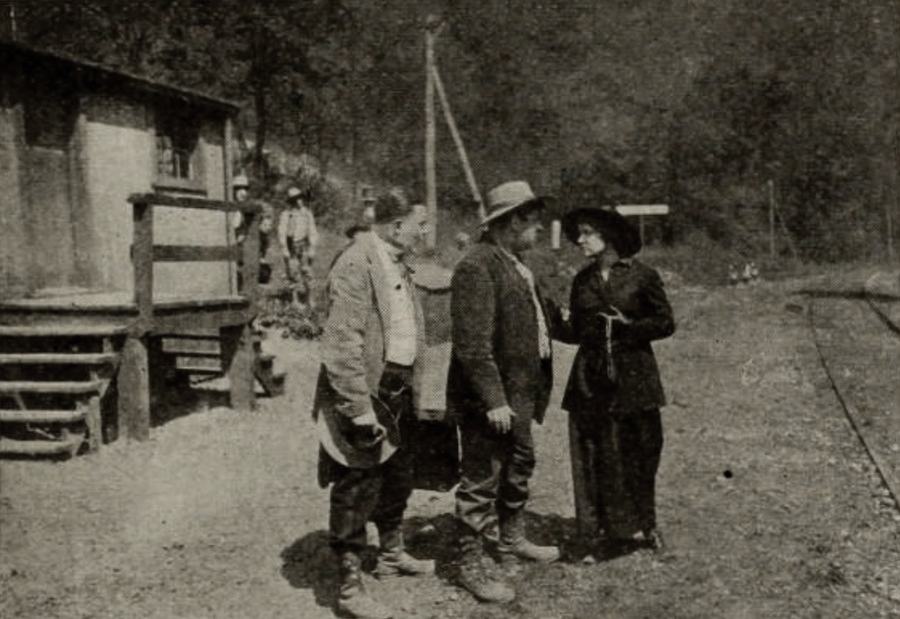
The miners at Paradise Gulch are bored. In a session at the "Three Cheers" saloon, owned by Seth Moore, they decide that the trouble with their existence is the fact that there are no women in the place. The verdict is that one of them must marry, and they choose "Happy Jack" Lewis, because he is not present. They go to "Happy Jack" Lewis, make him write out an advertisement for a wife, and sent it to neighboring towns. They stipulate that she must be blonde and pretty. At Gold City, Glad Mason, who answers every requirement, is working in the office of Willet and Condon, mining promoters. Since her father's death she has been obliged to shift for herself. Willet's attentions have become so obnoxious that she is at her wits' end to know what to do, when Lewis' advertisement is pointed out to her. In desperation she answers it, enclosing a photograph. Lewis lines the boys up against the bar and holds them up. Since they have got him into the trouble of getting married, he makes them furnish his shack. He gives a whoop of joy when he sees Glad's photograph among all the ugly ones he receives in answer to his advertisement, but Ben, the bartender, discourages him by saying that probably some old hag sent the picture. "Happy Jack" leaves in haste, first making over his house and his mine to her in recompense for her disappointment. He goes to the junction as Glad is changing trains for Paradise Gulch, and sees for himself what a beauty she is. But one of the boys with whom he has been fighting sees her, too, and without a word the miner gives "Happy Jack" a knock-out blow, and then puts him on the train, bound in the opposite direction. Each of the boys tries to win Glad. They tell her that Lewis is a quitter. Jumping off at a small station, Lewis is arrested as a suspicious character and thrown into jail. His wire to the boys for identification results in the answer that he is a cardsharp and crook. He escapes, and meets Willet, who offers to buy his mine. He accepts, taking the money, forgetting that he has made over the property to Glad, but robbers soon relieve him of his cash and he reaches Paradise Gulch penniless. Willet goes to take charge of the property, which he is anxious to claim because "Sid," the assayer, has told him it is of immense value. He finds Glad in possession and has "Happy Jack" arrested for obtaining money under false pretenses. Glad turns over her claim to Willet and Condon on the condition that they will free Lewis, although he implores her not to do so. But "Sid," the assayer, has made a discovery. He whispers something to Glad, and the last cloud is dispelled. He has made a mistake. The sample ore he has thought Lewis' belonged to Glad's father, who had brought it in to be assayed the day before he died. Glad and "Happy Jack" have lost control of the worthless mine, but they begin life together as owners of the magnificent Mason property.
Decades after its release, The Quitter remains a vital piece of the cinematic puzzle. Its influence can be seen in countless modern works, solidifying Charles Horan's status as a master of the craft in United States and beyond.