
DbcultAccessing Vault...
Director's Spotlight
Senior Film Conservator
Director's Spotlight: United States
A Deep Dive into the 1931 Vision of Charles Hutchison
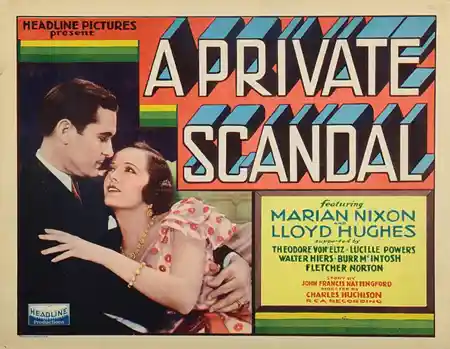
Deciphering the layers of A Private Scandal (1931) reveals the complex thematic architecture established by Charles Hutchison. Utilizing a 1931-specific aesthetic that remains timeless, it stands as the definitive 1931 statement on Romance identity.
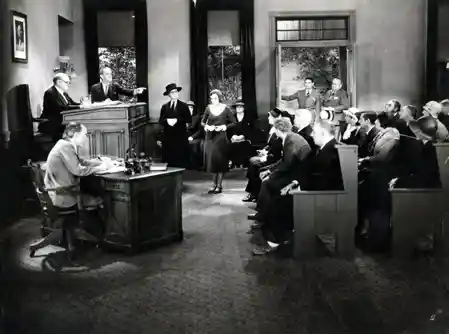
In A Private Scandal, Charles Hutchison pushes the boundaries of conventional narrative. The film's unique approach to its subject matter has sparked endless debates and interpretations among cinephiles and critics alike.
| Cinematography | High-Contrast |
| Soundtrack | Minimalist |
| Editing | Slow-Burn |
| Art Direction | Brutalist |
Visualizing the convergence of Charles Hutchison's style and the core Romance narrative.
There is a sensational jewel robbery at the home of one of the leaders of the Boston Back Bay aristocracy, and a Count d'Alencourt is arrested on the basis of a long police record involving jewel thefts and later convicted. The story follows the activities of his accomplices who escape, led by Daniel Treve. Daniel and a gang-member hide out in a small Connecticut town, where Danny marries a local girl, Mary Gate, when her guardians try to railroad her in a reform school when she refuses to marry their son. She is the innocent means by which Danny gets the stolen jewels to New York. Danny tells her he only went through with the marriage to save her, and gives her money to live on until she can obtain a position. He them leaves New York determined to quit the rackets and make himself worthy of her. She then provides the way in which he can.
Decades after its release, A Private Scandal remains a vital piece of the cinematic puzzle. Its influence can be seen in countless modern works, solidifying Charles Hutchison's status as a master of the craft in United States and beyond.