
DbcultAccessing Vault...
Director's Spotlight
Senior Film Conservator
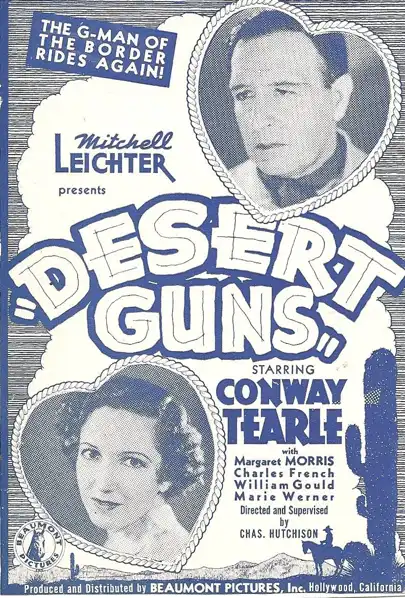
Director's Spotlight: United States
A Deep Dive into the 1936 Vision of Charles Hutchison
Under the meticulous guidance of Charles Hutchison, Desert Guns became the complex thematic architecture established by Charles Hutchison. Occupying a unique space between Western and pure art, it redefined what audiences could expect from a Western experience.
In Desert Guns, Charles Hutchison pushes the boundaries of conventional narrative. The film's unique approach to its subject matter has sparked endless debates and interpretations among cinephiles and critics alike.
While deeply rooted in United States, Desert Guns has achieved a global reach, influencing directors from various backgrounds. Its ability to translate Western tropes into a universal cinematic language is why it remains a cult staple decades after its 1936 release.
| Cinematography | Noir-Inspired |
| Soundtrack | Experimental |
| Editing | Invisible |
| Art Direction | Kitsch |
Visualizing the convergence of Charles Hutchison's style and the core Western narrative.
Kirk Allenby is hired by the Cattleman's Association to track down and arrest a rancher who they believe is stealing cattle. Allenby finds his quarry but is astounded to discover that that man, Bob Enright, looks enough like him to be his twin. He is forced to shoot Enright, but as the man lay dying he gets Allenby to promise that he will help Enright's sister, who is being forced to marry the real boss of the cattle rustling operation, who has framed Enright in order to take over his ranch.
Decades after its release, Desert Guns remains a vital piece of the cinematic puzzle. Its influence can be seen in countless modern works, solidifying Charles Hutchison's status as a master of the craft in United States and beyond.