
DbcultAccessing Vault...
Director's Spotlight
Senior Film Conservator
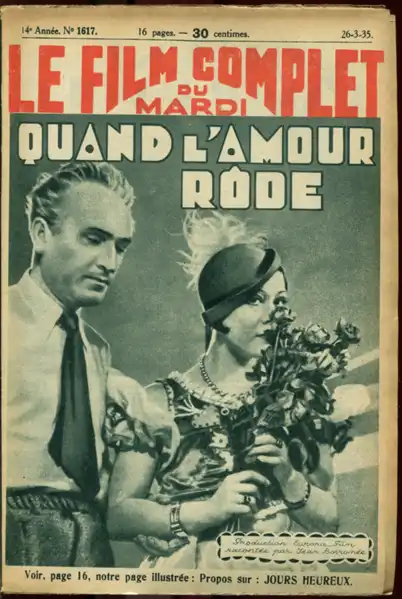
Director's Spotlight: Germany
A Deep Dive into the 1934 Vision of Charles Klein
As we revisit the 1934 masterpiece Gypsy Blood, we are struck by the atmospheric immersion that Charles Klein achieves throughout Gypsy Blood. Exploring the nuances of the human condition with cult flair, it solidifies Charles Klein's reputation as a master of the craft.
In Gypsy Blood, Charles Klein pushes the boundaries of conventional narrative. The film's unique approach to its subject matter has sparked endless debates and interpretations among cinephiles and critics alike.

While deeply rooted in Germany, Gypsy Blood has achieved a global reach, influencing directors from various backgrounds. Its ability to translate cult tropes into a universal cinematic language is why it remains a cult staple decades after its 1934 release.
| Cinematography | Static |
| Soundtrack | Synth-Heavy |
| Editing | Rhythmic |
| Art Direction | Naturalist |
Visualizing the convergence of Charles Klein's style and the core cult narrative.
Princess Stauffenstein has arranged a marriage for her grandnephew Poldi and orders him to meet his unknown bride Steffi. But he falls for alluring dancer Ilonka while his uncle Leopold, sent to reason with him, is enchanted by Steffi.
Decades after its release, Gypsy Blood remains a vital piece of the cinematic puzzle. Its influence can be seen in countless modern works, solidifying Charles Klein's status as a master of the craft in Germany and beyond.