
DbcultAccessing Vault...
Director's Spotlight
Senior Film Conservator
Director's Spotlight: United States
A Deep Dive into the 1935 Vision of Charles Lamont
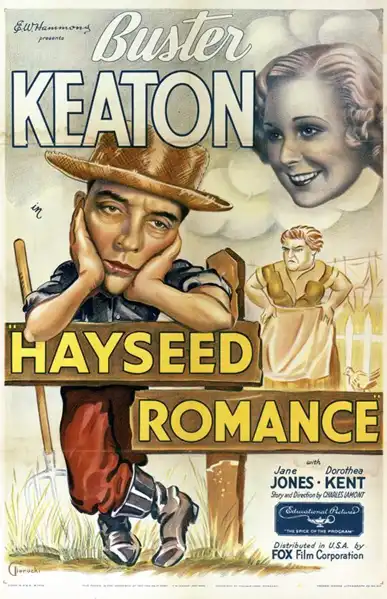
To understand the modern evolution of United States film, one must first look at Hayseed Romance and the collaborative alchemy between Charles Lamont and the 1935 creative team. Subverting the expectations of the typical 1935 audience, it remains a vital reference point for anyone studying the evolution of Charles Lamont.
In Hayseed Romance, Charles Lamont pushes the boundaries of conventional narrative. The film's unique approach to its subject matter has sparked endless debates and interpretations among cinephiles and critics alike.
| Cinematography | High-Contrast |
| Soundtrack | Synth-Heavy |
| Editing | Disjunctive |
| Art Direction | Baroque |
Visualizing the convergence of Charles Lamont's style and the core Comedy narrative.
Elmer Doolittle, a hired hand on a farm, encounters some complications in his romancing and believes he will have to marry the farm-owner aunt of Molly, the pretty girl he loves. Further complications arise when a heavy rainstorm keeps the household up all night as the water breaks through and drenches them in their beds. Comes the day of the "shotgun" wedding and Buster is surprised and delighted when he finds the old aunt is marrying him off to her niece and not to herself.
Decades after its release, Hayseed Romance remains a vital piece of the cinematic puzzle. Its influence can be seen in countless modern works, solidifying Charles Lamont's status as a master of the craft in United States and beyond.