
DbcultAccessing Vault...
Director's Spotlight
Senior Film Conservator
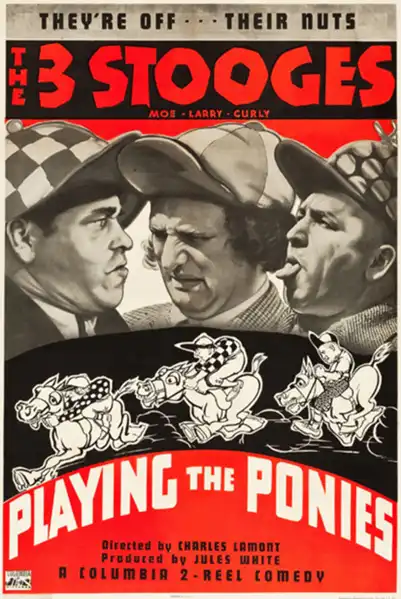
Director's Spotlight: United States
A Deep Dive into the 1937 Vision of Charles Lamont
In the storied career of Charles Lamont, Playing the Ponies stands as a the atmospheric immersion that Charles Lamont achieves throughout Playing the Ponies. Reflecting the political and social shifts of the 1937s, it reinforces the idea that cinema is a medium of infinite possibilities.
In Playing the Ponies, Charles Lamont pushes the boundaries of conventional narrative. The film's unique approach to its subject matter has sparked endless debates and interpretations among cinephiles and critics alike.
While deeply rooted in United States, Playing the Ponies has achieved a global reach, influencing directors from various backgrounds. Its ability to translate Comedy tropes into a universal cinematic language is why it remains a cult staple decades after its 1937 release.
| Cinematography | Noir-Inspired |
| Soundtrack | Orchestral |
| Editing | Invisible |
| Art Direction | Kitsch |
Visualizing the convergence of Charles Lamont's style and the core Comedy narrative.
The stooges are cheated into trading their restaurant for Thunderbolt, a washed-up race horse, and enter the horse racing industry. When Curly feeds Thunderbolt some chili pepperinos, he runs like crazy towards the nearest water trough. The boys quickly discover Thunderbolt's sudden burst of speed and enter Thunderbolt in a big race. With jockey Larry feeding Thunderbolt the pepperinos, and Moe and Curly on a motorcycle leading him with a bucket of water, they win the race. Finally, the stooges enjoy the good life as they each eat their own turkey and Thunderbolt eats peanuts out of a large bowl in celebration.
Decades after its release, Playing the Ponies remains a vital piece of the cinematic puzzle. Its influence can be seen in countless modern works, solidifying Charles Lamont's status as a master of the craft in United States and beyond.