
DbcultAccessing Vault...
Director's Spotlight
Senior Film Conservator
Director's Spotlight: United States
A Deep Dive into the 1924 Vision of Charles Lamont
The Comedy DNA of Tin Can Alley is a reflection of United States's the subversive storytelling techniques employed by Charles Lamont in 1924. Breaking the traditional rules of Comedy engagement, it leaves an indelible mark on the soul of the viewer.
In Tin Can Alley, Charles Lamont pushes the boundaries of conventional narrative. The film's unique approach to its subject matter has sparked endless debates and interpretations among cinephiles and critics alike.
The visual language of Tin Can Alley is defined by its use of shadows and framing, a hallmark of Charles Lamont's style. By utilizing a 1924-era palette, the film creates an immersive experience that perfectly complements its Comedy themes.
| Cinematography | Deep Focus |
| Soundtrack | Minimalist |
| Editing | Disjunctive |
| Art Direction | Baroque |
Visualizing the convergence of Charles Lamont's style and the core Comedy narrative.
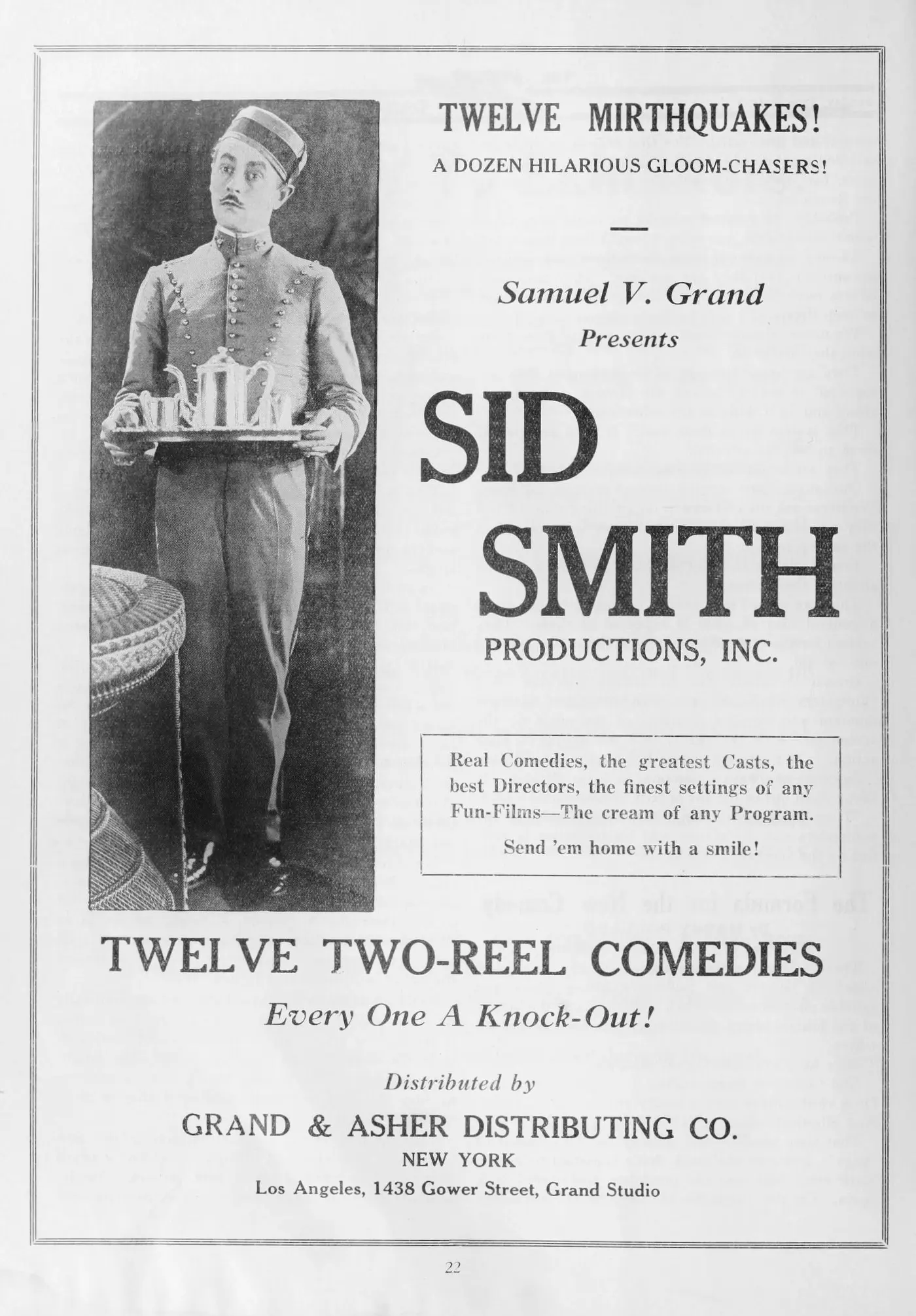
Sid Smith has just become a lecturer and reformer in a tough neighborhood but he is unable to find an audience that will listen to him preach on the benefits of prohibition. While trying to help some poor people in his neighborhood he gets into trouble with two crooks over a girl and is hit on the head. While staggering about he comes upon prohibition officers emptying liquor into the street. He slips and falls into the liquor but finally gets up and visits a brother lecturer who has a fairly large audience. The audience immediately leaves and follows Sid when they smell his booze soaked clothes. Sid leads them into his tent to lecture them on prohibition. When they .ind that drinks will not be dispensed, they desert him. A little later he again meets the two crooks and the girl who seem to be in a quandary. The girl asks him to go to the train and get a black bag from a confederate and bring it to her. He finally agrees and is given the password. He gets the bag and is bringing it back when he reads a billboard stating that there is a large reward for the man who recovers such a bag which contains stolen securities. Sid believes that he is holding the bag described and tries to get rid of it in a number of ways bu ways unsuccessfully. Finally, just as he has gotten rid of it another almost identical bag is put in his hands from a window he is passing. This too he tries to loose and in doing so excites the suspicion on the police who chase him over the housetops until when they ore about to catch him, he sees the crooks for whom he got the bag standing below and throw it to them. The bag, which contained dynamite explodes upon reaching the ground. The police take the crooks away and Sid is left with the girl.
Decades after its release, Tin Can Alley remains a vital piece of the cinematic puzzle. Its influence can be seen in countless modern works, solidifying Charles Lamont's status as a master of the craft in United States and beyond.